Understanding the Black Bear
"A PROBLEM FOR BEARS IS NOT SO MUCH WHAT WE DON'T KNOW, IT IS WHAT WE THINK WE KNOW THAT ISN'T TRUE"
- DR LYNN ROGERS
- DR LYNN ROGERS
What Is a Black Bear?
The American black bear is the most widespread bear species in North America. Adults typically measure 1.3 to 1.9 metres long and can weigh anywhere from 60 to more than 300 kilograms, with males significantly larger than females.
The American black bear is the most widespread bear species in North America. Adults typically measure 1.3 to 1.9 metres long and can weigh anywhere from 60 to more than 300 kilograms, with males significantly larger than females.
Despite their name, black bears are not always black. Their fur may also appear brown, cinnamon, chocolate or even bluish-grey, and some individuals have a small white patch on their chest. They are strong, adaptable animals with rounded ears, short tails and five curved claws on each foot that help them climb trees, dig for food and tear apart logs in search of insects. Black bears are also surprisingly athletic. Lean bears can run about 48 km/h (over 30 mph) and are excellent swimmers and climbers.
Habitat and Range
Black bears live across most of Canada, the United States, and parts of Mexico, thriving mainly in forested habitats. Their ideal environment includes large forests with berry-producing shrubs, nut trees, wetlands and access to water. These landscapes provide the variety of foods bears need throughout the year. In Ontario, bears are widespread and may occasionally appear near towns, cottage, and campsites, especially when natural food supplies are limited. When this happens, they may investigate human sources of food such as garbage or bird feeders.
Habitat and Range
Black bears live across most of Canada, the United States, and parts of Mexico, thriving mainly in forested habitats. Their ideal environment includes large forests with berry-producing shrubs, nut trees, wetlands and access to water. These landscapes provide the variety of foods bears need throughout the year. In Ontario, bears are widespread and may occasionally appear near towns, cottage, and campsites, especially when natural food supplies are limited. When this happens, they may investigate human sources of food such as garbage or bird feeders.
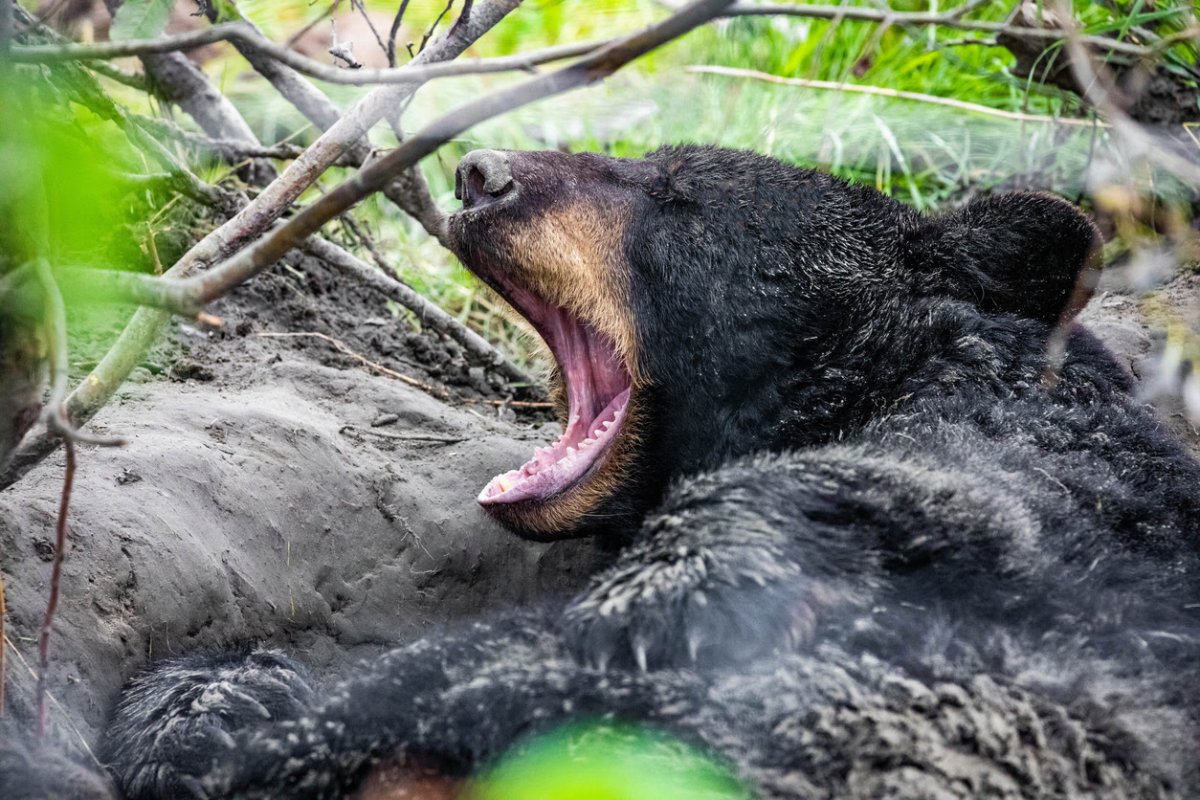
Photo Credit: Muskoka Watershed Council Downstream Newsletter May 12, 2025
Background Photo: Ella McIntosh, Bear With Us
Diet: Opportunistic Omnivores
Although black bears belong to the order Carnivora, their diet is mostly plant-based. They are opportunistic omnivores, eating whatever food is available during the season. Common foods include:
Although black bears belong to the order Carnivora, their diet is mostly plant-based. They are opportunistic omnivores, eating whatever food is available during the season. Common foods include:
- Berries such as blueberries, raspberries and cherries
- Nuts including acorns and beechnuts
- Insects and larvae
- Roots and green vegetation
- Fish or small mammals
- Carrion
7 facts about Black Bears
Hibernation and Cubs
Black bears spend the winter in dens where they enter a state often described as hibernation. Their heart rate and breathing slow, allowing them to survive for months using stored body fat. Cubs are born in the den during winter, usually in January or February, and weigh only about half a pound at birth. Most litters contain one to three cubs, and the young remain with their mother for about 17 months before becoming independent.
Hinterland Who’s Who: Black Bear
Behaviour and Intelligence
Black bears are generally solitary animals, except for mothers raising cubs or during the mating season. They have extremely well-developed senses. Their sense of smell is particularly powerful - far stronger than a human’s - and allows them to locate food from long distances. Bears are also highly intelligent animals with excellent long-term memory, which helps them remember productive feeding areas year after year.
Hibernation and Cubs
Black bears spend the winter in dens where they enter a state often described as hibernation. Their heart rate and breathing slow, allowing them to survive for months using stored body fat. Cubs are born in the den during winter, usually in January or February, and weigh only about half a pound at birth. Most litters contain one to three cubs, and the young remain with their mother for about 17 months before becoming independent.
Bears typically emerge from hibernation between mid-March and late April, depending on weather conditions. While in hibernation, they don’t eat, and lose body weight. When they come out of their dens in the spring, they are hungry and skinny. Black Bears are omnivores whose diets mostly consist of vegetation. Because there are few berries or nuts in the early spring, they don’t start gaining weight until early July. Basically, Black Bears only have five months to eat enough food to survive for an entire year. This small window of time to gain weight strongly influences Black Bear behaviour.
Hinterland Who’s Who: Black Bear
Behaviour and Intelligence
Black bears are generally solitary animals, except for mothers raising cubs or during the mating season. They have extremely well-developed senses. Their sense of smell is particularly powerful - far stronger than a human’s - and allows them to locate food from long distances. Bears are also highly intelligent animals with excellent long-term memory, which helps them remember productive feeding areas year after year.
Many times a bear’s nervousness is misread as aggression. When a bear clacks its teeth, exhales heavily through its nose, slaps the ground with its paws, the bear is 'asking' the person to leave or give it more space. Rarely does this kind of behaviour from a bear result in an injury to a person.
Why Bears Visit Communities
When bears appear in neighbourhoods or cottage areas, it is usually because they are searching for food. Their survival depends heavily on gaining weight before winter, and strong smells can attract them from far away. Common attractants include:
When bears appear in neighbourhoods or cottage areas, it is usually because they are searching for food. Their survival depends heavily on gaining weight before winter, and strong smells can attract them from far away. Common attractants include:
- Garbage or compost
- Bird feeders
- Barbecue grease
- Pet food left outside
- Fruit trees and fallen fruit
Bear-Wise Tips: Preventing Encounters
When you live, camp, hike or walk your dog in a woods where there are bears you have little to worry about. The reality is you are safer in the woods compared to a place you may be where there are many people.
When you live, camp, hike or walk your dog in a woods where there are bears you have little to worry about. The reality is you are safer in the woods compared to a place you may be where there are many people.
The best way to deal with bears is prevention. Removing attractants helps keep bears wild and reduces the risk of dangerous encounters. Around homes and cottages:
When outdoors
- Store garbage in secure containers with tight lids.
- Put garbage out only on collection day, or take garbage to waste disposal on a regular basis.
- Do not put meat products in compost, no eggs.
- Remove bird feeders during spring and summer.
- Clean barbecues and grease trays regularly.
- Keep pet food indoors.
- Never feed or approach bears.
- Keep campsites clean and store food properly.
- Keep your dog on a leash. Dogs off leash may chase and harass the bear causing the bear to chase the dog - and then the dog comes back to you!
- Make noise when hiking so you don’t surprise wildlife.
- Listen to music, podcasts or audiobooks using your device's speakers, not earphones.
- Attach a bear bell to your shoe (available at Lee Valley Tools)
Additional Resources
Orphaned Cubs Or Injured Bears
What to Do If You Encounter a Bear
Ontario.ca - Be Bear Wise
Sharing the Landscape with Bears
Black bears are an important part of forest ecosystems. By spreading seeds, controlling insect populations, and scavenging carcasses, they help maintain healthy natural environments. With proper awareness and responsible behaviour, especially managing food and garbage, people and bears can successfully coexist across Ontario’s forests and cottage country.
- Stay calm and do not run. Stand still and talk to the bear in a calm voice. Most bears will retreat once they realize you are human.
- Arm your pepper spray.
- Slowly back away while keeping the bear in sight. Do not try to get closer to the bear.
- Do not scream, turn your back on the bear, run, kneel down or make direct eye contact.
- Do not run or climb a tree.
- If you are with others, stay together and act as a group. Make sure the bear has a clear escape route.
- Watch the bear and wait for it to leave.
- If the bear does not leave or approaches you, yell and wave your arms to make yourself look bigger. Throw objects, blow a whistle or an air horn. The idea is to persuade the bear to leave.
- If the bear keeps advancing, and is getting close, stand your ground. Use your bear pepper spray (if the bear is within seven metres) or anything else you can find or use to threaten or distract the bear.
- Move toward a building or vehicle if possible.
Sharing the Landscape with Bears
Black bears are an important part of forest ecosystems. By spreading seeds, controlling insect populations, and scavenging carcasses, they help maintain healthy natural environments. With proper awareness and responsible behaviour, especially managing food and garbage, people and bears can successfully coexist across Ontario’s forests and cottage country.
Reporting
Not every bear sighting is an emergency situation.
Bears come around people when there is food available. Bears do not consider people food. Although it is possible for an individual bear to become assertive when accessing people’s food in garbage or bird feeders there is no record of an all out attack from a bear behaving in this way. Most will visit temporarily and move on.
Bears come around people when there is food available. Bears do not consider people food. Although it is possible for an individual bear to become assertive when accessing people’s food in garbage or bird feeders there is no record of an all out attack from a bear behaving in this way. Most will visit temporarily and move on.
🐻 🐻 🐻 🐻 🐻 🐻 🐻 🐻 🐻 🐻
Non-emergency encounters
Seeing a bear is not an emergency or is it a bear problem.
Seeing a bear is not an emergency or is it a bear problem.
Call the toll-free Ontario Ministry of Natural Resources Bear Wise reporting line at 1-866-514-2327 if a bear:
- roams around or checks garbage cans
- breaks into a shed where garbage or food is stored
- is in a tree
- pulls down a bird feeder or knocks over a barbecue
- moves through a backyard or field but does not linger
🐻 🐻 🐻 🐻 🐻 🐻 🐻 🐻 🐻 🐻
In an immediate emergency
If your personal safety is threatened, call 911
If your personal safety is threatened, call 911
NOTE: If a bear is rummaging through your garbage or eating seed out of a bird feeder, this is not an emergency. After the bear leaves the area, clean up the garbage and put the bird feeder(s) away until the snow flies.