Invasive Plants & Species - Terrestrial
PLANTS
Four terrestrial invasive plant species of particular concern in Muskoka are
Garlic Mustard is also becoming a serious concern - it IS in our area. If you find it, follow these steps (FYI: A patch of Garlic Mustard was found and removed by hand and, after a second regrow and removal, it's now gone).
Invasive Terrestrial Plants - A Quick Reference Guide
Effective management depends on sightings being reported, so residents and visitors are encouraged to use the app and upload their sightings.
If you find an invasive species, report it:
- Invading Species hotline at 1-800-563-7711
- By email: info@invadingspecies.com
- Or EDDMapS.org available via web browser, or download the mobile app
- iNaturalist Invasive Species In Ontario Project -- This project is intended to complement the citizen science aspect of EDDMapS and aid in collecting point observations from scientists on-the-ground. Observations entered into this project will be reviewed by in-house experts, and then qualifying points will be added to Ontario's EDDMapS database. Available via web browser, or download the mobile app.
online or through the app. NOTE: Observations can be made without
photos - it just means it won't be eligible for 'research grade.'
Here are some great resources to help you learn about invasive plant species:
- Ontario Invasive Plant Council
- Invasive and potentially harmful plant species in Muskoka
- Natural Invaders
- Invasive Species - Lake Of Bays Heritage Foundation
- A Shoreline Owner's Guide To Invasive Species
- Invasives Canada: Take Action
- Ontario Invasive Plants
- Invasive Species In Ontario
- Phragmites: Canada’s WORST invasive species
- 5 Ways Gardeners Can Reduce The Spread Of Invasive Species
- Climate Corner August 2025 - Invasive Species
Do You Know of an Invasive Phragmites Problem Spot?
If a site comes to mind in your area, please reach out to Derissa Vincentini by email: dVincentini@invasivespeciescentre.ca
After reporting it, the Invasive Species Centre is looking for locations where invasive Phragmites is clearly visible, especially areas where it’s blocking or growing around docks, to photograph for the
If a site comes to mind in your area, please reach out to Derissa Vincentini by email: dVincentini@invasivespeciescentre.ca
The great news is that a hand-cutting technique called "cut-to-drown" is extremely effective!
Your local knowledge can help tell the story of this invasive species!
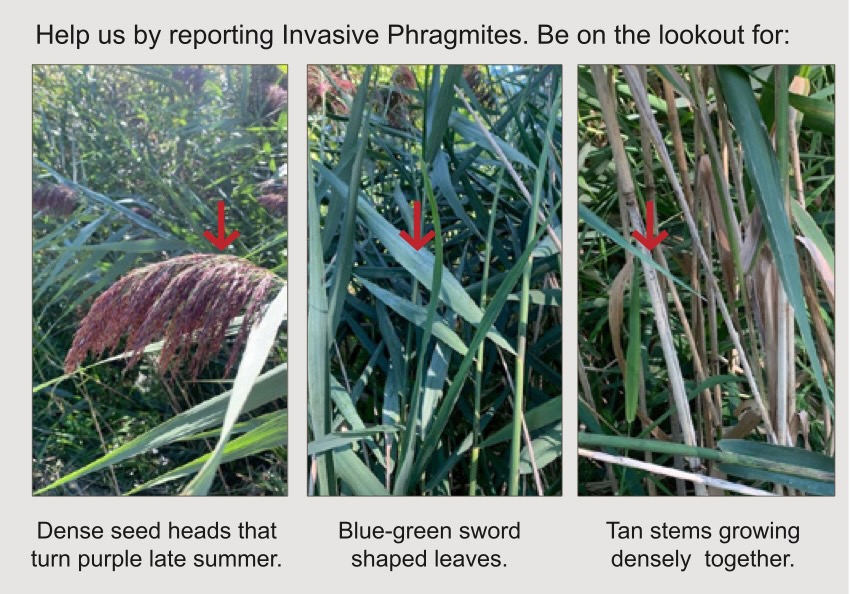
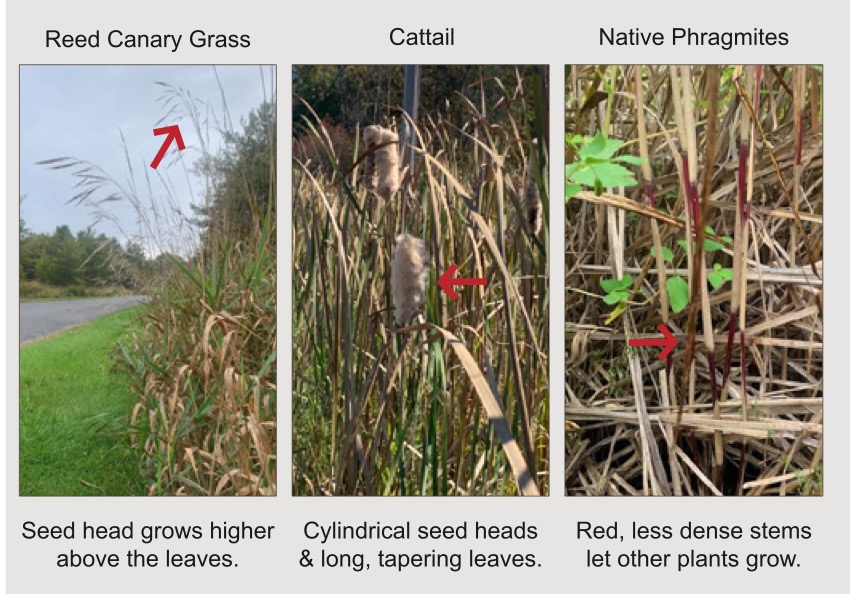
Invasive phragmites (above) vs common lookalikes (below)
PATHOGENS & FOREST PESTS
Along with the nine invasive species of concern in Muskoka (four terrestrial and five aquatic), there are several pathogens that have arrived in recent years. Most notable are Lyme disease and West Nile virus.
Read more
Forest pathogens cause defoliation, root decay and stem cankers that reduce the distribution of nutrients throughout the tree. The status of each, in brackets, is current as of December, 2025.
Beech Bark Disease (confirmed in Muskoka)
Butternut Canker (confirmed in Muskoka)
Dutch Elm Disease (confirmed in Muskoka)
Oak Wilt (assumed to be in Muskoka)
Sudden Oak Death (not currently in Ontario)
Thousand Cankers Disease (not currently in Ontario)
Beech Bark Disease (confirmed in Muskoka)
Butternut Canker (confirmed in Muskoka)
Dutch Elm Disease (confirmed in Muskoka)
Oak Wilt (assumed to be in Muskoka)
Sudden Oak Death (not currently in Ontario)
Thousand Cankers Disease (not currently in Ontario)
__________________________________________________________
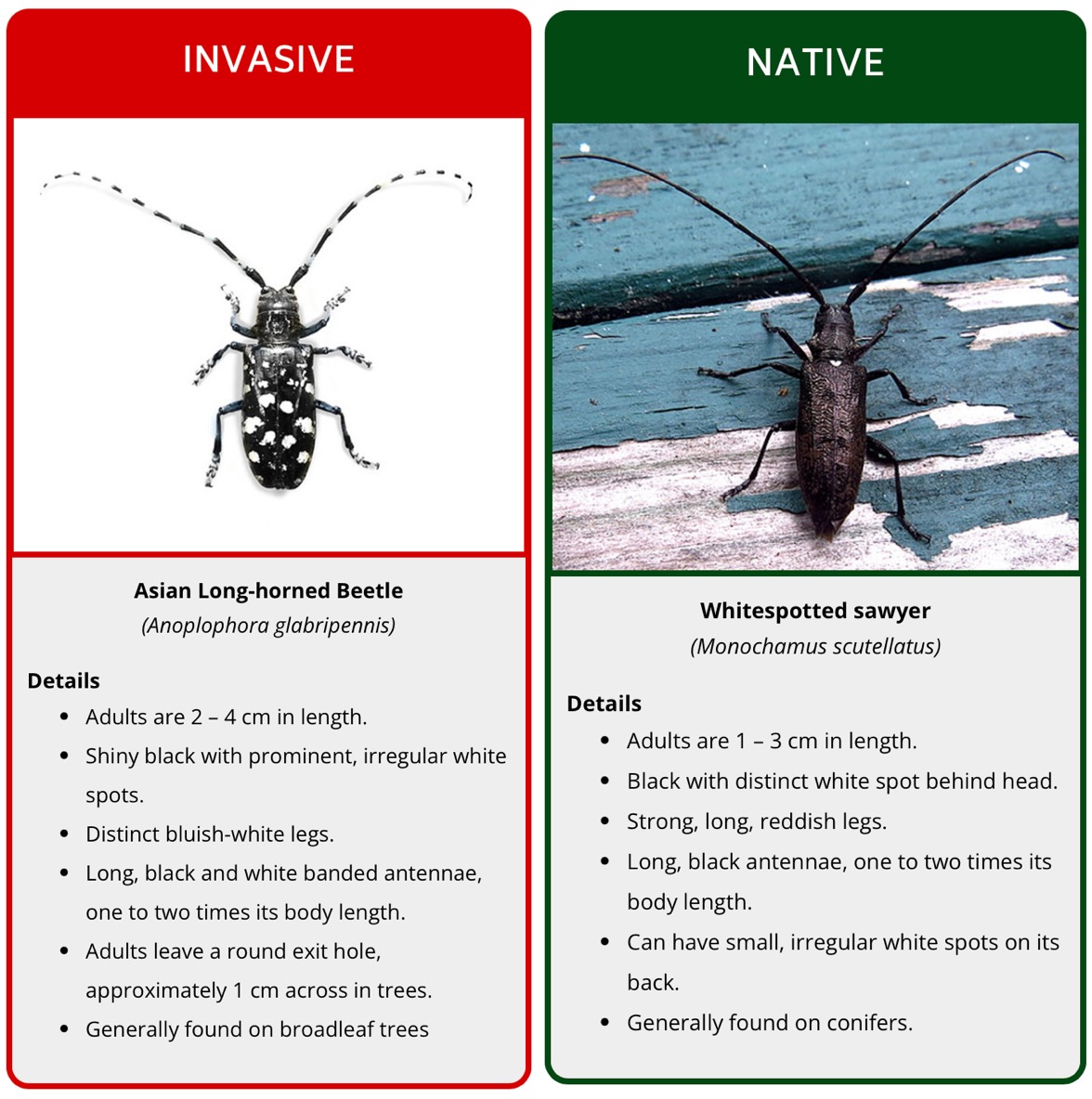
Forest pests, often introduced through wood packaging and movement of firewood, degrade wood quality and harm wildlife habitats. The status of each, in brackets, is current as of December, 2025.
Hemlock Woolly Adelgid (confirmed in Muskoka)
Invasive Earthworms (confirmed in Muskoka)
Mountain Pine Beetle (not yet confirmed in Muskoka)
Spongy Moth, formerly Gypsy Moth or LDD moth (confirmed in Muskoka)
Spotted Lanternfly (not yet confirmed in Muskoka)
> BUT... it's close. Spotted Lanternfly threatens many of our native tree species, including maples, poplars and pines. Ontario Parks is asking community scientists around the province to report sightings of the Tree of Heaven, an invasive tree native to China now widespread throughout Ontario, AND the primary host species for Spotted Lanternfly: https://blog.ontarioparks.ca/spotted-lanternfly-invasive/
Special note: While not yet confirmed in Muskoka, be alert for sightings of WILD PIGS. They are highly destructive. If spotted, email wildpigs@ontario.ca or call
WHAT CAN YOU DO?
There are many ways you can help prevent the introduction and spread of invasive species in Muskoka:
When hiking or camping
▪ Stay on the trail and keep your pet on a leash
▪ Check your hiking gear at the end of your outing for plants and mud that might be carrying invasive plant seeds
When riding ATVs or biking
▪Mud can carry seeds of invasive plants, such as Garlic Mustard and Dog-strangling Vine. Clean bikes, ATVs and trail equipment thoroughly before moving them to new locations.
Buy and burn local firewood
When hunting
▪ Inspect equipment and remove aquatic plants, animals, and mud that are attached to decoy lines or anchors
▪ Switch to elliptical, bulb shaped, or strap anchors on decoys, which avoid collecting submersed and floating aquatic plants
When gardening
▪ Dispose of invasive plants in the garbage. Do not put them in the compost
▪ Buy and plant native plant species from reputable garden suppliers
When hunting
▪ Inspect equipment and remove aquatic plants, animals, and mud that are attached to decoy lines or anchors
▪ Switch to elliptical, bulb shaped, or strap anchors on decoys, which avoid collecting submersed and floating aquatic plants
When gardening
▪ Dispose of invasive plants in the garbage. Do not put them in the compost
▪ Buy and plant native plant species from reputable garden suppliers
Buyer Beware
Imported golden oyster mushrooms have spread from farms and home-grow kits into the wild, where they threaten native species.
Read more about The Great Mushroom Escape