Beetles: Nature’s Recyclers ♻️ Predators 🐅 and Occasional Pests 😭
BEETLES MAKE UP THE LARGEST GROUP OF INSECTS IN THE WORLD, WITH MORE THAN 8,000 SPECIES OF BEETLES IN CANADA ALONE.
WHO KNOWS HOW MANY ARE STILL WAITING TO BE DISCOVERED!
Beetles live almost everywhere: Forests, wetlands, fields, lakeshores, gardens, in the water and even in our homes. Some beetles are colourful and striking, while others are small and easily overlooked. But regardless of their appearance, beetles play critical roles in maintaining healthy ecosystems.
What Makes a Beetle a Beetle?
Beetles are easy to recognize once you know what to look for. Their most distinctive feature is a pair of hard front wings called elytra, which form a protective shell over their delicate flight wings. This "armour" helps shield them from predators, harsh weather, and physical damage. Most beetles also share several other traits:
Beetles perform an astonishing variety of jobs in ecosystems.
Nature’s Clean-Up Crew
Many beetles feed on dead plants, decaying wood, animal remains, or fungi, helping recycle nutrients back into the soil. Without these decomposers, forests would quickly become buried in organic debris.
Pest Controllers
Some beetles are important predators. Ground beetles, tiger beetles, and lady beetles hunt aphids, caterpillars, and other insects that damage plants and crops. These natural hunters can significantly reduce pest populations in gardens and farms.
Pollinators
While bees, butterflies and flower flies often get the credit, some beetles (such as soft-winged flower, pollen or metallic wood-boring beetles) also help pollinate flowers as they feed on pollen or nectar.
Beetles themselves are an important food source for birds, amphibians, reptiles and mammals.
Small Insects, Big Impact
Beetles may be tiny, but their influence on ecosystems is enormous. While a few invasive species can cause serious damage, the vast majority of beetles are hardworking allies in maintaining healthy forests, lakeshores and gardens.
What Makes a Beetle a Beetle?
Beetles are easy to recognize once you know what to look for. Their most distinctive feature is a pair of hard front wings called elytra, which form a protective shell over their delicate flight wings. This "armour" helps shield them from predators, harsh weather, and physical damage. Most beetles also share several other traits:
- Chewing mouthparts
- Six legs and two antennae
- Strong jaws (mandibles)
- Larval stages (grubs)
Beetles perform an astonishing variety of jobs in ecosystems.
Nature’s Clean-Up Crew
Many beetles feed on dead plants, decaying wood, animal remains, or fungi, helping recycle nutrients back into the soil. Without these decomposers, forests would quickly become buried in organic debris.
Pest Controllers
Some beetles are important predators. Ground beetles, tiger beetles, and lady beetles hunt aphids, caterpillars, and other insects that damage plants and crops. These natural hunters can significantly reduce pest populations in gardens and farms.
Pollinators
While bees, butterflies and flower flies often get the credit, some beetles (such as soft-winged flower, pollen or metallic wood-boring beetles) also help pollinate flowers as they feed on pollen or nectar.
Preferences:
- Wide open flowers (generally cup or bowl-shaped) that allow easy access to their pollen
- Rotting logs, dead and dying trees, leaf litter, plant galls can provide egg-laying sites
- Good flower choices include aster, coneflower, goldenrod, milkweed.
Beetles themselves are an important food source for birds, amphibians, reptiles and mammals.
Small Insects, Big Impact
Beetles may be tiny, but their influence on ecosystems is enormous. While a few invasive species can cause serious damage, the vast majority of beetles are hardworking allies in maintaining healthy forests, lakeshores and gardens.
RESOURCES
Ut enim ad minim veniam, quis nostrud exercitation ullamco laboris nisi ut aliquip ex ea commodo consequat. Duis aute irure dolor in reprehenderit in voluptate velit esse cillum dolore eu fugiat nulla pariatur
- Coleoptera of Canada
- CWF: Bees and Other Pollinators
- Pest Hunters: Beneficial Predatory and Parasitic Insects
- 11 Ontario Insects That Are Beneficial To Your Garden
- CWF: Beneficial Insects
- iNaturalist - Beneficial Beetles
- Beneficial Beetles: 5 Types To Attract
BENEFICIAL BEETLES YOU MIGHT SEE IN ONTARIO
Many beetles are helpful neighbours in gardens and forests.
Lady beetles (ladybugs)
These familiar red-and-black insects are famous aphid hunters. Both adults and larvae feed on plant-damaging pests.
These familiar red-and-black insects are famous aphid hunters. Both adults and larvae feed on plant-damaging pests.
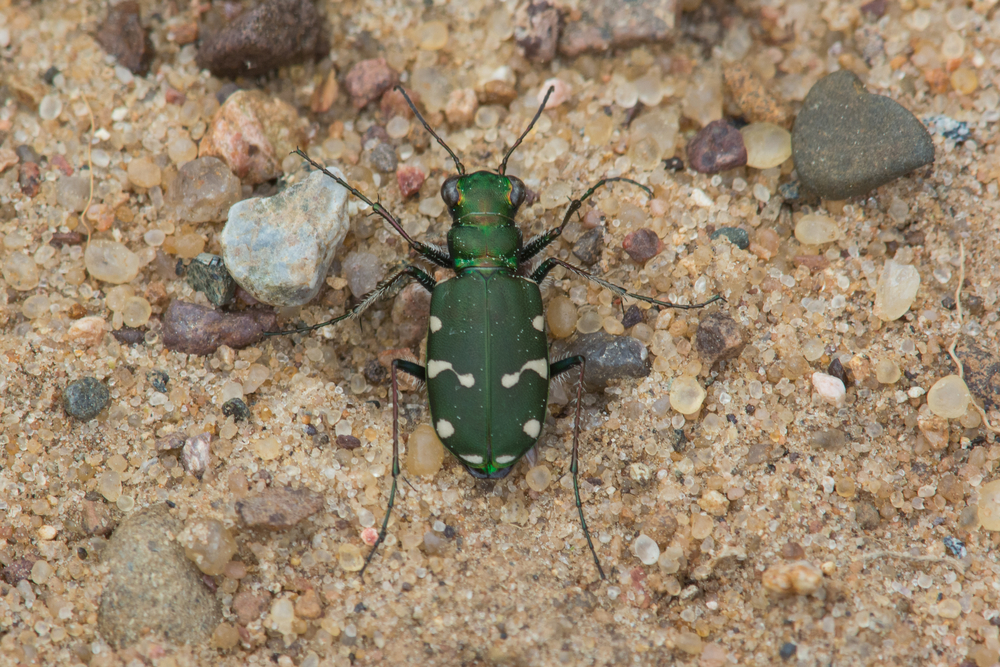
Tiger beetles
Tiger beetles are fast-running predators often seen on sandy trails and shorelines. Some species are among the fastest insects relative to body size. Some examples:
Tiger beetles are fast-running predators often seen on sandy trails and shorelines. Some species are among the fastest insects relative to body size. Some examples:
- Six-spotted Tiger Beetle
- Twelve-spotted Tiger Beetle
- Endangered: Northern Barrens Tiger Beetle
- Hairy-necked Tiger Beetle
- Punctured Tiger Beetle
Ground beetles
Night-active hunters that patrol soil and leaf litter. Ground beetles feed on slugs, caterpillars, and other small creatures. Some examples:
Night-active hunters that patrol soil and leaf litter. Ground beetles feed on slugs, caterpillars, and other small creatures. Some examples:
- Fiery Searcher
- Narrow-collared Snail-eating Beetle
- Pennsylvania Dingy Ground Beetle
- California Warrior Beetle
- Rain Beetle
- Long-necked Ground Beetle
Fireflies (lightning bugs)
Fireflies are actually beetles. These glowing insects use bioluminescence to communicate and attract mates. Together, these species provide natural pest control and contribute to biodiversity in forests and gardens.
Fireflies are actually beetles. These glowing insects use bioluminescence to communicate and attract mates. Together, these species provide natural pest control and contribute to biodiversity in forests and gardens.
Other Beneficial Beetles
- Soldier Beetles: Feed on aphids and caterpillars, and adults are pollinators
- Rove Beetles: Small, fast-moving beetles that consume maggots and mites
- Whirligig Beetles: Surface-dwelling aquatic beetles
WHEN BEETLES BECOME A PROBLEM
While many beetles are beneficial, a few species can cause significant damage, especially when they arrive from other parts of the world.
Emerald Ash Borer
The emerald ash borer is an invasive beetle that has killed millions of ash trees across North America. The larvae tunnel beneath the bark, disrupting the tree’s ability to move water and nutrients.
Invasive Species Centre: Emerald Ash Borer
Asian Long-Horned Beetle
Another invasive species, the Asian long-horned beetle, attacks hardwood trees such as maple, birch, and willow. Because Canada’s forests contain many of these trees, early detection and prevention are critical.
Ontario.ca: Asian Long-Horned Beetle
Other Invasive/Destructive Beetles
Emerald Ash Borer
The emerald ash borer is an invasive beetle that has killed millions of ash trees across North America. The larvae tunnel beneath the bark, disrupting the tree’s ability to move water and nutrients.
Invasive Species Centre: Emerald Ash Borer
Asian Long-Horned Beetle
Another invasive species, the Asian long-horned beetle, attacks hardwood trees such as maple, birch, and willow. Because Canada’s forests contain many of these trees, early detection and prevention are critical.
Ontario.ca: Asian Long-Horned Beetle
Other Invasive/Destructive Beetles
- Japanese Beetle
- Lily Leaf Beetle
- Pine Shoot Beetle
- Sirex Woodwasp (not a beetle, but kills pine trees in a similar fashion)
Agricultural Pests
Some beetles (such as Cucumber, Colorado Potato and Blister beetles) also damage crops, stored grains, fruit or wood products. These species can affect agriculture, forestry, and even homes.
Canada.ca: Agroforestry Diseases And Pests
Some beetles (such as Cucumber, Colorado Potato and Blister beetles) also damage crops, stored grains, fruit or wood products. These species can affect agriculture, forestry, and even homes.
Canada.ca: Agroforestry Diseases And Pests
FURTHER READING
- Proactive Stand Taken Against Ash-Killing Beetle
- Invasive Beetle Found In Muskoka And Kawartha Lakes
- Lake of Bays Heritage Foundation: Invasive Species
PRO TIP
Not sure if that bug is good or bad? Before you squish it, identify it using iNaturalist or the Seek By iNaturalist apps. Then, using your browser, ask "Is xxxx native to Muskoka" or "Is xxxx invasive" If so, squish away :-)
PROTECTING FORESTS FROM INVASIVE BEETLES
Invasive beetles often spread accidentally through human activity, especially through:
* Transporting firewood
* Moving untreated wood or lumber
* Shipping goods that contain insect larvae
* Transporting firewood
* Moving untreated wood or lumber
* Shipping goods that contain insect larvae
To help protect forests:
* Buy local firewood and burn it locally
* Report unusual insects or tree damage
* Support programs that monitor invasive species
* Buy local firewood and burn it locally
* Report unusual insects or tree damage
* Support programs that monitor invasive species
Early detection is one of the most effective ways to limit the spread of destructive beetles.
Visit our Invasive Species RESOURCES page for more information on reporting sightings.
Visit our Invasive Species RESOURCES page for more information on reporting sightings.