Dragonflies and Damselflies
Subtitle
ANCIENT FLIERS, SKILLED HUNTERS AND INDICATORS OF HEALTHY WATER
Dragonflies and damselflies belong to the insect order Odonata, a group that has been flying over wetlands, forests and fields for more than 300 million years.
Because their young develop in water, healthy lakes, ponds, marshes, bogs and slow-moving rivers provide ideal habitat.
Although closely related, dragonflies and damselflies can usually be told apart.
Dragonflies
A Life Between Water and Air
All dragonflies and damselflies begin life in water.
- Thicker, more robust bodies
- Wings held open horizontally when resting
- Hind wings broader at the base than front wings
- Very large eyes that usually touch at the top of the head
- Strong, direct, hovering flight
- Slender, delicate bodies
- Wings usually folded together over the abdomen when resting
- Front and hind wings similar in shape
- Eyes clearly separated
- Softer, fluttering flight
A Life Between Water and Air
All dragonflies and damselflies begin life in water.
1. Eggs are laid in or near water.
2. They hatch into aquatic young called nymphs.
3. Nymphs live underwater for months, sometimes several years, shedding their skin repeatedly as they grow.
4. When fully developed, the nymph crawls out of the water, splits its skin and emerges as a winged adult.
2. They hatch into aquatic young called nymphs.
3. Nymphs live underwater for months, sometimes several years, shedding their skin repeatedly as they grow.
4. When fully developed, the nymph crawls out of the water, splits its skin and emerges as a winged adult.
Nymphs have no wings and live underwater, where they are formidable predators. They feed on aquatic insects, tadpoles, small fish and other invertebrates.
Most species survive winter underwater as nymphs beneath the ice. Some overwinter as eggs laid inside plant stems above the waterline. A few species, such as the Common Green Darner are long-distance migrants, flying north in spring from the southern United States or beyond, with the next generation returning south in late summer or fall.
Masters of Flight
Dragonflies are among the most accomplished fliers in the insect world. Their two pairs of wings move independently, allowing them to:
Do They Control Mosquitoes?
Yes. Yes, they do.
Dragonflies are among the most accomplished fliers in the insect world. Their two pairs of wings move independently, allowing them to:
- Hover in place
- Glide effortlessly
- Change direction instantly
- Fly backward
- Capture prey mid-air
Do They Control Mosquitoes?
Yes. Yes, they do.
Dragonflies are natural mosquito predator. The can eat hundreds of mosquitos in a day! In fact, mosquitos make up about 90 per cent of a dragonfly’s diet.
AND they are effective at controlling mosquitoes at two stages: In the air, as adults, and in the water, when dragonfly larvae prey on mosquito larvae with even greater effect.
If you're thinking about using 'safe' pesticides, think again... they are extremely toxic and deadly to beneficial insects, benthic invertebrates and fish. Since Dragonflies and Damselflies live up to three years in the water in their nymph stage, pesticides that get into the water are killing future natural predators!
When dragonflies hover over shoreline vegetation or patrol above open water, they signal that a complex, functioning ecosystem is at work. They are not just summer visitors; they are ancient, intricate and essential participants in the natural world.
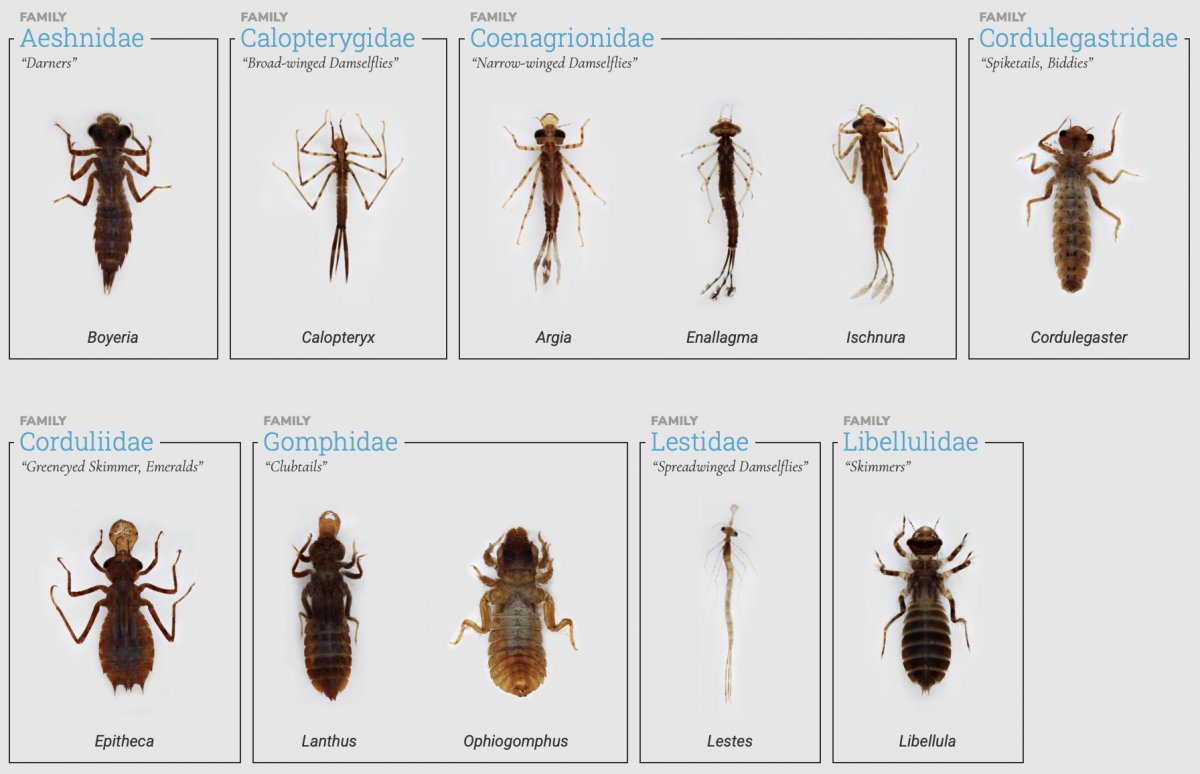
If you've ever seen these carcasses clinging to your house or around your property, you might think something out of a horror movie crawled out of it 🫣. But they're really the shells of dragonfly larva. It's hard to believe these bugs turn into a beautiful dragonfly, isn't it!! And this is yet another reason NOT to dredge the lake bed - the muck contains lots of beneficial insects in their larval stage.
Ecological Importance
In water:
Climate and Change
Dragonflies are also helping scientists track climate change. They are mobile, relatively easy to observe and sensitive to temperature shifts. Researchers have documented northward range expansions of some species and declines in others, particularly those adapted to cooler habitats. Watching dragonflies can provide meaningful data about environmental change over time.
We can do our part to help track their populations and trends by reporting sightings. All you have to do is take a picture and submit your observation(s) online or via app:
In water:
- Nymphs are often top predators in fish-free ponds.
- They shape aquatic insect communities.
- Their presence can signal good water quality.
- Adults consume flies, mosquitoes and other insects.
- Emerging adults transfer nutrients and energy from water to surrounding forests and fields.
Climate and Change
Dragonflies are also helping scientists track climate change. They are mobile, relatively easy to observe and sensitive to temperature shifts. Researchers have documented northward range expansions of some species and declines in others, particularly those adapted to cooler habitats. Watching dragonflies can provide meaningful data about environmental change over time.
We can do our part to help track their populations and trends by reporting sightings. All you have to do is take a picture and submit your observation(s) online or via app: