Short-Term Rental Accommodations
What cottage owners and renters need to know
What is a Short-Term Rental?
In Ontario, a short-term rental is generally defined as a dwelling (or part of a dwelling) rented for less than 30 consecutive days. Municipalities, rather than the province, set the specific rules. This means requirements can vary significantly from one township to another.
Lake of Bays Regulations
Why Regulations Exist
The rapid growth of short-term rentals has raised concerns in many communities, leading to increased oversight.
The Township of Lake of Bays has implemented a structured licensing system to manage short-term rentals responsibly.
Key requirements include:
- Mandatory licensing: All short-term rentals must obtain a licence to operate legally.
- Compliance with by-laws: Properties must follow all municipal by-laws related to safety, property standards, and noise (whether licensed or not)
- Defined occupancy limits: Maximum occupancy is regulated, typically based on the number of bedrooms and septic capacity.
- Parking and property standards: Adequate off-street parking and proper maintenance are required.
- Code of conduct: Owners must ensure renters follow rules related to noise, garbage, and respectful behaviour.
Taxes and Economic Impact
Short-term rentals contribute to the local economy, but they are also subject to taxation:
Short-term rentals contribute to the local economy, but they are also subject to taxation:
- A Municipal Accommodation Tax (MAT) applies to stays under 30 days
- In Lake of Bays, this tax is currently 4%, paid by visitors
Why Regulations Exist
The rapid growth of short-term rentals has raised concerns in many communities, leading to increased oversight.
Common concerns include:
- Noise and neighbourhood disruption
- Waste management and environmental impacts
- Pressure on local housing supply
- Safety and emergency response challenges
Resources
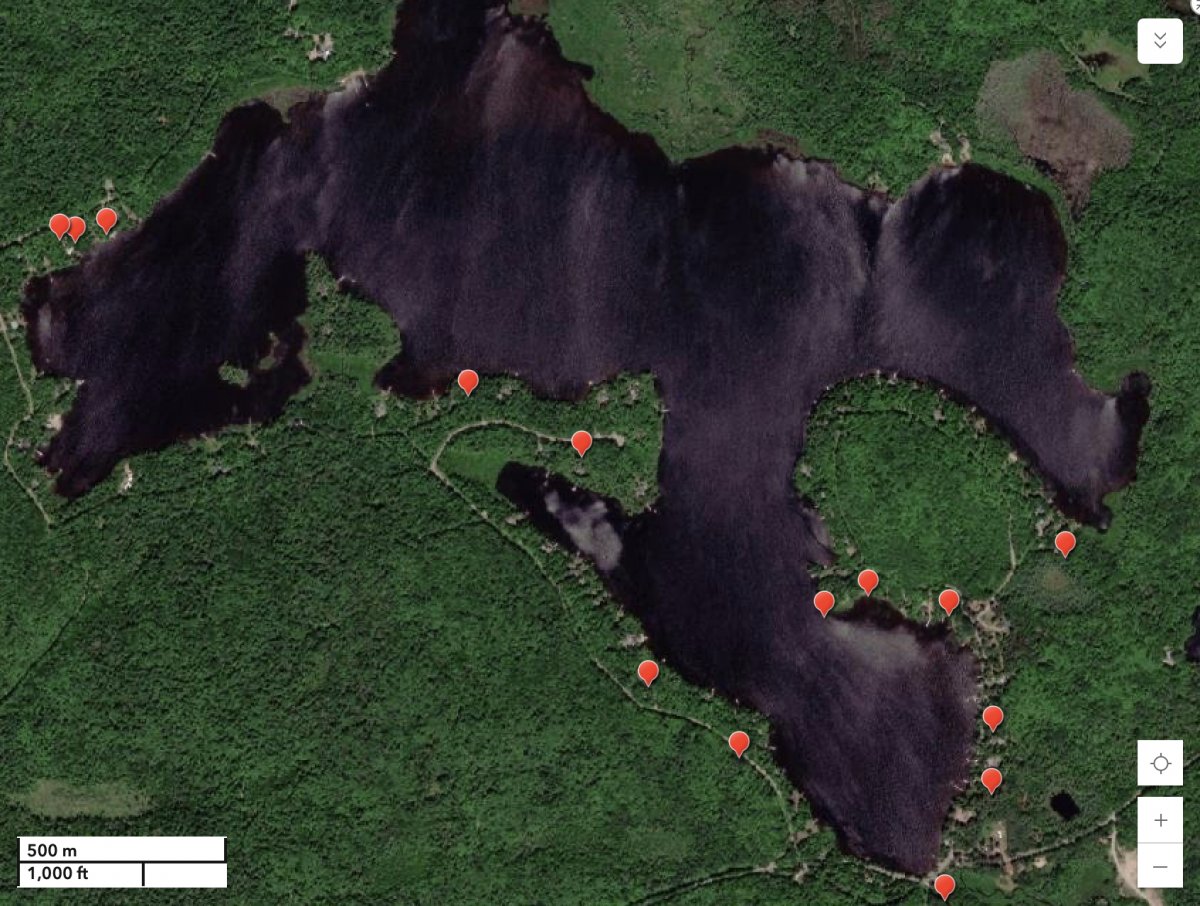
Click on the ‘find my location’ icon (directly above the + - buttons) if you’re already at your cottage. If you are not on Echo Lake, you’ll need to click the magnifying glass to do a search.
Once you're focussed on Echo Lake, there is a clickable set of addresses, or you can click on any of the red buttons on the map and it will show you all the contact details.
Organizations such as the Federation of Ontario Cottagers’ Associations emphasize that responsible rental practices benefit everyone.
Best practices include:
- Clearly communicating house rules to guests
- Providing a local emergency contact
- Managing occupancy limits responsibly
- Ensuring proper waste disposal and recycling
- Respecting neighbours and the natural environment