STOP the Spread of Aquatic Invasive Species
CLEAN & INSPECT, DRAIN, AND DRY BEFORE YOU LEAVE THE WATER
When and Why is Decontamination Needed
The risk of spreading invasive species to other areas is much greater after being in an invaded area.
This additional step of Decontamination follows Clean, Drain, Dry applies when items have been removed from an area known to have Aquatic Invasive Species (AIS), such as a control zone, or in other areas with posted decontamination requirements.
Decontamination steps are discussed further below.
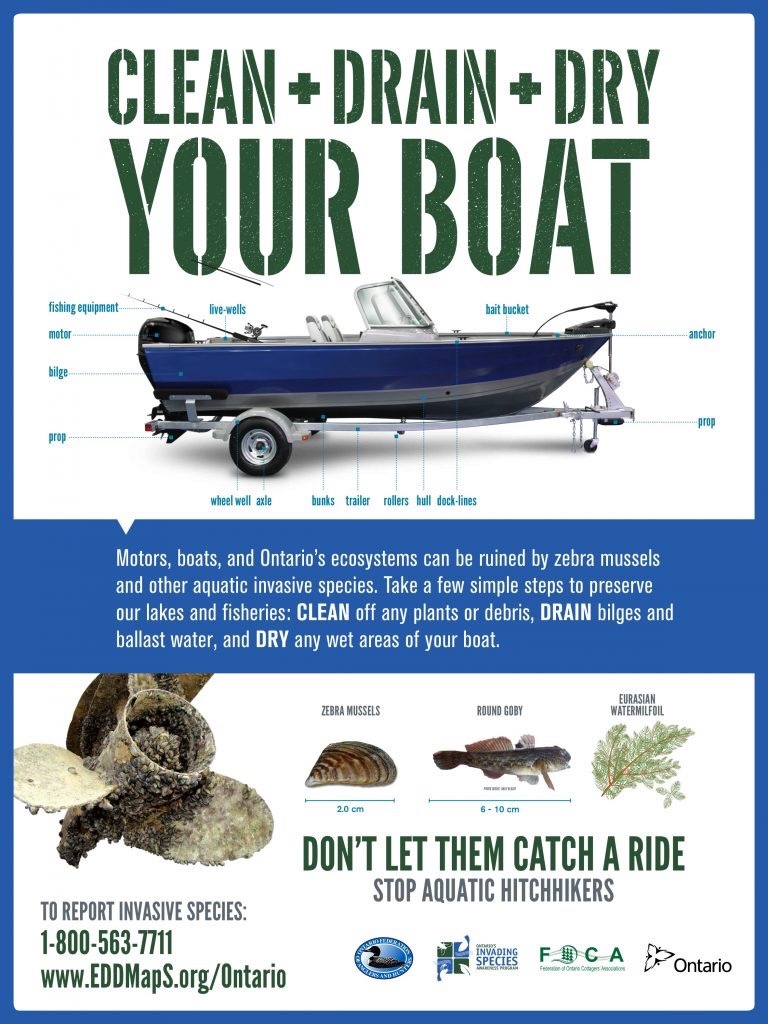
Some aquatic invasive species can survive up to two weeks out of water and not every invader attached to your boat, bike or ATV can be seen with the naked eye.
If you are a boater, you have an important role to play in preventing the spread of aquatic invasive species.
In Ontario, it's the law: you must clean, drain and dry your boat before moving it between lakes or rivers.
Important Caution
- Avoid public car washes if invasive species are present in the area, as wastewater can enter municipal drainage systems and spread contaminants.
- Motorboats: Flush the motor according to the owner’s manual.
- Jet boats & personal watercraft (PWCs): Clean the hull, trailer, intake grate, and steering nozzle. Run the engine for 5–10 seconds to blow out excess water and vegetation.
- Sailboats: Clean centerboards, bilge board wells, rudder posts, trailers, and related equipment.
- Paddlers: Clean non-motorized watercraft, paddles, ropes, anchors, floats, dip nets, and trailers.
- Anglers: Clean waders, footwear, fishing lines, ropes, anchors, bait traps, downrigger cables, and field gear. Scrub footwear thoroughly. Use non-felt-soled boots to further reduce risk.
Aquatic invasive species spread easily through boats, trailers, and recreational gear. Whether you are boating, paddling, or fishing, following the Clean, Drain, and Dry process before leaving a water access point is one of the most effective ways to protect lakes and rivers.
1. Clean and Inspect
Before leaving the water access area, thoroughly inspect your watercraft, trailer, and all gear (ropes, anchors, fishing equipment, paddles, and footwear).
Remove Debris
Drying is critical, as many invasive species are microscopic and survive in damp conditions.
1. Clean and Inspect
Before leaving the water access area, thoroughly inspect your watercraft, trailer, and all gear (ropes, anchors, fishing equipment, paddles, and footwear).
WHY: To remove AIS itself or substances where AIS can hide.
WHEN: Before removing watercraft or water-related equipment from the shore of a water body.
Remove Debris
- Manually remove all visible plants, animals, and mud.
- Dispose of debris on dry land or in a trash bin, well away from water bodies and storm drains.
- Use a stiff brush and water to scrub the hull and any surface that contacted the water.
- Pay close attention to cracks, crevices, grainy surfaces, trailer pads, propellers, anchor lines, intake grates, and rudder or centerboard areas, where organisms—such as invasive mussels—can hide.
- When possible, rinse watercraft, trailers, and equipment using:
- High-pressure water (at least 1,000 psi), or
- Hot water:
- 60°C (140°F) for at least 10 seconds, or
- 50°C (122°F) for at least 2 minutes
These methods can kill many invasive organisms.
WHY: This is where hard-to-see and microscopic AIS can live and would not be otherwise removed by cleaning. To facilitate draining:
* Remove watercraft drain plugs and keep them out when transporting watercraft overland.
* Raise, lower and move the outboard motor from side to side.
WHEN: Before removing watercraft or water-related equipment from the shore of a water body.
Drain all standing water before leaving the access area.
- Pull all drain plugs, including those for bilges, livewells, ballast tanks, and other compartments. Transporting a watercraft with plugs in place is illegal in many regions.
- Drain the motor by lowering it fully and tipping it side to side.
- Empty all containers, including bait buckets, coolers, life jackets, sponges, and bailers.
- Tilt or invert non-motorized craft such as canoes, kayaks, and paddleboards to remove all water.
- When keeping live bait during transport, replace water with spring water or dechlorinated tap water before departure.
WHY: The action of wiping down internal watercraft compartments and surfaces of gear can help crush any AIS and remove trace habitats that would not be otherwise removed by cleaning or draining steps further decreasing the chance of their survival.
WHEN: For watercraft - the interior compartments, or accessible spaces where water can accumulate (e.g., transom area) must be dried before leaving the shore of a water body. For water-related equipment - it must be dried completely before it's used in a different water body (i.e., doesn't need to be dried before leaving the shore of the water body).
Drying is critical, as many invasive species are microscopic and survive in damp conditions.
- Air dry watercraft and equipment with all compartments open:
- About 5 days in hot, dry conditions
- 10–30 days in cool or damp conditions
- Towel dry or sponge all surfaces to speed up drying and reach hidden areas.
Clean, Drain and Dry - Why not just decontaminate?
Decontamination is not always part of the standard Clean, Drain, Dry routine because basic physical removal and drying are usually universally effective for everyday use, whereas active decontamination is reserved for high-risk situations or known infested waters.
As always, before transporting your boat or watercraft:
- CLEAN - Remove all aquatic plants, animals and algae from your watercraft, trailer and equipment.
- DRAIN - Open or remove drain plugs and drain all water from your watercraft and equipment.
- DRY - Make sure everything is completely dry before entering another waterbody.
Then If Decontamination Is Required
Use extremely hot water (minimum of 60° C or 140° F) to kill any Aquatic Invasive Species. Hot-water decontamination should be done on land, away from another waterbody and away from drainage systems such as storm sewers and roadside ditches.
After hot-water treatment, high-pressure spraying can help remove remaining mussels or other aquatic invasive species.
Do not use soap or chemicals. They are ineffective against zebra mussels and may harm the aquatic environment.
If your equipment cannot be completely dried before entering another waterbody, it may need to be professionally decontaminated.
Use extremely hot water (minimum of 60° C or 140° F) to kill any Aquatic Invasive Species. Hot-water decontamination should be done on land, away from another waterbody and away from drainage systems such as storm sewers and roadside ditches.
After hot-water treatment, high-pressure spraying can help remove remaining mussels or other aquatic invasive species.
Do not use soap or chemicals. They are ineffective against zebra mussels and may harm the aquatic environment.
If your equipment cannot be completely dried before entering another waterbody, it may need to be professionally decontaminated.
Important
Do not use a car wash for decontamination. The water temperatures may be inadequate, and contaminated water could potentially enter drainage systems.
Do not use a car wash for decontamination. The water temperatures may be inadequate, and contaminated water could potentially enter drainage systems.
Always check the owner's manual and manufacturer's specifications before using hot water or high pressure on your equipment. If equipment cannot be completely dried before entering another waterbody, it may need to be decontaminated using an approved method or taken to a provincially operated Watercraft Inspection Station for hot-water decontamination.
Optional: Chemical Decontamination
If time is limited:
- Use a bleach solution (20 mL household bleach per 1 L of water).
- Wash down surfaces and soak removable equipment for 30 minutes, then rinse thoroughly with clean water.
- Dispose of unwanted bait, fish parts, and packing materials in the trash.
- Never dump bait, fish, or other organisms into water or onto land.
- Clean fish for consumption or taxidermy at designated fish-cleaning stations or place them on ice.
Protect Our Waters
By consistently cleaning, inspecting, draining, and drying your equipment, you play a vital role in protecting local ecosystems from harmful invasive species. For detailed guidance on regional regulations and high-risk species, consult these resources:
- Pathways of Spread: Invasive Species Centre
- The Ontario government publishes Invasive Species Action Plans for Anglers, Boaters, Cottagers, Gardeners and Hikers: Ontario’s Invasive Species Action Plans.
- Learn how to ID non-native and native species: Underwater Plants Guide
- Ontario has rules to help stop the spread and protect our natural environment: Managing invasive species in Ontario
- What you need to know about Clean, Drain, Dry in Ontario
- Clean Marine Program: Protecting Ontario's Waterways