Invasive Plants & Species - Aquatic
Nine invasive species of particular concern have been identified in the Muskoka watersheds: Five of them are aquatic.
Data on invasive species distribution is sparse and biased due to heavy reliance on citizen reporting. More reports are made in areas most frequented by people, thus a region-wide analysis is difficult. The effective management of invasive species, like that of species at risk, depends on sightings being reported. If you find an invasive species (whether terrestrial, pathogenic or aquatic), report it:
- Invading Species hotline at 1-800-563-7711
- By email: info@invadingspecies.com
- Or EDDMapS.org available via web browser, or download the mobile app.
- iNaturalist Invasive Species In Ontario Project -- This project is intended to complement the citizen science aspect of EDDMapS and aid in collecting point observations from scientists on-the-ground. Observations entered into this project will be reviewed by in-house experts, and then qualifying points will be added to Ontario's EDDMapS database. Available via web browser, or download the mobile app.
it just means it won't be eligible for 'research grade.'
PLANTS
Invasive aquatic plants affect recreational activities, displace native vegetation, slow down water flow, and alter oxygen levels. The status of each, in brackets, is current as of December, 2025.
Brazilian Elodea (not yet confirmed in Muskoka)
Eurasian Water-Milfoil (confirmed in Muskoka)
European Frog-bit (confirmed in Muskoka)
European Water Chestnut (not yet confirmed in Muskoka)
Fanwort (not yet confirmed in Muskoka)
Floating Primrose-Willow (not yet confirmed in Muskoka)
Flowering Rush (confirmed in Muskoka)
Hydrilla (not yet confirmed in Muskoka)
Oxygen Weed (not currently in Ontario)
Parrot Feather (not yet confirmed in Muskoka)
Starry Stonewort (not yet confirmed in Muskoka)
Water Fern (not yet confirmed in Muskoka)
Water Hyacinth (not yet confirmed in Muskoka)
Water Lettuce (not yet confirmed in Muskoka)
Water Soldier (not yet confirmed in Muskoka)
Watermoss (not yet confirmed in Muskoka)
Yellow Floating-heart (not yet confirmed in Muskoka)
Yellow Iris (confirmed in Muskoka)
FISH
Invasive fish species compete with native fishes for food and habitat, altering food webs, and preying on sport fish eggs and larvae populations.
Eurasian Ruffe (not yet confirmed in Muskoka)
Goldfish (confirmed in Muskoka)
Ide (not yet in Canada)
Invasive Carps (not yet confirmed in Muskoka)
Northern Snakehead (not yet confirmed in Muskoka)
Prussian Carp (not yet confirmed in Muskoka)
Rainbow Smelt (confirmed in Muskoka)
Red Shiner (not yet confirmed in Muskoka)
Round Goby (confirmed in Muskoka)
Rudd (not yet confirmed in Muskoka)
Sea Lamprey (confirmed in Muskoka)
Stone Moroko (not yet in North America)
Tench (not yet confirmed in Muskoka)
Tubenose Goby (not yet confirmed in Muskoka)
Wels Catfish (not yet in North America)
INVERTEBRATES
Invasive invertebrates can be crayfish, snails, mussels, clams, waterfleas, or mysid that impact our aquatic ecosystems by competing with native species for resources, such as food and habitat, and can destroy native fish spawning habitats.
Asian Clam (not yet confirmed in Muskoka)
Bloody Red Shrimp (not yet confirmed in Muskoka)
Common Yabby (not yet confirmed in Muskoka)
Bloody Red Shrimp (not yet confirmed in Muskoka)
Common Yabby (not yet confirmed in Muskoka)
Golden Mussel (not yet in North America)
Invasive Snails * (confirmed in Muskoka)
Killer Shrimp (not yet confirmed in Muskoka)
Marbled Crayfish (not yet confirmed in Muskoka)
Red Swamp Crayfish (not yet confirmed in Muskoka)
Rusty Crayfish (confirmed in Muskoka)
Signal Crayfish (not yet confirmed in Muskoka)
Fishhook Waterflea (not yet confirmed in Muskoka)
White River Crayfish (confirmed in Muskoka)
Zebra and Quagga Mussels (confirmed in Muskoka)
Spiny Waterflea (confirmed in Muskoka)
> Learn how to identify these invasive pests and prevent them from destroying
WHAT CAN YOU DO?
When boating or fishing
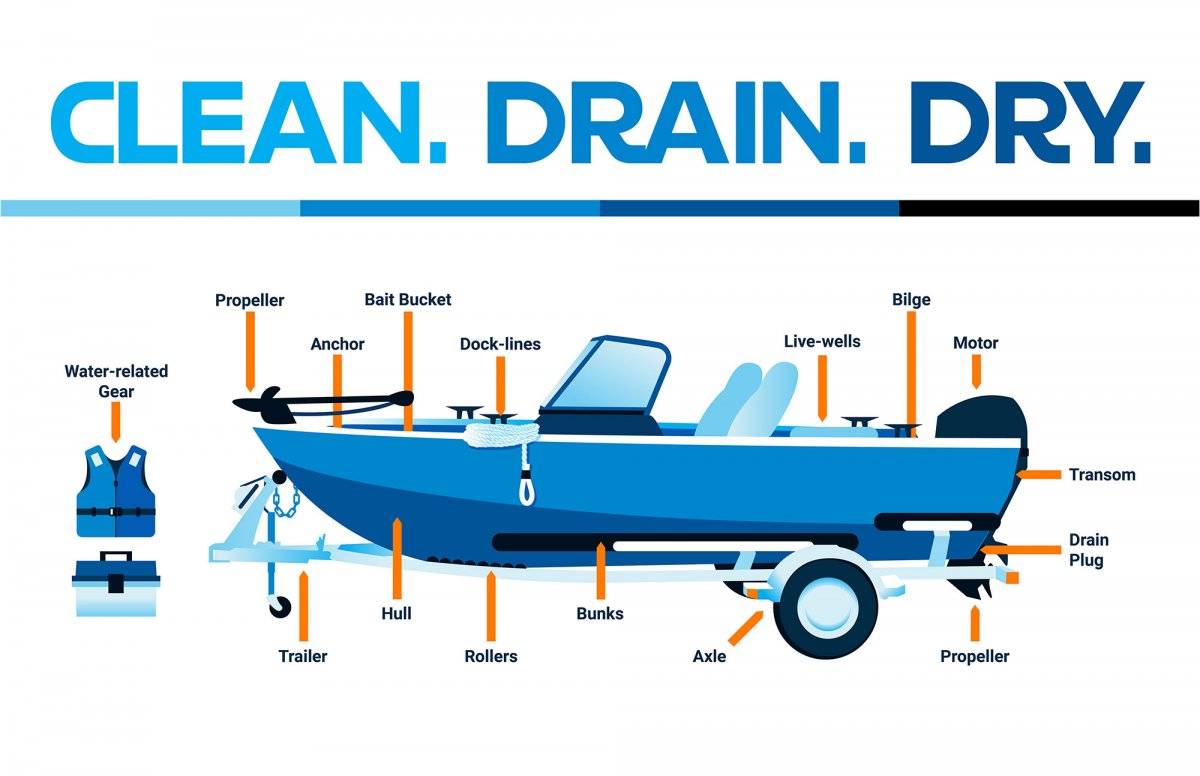
▪ Clean, drain and dry your boat each time you leave a lake (it's the law)
▪ Never move live fish from one waterbody to another
▪ Never dump your extra bait in the water.
When fishing
▪ Inspect equipment and remove aquatic plants, animals, and mud that are attached to decoy lines or anchors
▪ Switch to elliptical, bulb shaped, or strap anchors on decoys, which avoid collecting submersed and floating aquatic plants
When fishing
▪ Inspect equipment and remove aquatic plants, animals, and mud that are attached to decoy lines or anchors
▪ Switch to elliptical, bulb shaped, or strap anchors on decoys, which avoid collecting submersed and floating aquatic plants