Why Moths Matter — And How Simple Shoreline Choices Can Help
The following was taken from a webinar called "Moths in our Midst: What They Do and Why It Matters" hosted by the Canadian Wildlife Federation
When most people think of moths, a few familiar images come to mind: A moth fluttering toward a porch light at the cottage, or one chewing holes in clothing. But these stereotypes miss the bigger picture. Moths are among the most diverse, ecologically important, and misunderstood creatures in our landscapes. If we shift our thinking from moths as pests to moths as biodiversity, we begin to see how deeply they support healthy ecosystems — especially in our own yards and communities.
Moths as Pollinators — Often at Night
Bees and butterflies tend to get the credit for pollination, but moths play a significant and often overlooked role, especially after dark. Many plants rely on moths to move pollen between flowers. Some open only in the evening, emit fragrance at night, or have pale colours that are easier to see in low light. Evening primrose is a classic example. Research increasingly shows that moths may contribute more to pollination, including some crops, than previously recognized.
Caterpillars — The Foundation of Food Webs
Caterpillars feed on an astonishing range of materials:
Pests Are the Exception, Not the Rule
A small number of moth species damage crops or fabrics—but they represent well under one percent of all moths. The vast majority never interact with humans at all. They quietly recycle nutrients, support wildlife, pollinate plants, and stabilize ecosystems.
How Moths Survive Winter
Moths use several strategies to make it through winter:
Habitat Matters — Why “Leave the Leaves” Works
Dead Stems Are Not Dead Space
Many insects overwinter inside hollow or pithy plant stems. Galls, such as those found on goldenrod, are often reused by multiple species over time. What may look untidy to us functions as shelter in nature.
Bees and butterflies tend to get the credit for pollination, but moths play a significant and often overlooked role, especially after dark. Many plants rely on moths to move pollen between flowers. Some open only in the evening, emit fragrance at night, or have pale colours that are easier to see in low light. Evening primrose is a classic example. Research increasingly shows that moths may contribute more to pollination, including some crops, than previously recognized.
Caterpillars — The Foundation of Food Webs
Caterpillars feed on an astonishing range of materials:
- Leaves, flowers, seeds
- Roots and stems
- Lichens and fungi
- Leaf litter and decaying wood
- Aquatic plants
- Even algae on buildings
Pests Are the Exception, Not the Rule
A small number of moth species damage crops or fabrics—but they represent well under one percent of all moths. The vast majority never interact with humans at all. They quietly recycle nutrients, support wildlife, pollinate plants, and stabilize ecosystems.
How Moths Survive Winter
Moths use several strategies to make it through winter:
- Many overwinter as pupae in soil or leaf litter
- Others overwinter as caterpillars, protected by snow and debris
- Some survive as eggs, and a small number as adults
Habitat Matters — Why “Leave the Leaves” Works
One of the simplest and most effective ways to help moths is to leave some leaves and plant material where they fall. Leaf litter, fallen stems, and natural debris provide:
- Insulation from cold
- Protection from predators
- Moisture regulation
- Closely cut lawns
- Concrete or stone
- Bare, exposed soil
Dead Stems Are Not Dead Space
Many insects overwinter inside hollow or pithy plant stems. Galls, such as those found on goldenrod, are often reused by multiple species over time. What may look untidy to us functions as shelter in nature.
A Simple Way to Explain Why Moths Matter
Butterflies are just moths that aren’t afraid of the dark. Moths do the same jobs — just mostly at night.
Why This Matters for Echo Lake
Moths are not background noise in nature. They are ancient, diverse, and essential. What helps moths is usually:
Butterflies are just moths that aren’t afraid of the dark. Moths do the same jobs — just mostly at night.
Why This Matters for Echo Lake
Moths are not background noise in nature. They are ancient, diverse, and essential. What helps moths is usually:
- Simple
- Low‑effort
- Free
- Better for birds, fish, soil, and water quality
Native Plants — The Single Most Important Choice
Moths have evolved alongside specific plants over thousands, sometimes millions, of years. Most cannot complete their life cycle on ornamental or non‑native species.They do not thrive on hostas. They NEED native plants. And you do not need to replace your entire landscape. Starting with just a few native plants is enough.
Trees That Support the Most Moths
If space allows, native trees and shrubs provide the greatest ecological return.
Flowering Shrubs — Two Benefits in One
Trees That Support the Most Moths
If space allows, native trees and shrubs provide the greatest ecological return.
- Oaks (the single highest‑value group)
- Cherries (Prunus species)
- Willows
- Poplars
- Birches
- Pines
- Maples
- Basswood
- Ash
Flowering Shrubs — Two Benefits in One
Native flowering shrubs provide:
- Nectar for adult pollinators
- Food for caterpillars
- Rose family (cherries, serviceberries, dogwoods)
- Viburnums
- Elderberries
- Blueberries
- New Jersey tea (Ceanothus)
Value is not limited to trees.
- Asters, legumes, and mint family plants provide long‑season resources
- Native tall grasses support insects that feed only on grasses
- Evening primrose is a standout: Hardy, low‑maintenance, and used by many moth species and birds
Invasive Plants Don’t Replace Native Habitat
Invasive species such as European buckthorn can dominate landscapes while supporting very few native insects. Even when a handful of moths use them, they cannot replace native plant communities. Restoring native plants allows entire food webs to recover.
If You Plant It, They Will Come
Moths are excellent at finding habitat. New species often appear years after planting, sometimes unnoticed until late in the season. They fly. They search. They respond quickly when resources return.
You Don’t Have to Do Everything
Helping moths does not require perfection. Even small actions matter:
- Stop mowing one patch of lawn
- Leave leaves under trees
- Delay cutting stems until spring
- Avoid sealing surfaces
Where Have Large Moths Gone?
The threats to butterflies have caught the public’s attention, particularly because of the declines in monarch butterflies. Moths, which are by far the largest part of the order Lepidoptera, are also experiencing declines, but their plight is less well known. Since most moth species are nocturnal, they are not easily seen except when they are attracted to lights.
Over the past 30 years, there has been a marked decline in the number of moths, particularly the larger moths, such as sphinxes and giant silks.
The importance of moths to the ecosystem cannot be overstated. They are critical food for a range of species, from bats to songbirds to amphibians. Moths are also pollinators and contribute significantly to overall biodiversity.
The causes of moth declines are not clear, but a combination of factors is probably at play. With growing light pollution, moths drawn to lights become susceptible to predators. The bacterium Bacillus thuringiensis (commonly known as “Bt”), which farmers spray aerially to control spongy moths, tent caterpillars or spruce budworms, also kills any lepidopterans in the larval stage.
Additionally, Bt has been incorporated into genetically modified corn to prevent caterpillars from decimating crops.
Invasive plants that displace native plants often show minimal insect damage, which indicates that nothing is eating them. The loss of native plants in turn affects moth caterpillars that depend on them. Whatever its causes, the recent trend in moth numbers is another case of biodiversity loss of a largely overlooked but important group of organisms.
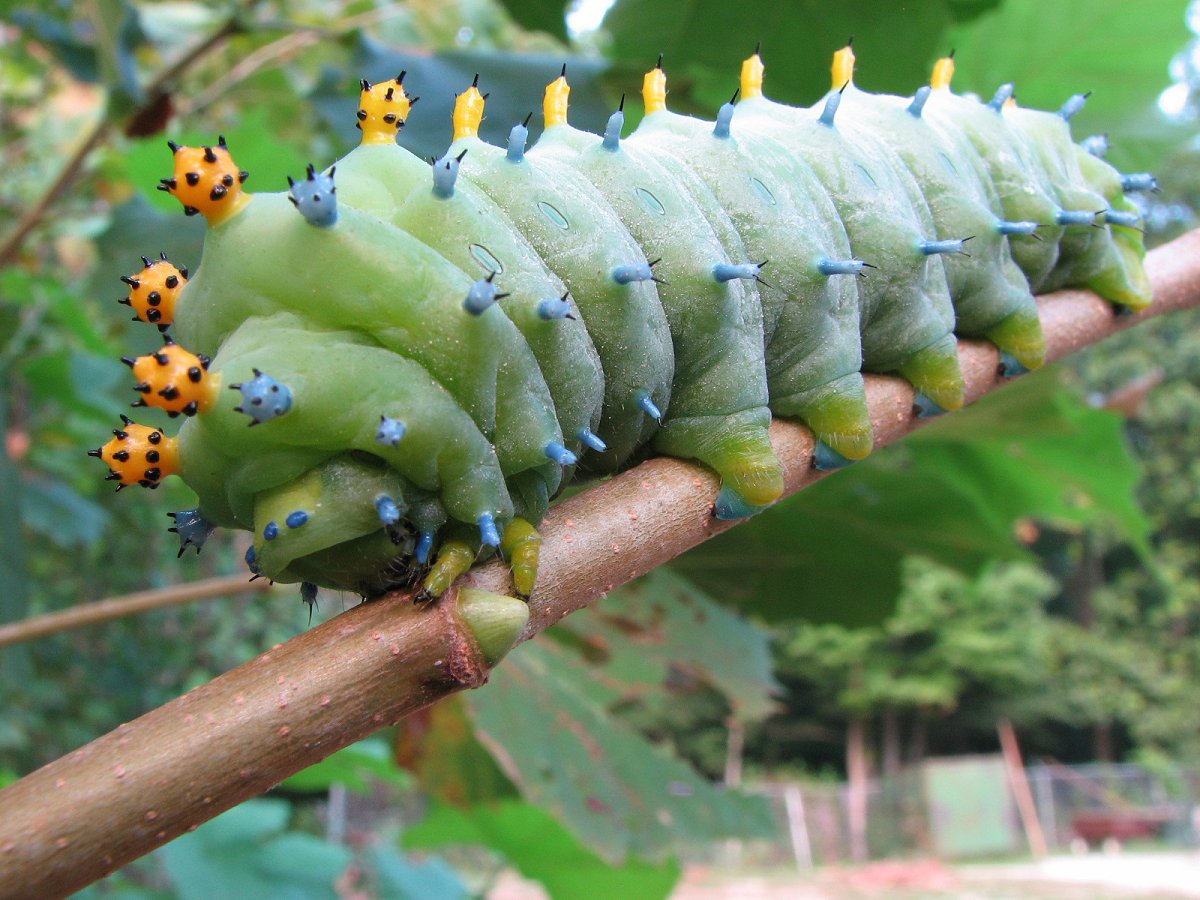
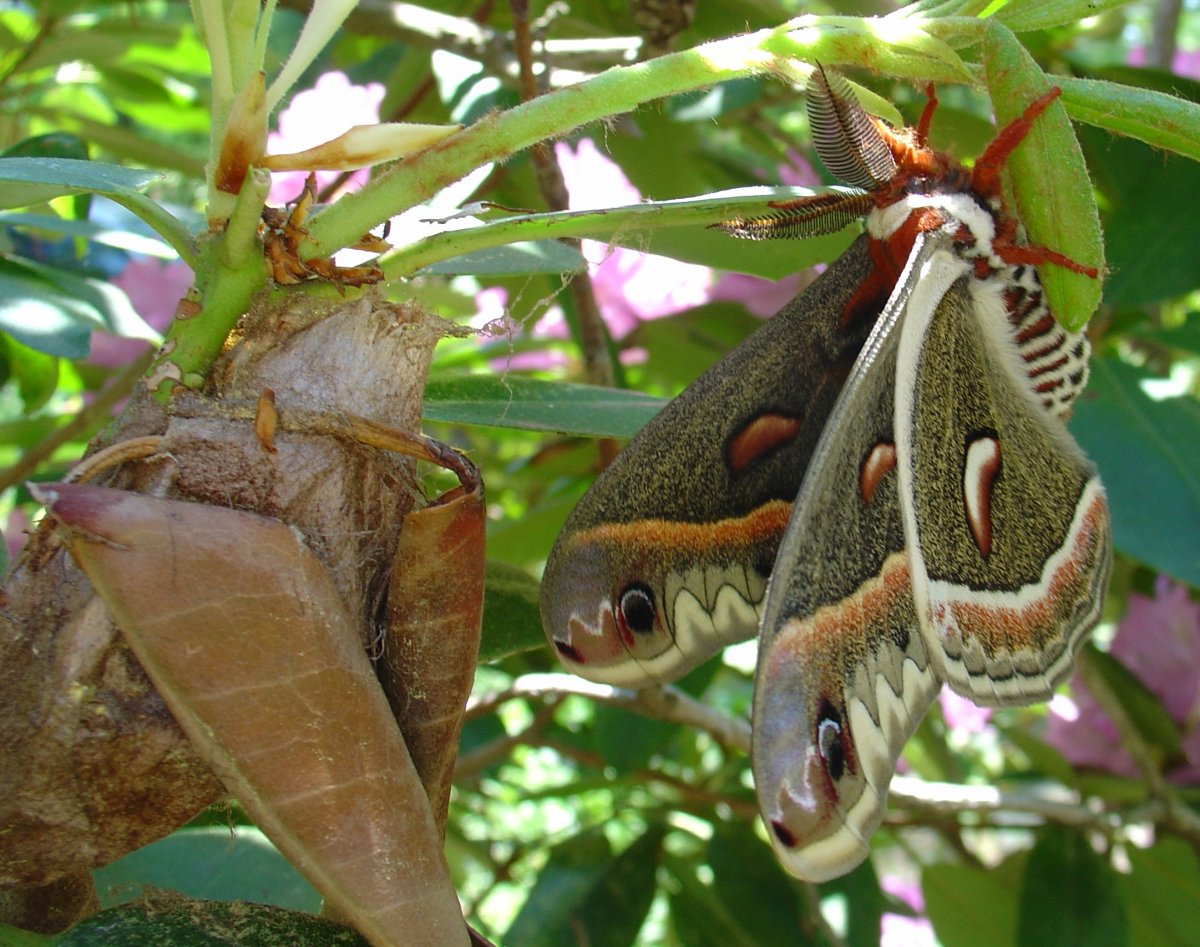
Cecropia caterpillar (above) and moth emerging (below)