All-terrain vehicles (ATVs) act as a major vector for spreading invasive species by inadvertently transporting seeds, plant fragments, soil, and even insects across different landscapes. This spread is primarily accidental, as materials cling to the vehicle's components.
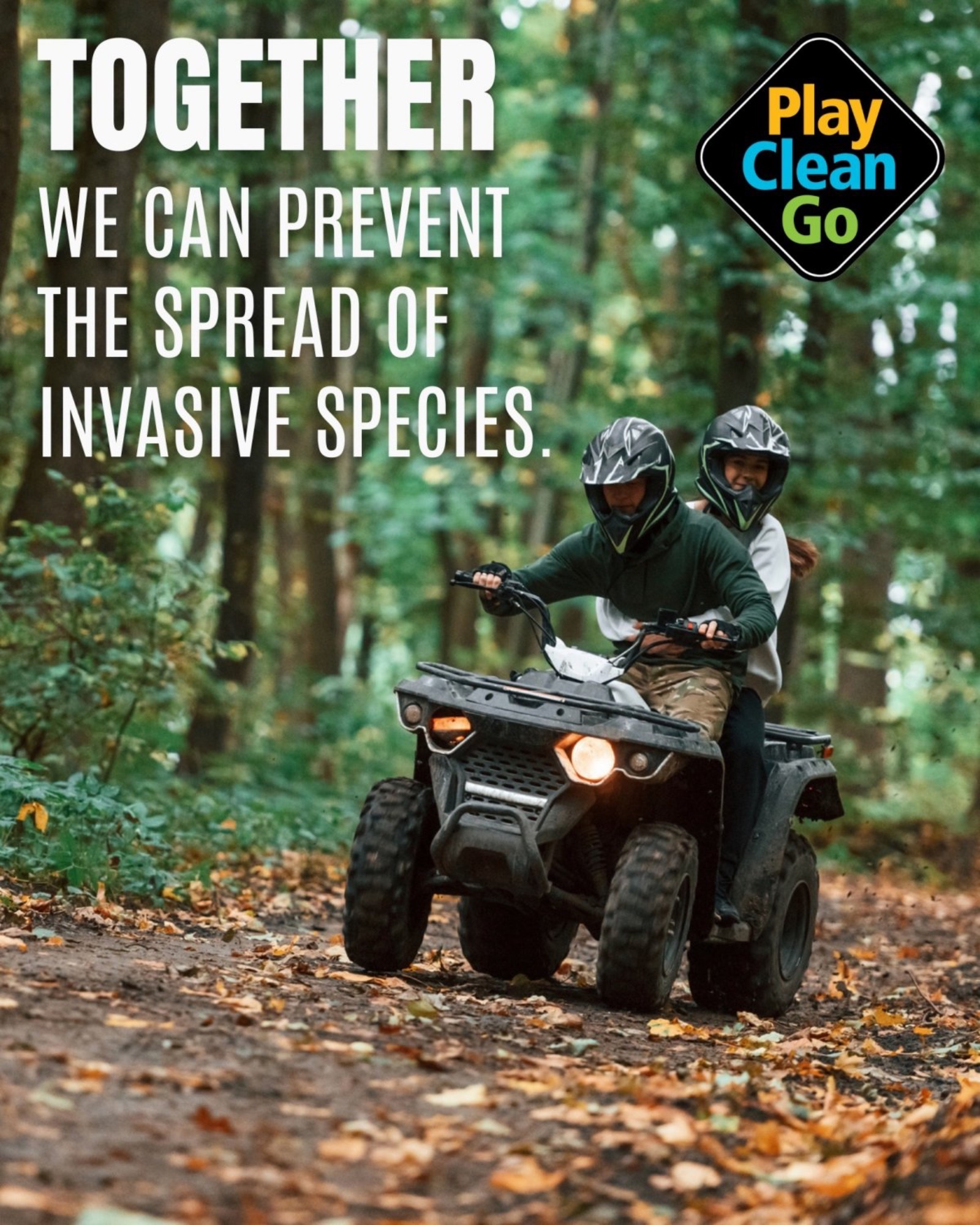
How ATVs Spread Invasive Species:
Hitching a Ride
Seeds and plant pieces, especially those with burrs or stickiness (e.g., burdock, garlic mustard), easily attach to muddy tires, undercarriages, skid plates, and footrests.
Creating Disturbance
The aggressive treads of ATVs can tear up native vegetation and disturb the soil, creating bare ground conditions that are prime locations for invasive species to establish and thrive.
Trail Corridors
Trails themselves act as corridors, facilitating the movement of invasive plants from infested areas into previously untouched, remote, or sensitive ecosystems.
Off-Trail Travel
Traveling off-trail significantly increases the rate at which seeds are picked up and dispersed compared to staying on designated paths.

Hitting The Trail
The Play, Clean, Go protocol is the terrestrial equivalent of Clean, Drain, Dry (used by boaters and paddlers to prevent the spread of aquatic invasive species). Following this simple process helps stop the spread of invasive plants, seeds, and microscopic organisms that can harm local ecosystems and trail systems.
Step 1: Park and Prepare
Before cleaning, park your ATV or bike in a contained area where wash water can be controlled and will not drain into natural waterways. Suitable locations include gravel pads, hard surfaces, or regularly mowed grassy areas at least 30 metres from any water body. Turn off the engine and allow it to cool completely.
Step 2: Clean Thoroughly
Removing all visible dirt and debris is the most important step.
Remove Loose Debris (On-Site)
- Knock off large clumps of mud and vegetation using a stick or brush.
- Pay close attention to tire treads, suspension components, drivetrain parts (chain, gears), skid plates, footrests, and radiator screens.
- Use hand tools, a plastic scraper, or compressed air to reach tight areas.
- Remove the seat and any easily detachable guards or covers to access hidden areas.
- Wash the ATV or bike from top to bottom and inside out using a hose or pressure washer (use caution around seals, wiring, and decals).
- Focus on the undercarriage, wheel wells, engine area (between the motor and skid plate), and all ground-contact components.
- A stiff brush and mild, non-corrosive soap or a dedicated ATV wash can help remove stubborn grime.
Drain
- Ensure all standing water drains from the frame, skid plates, and accessories after washing.
- Allow the ATV or bike to dry completely before riding in a new area.
- Use clean, lint-free towels, rags, or compressed air to speed up drying—especially in hard-to-reach crevices.
- A leaf blower or air compressor is particularly effective.
- If possible, let the ATV or bike air-dry for several days (at least 5 days in warm weather; longer in cool or damp conditions) to kill any remaining microscopic organisms.
environments.
Additional Best Practices
Additional Best Practices
- Clean your gear: Boots and shoes, clothing, helmets, gloves, water bottles, and tools can carry seeds and debris. Inspect, brush off, wash, and dry all gear.
- Use designated wash stations: Many trail systems provide wash stations—use them whenever available.
- Stay on established trails: This reduces contact with sensitive habitats where invasive species may be present.
- Dispose of waste properly: Place collected plant material and dirt in a trash bin or bury it far from trails and water bodies.
- Protect yourself: Wear rubber gloves and safety glasses when cleaning, especially if noxious or poisonous plants may be present.
- Know local regulations: Follow local and provincial requirements for off-road vehicle cleaning: