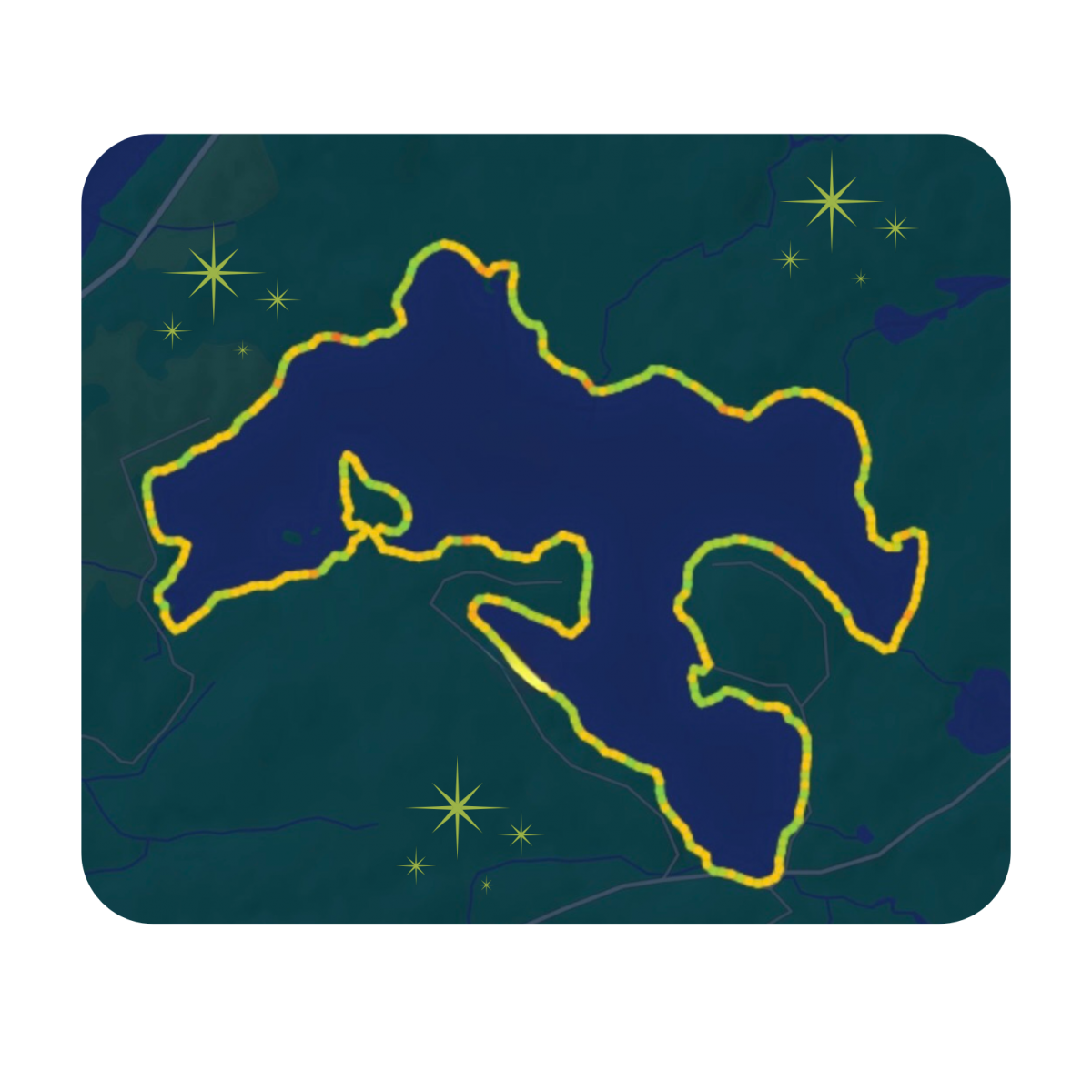
There's Something About Loons...
Canadians are obsessed with loons because they are deeply embedded in our national culture, symbolizing wilderness, serenity, and the iconic "cottage life" experience. Some reasons for the obsession:
- Haunting Calls: Their calls — ranging from yodels to wails — are iconic sounds of Canadian wilderness, often heard echoing across lakes.
- Symbol of Wilderness & Solitude: Unlike more common ducks, the solitary, territorial nature of loons represents the peaceful, untouched, and serene nature of Canadian cottage country.
- Ecological Indicator: The presence of loons signals healthy lakes with clean, clear water, which are highly valued in Canadian culture.
- Distinct Behaviour: Loons are known for carrying their young on their backs, a behaviour that many find endearing and unique.
Here on the Echo Lake Association website, we've made frequent references to loons throughout, but what's good for loons is also good for other aquatic birds, like mergansers and ducks.
ECHO LAKE'S LOON BREEDING RECORDS
Laura Murray, a wildlife biologist and long-time cottager on Echo Lake, has been a loon surveyor for more than 30 years. The following data are notes from Laura's and her Dad's records going back to 2010:
In general, our success rate was pretty good, often with 2 young, prior to 2017.
- 2010: 2 babes last noted in mid July
- 2011: 2 babes noted Aug 1
- *2012: 2 babes seen in late Sept
- 2013: No young
- 2014: 2 babes noted mid August
- *2015: 2 babes mid Aug, 1 babe late Sept
- *2016: 2 babes Sept 1, later 1 babe
- 2017: No young
- 2018: 1 babe mid Aug
- 2019: No young
- 2020: no young
- <2021: Drowned nest found in mid Aug, with 1 unhatched egg. Extreme rainfall in June
- 2022: No young
- <2023: 2 babes, adult killed by pwc in mid July, no babes seen after end July
- 2024: No young
- 2025: No young So very poor results since @2017.
- A dead adult was found in late fall, i think sometime in 2021 or 2022. It was wrapped in fishing line.
The Canadian Lakes Loon Survey (CLLS) is one of the longest-running and most popular monitoring programs delivered by Birds Canada, the country’s leading science-based bird conservation organization. Launched in Ontario in 1981, the CLLS expanded to include most of southern Canada in the early 1990s. The CLLS is funded, almost entirely, by Birds Canada members and supporters.
Is the future of the iconic loon in Muskoka, Parry Sound in danger?
By Andrew Hind MuskokaRegion.com
But, sadly, Echo Lake is now seeing a decline like pretty much everywhere else.
The Canadian Lakes Loon Survey (CLLS), a project of Bird Studies Canada, has been monitoring loon nesting success since 1981. While the Canadian loon population is generally stable, Muskoka loons may be vulnerable due to human activity, especially during nesting season.
Lead, a known killer of loons and other waterfowl, is ingested by loons that grind food in their gizzards using small stones from the lake bottom. Lead sinkers and shot, though banned for hunting, can cause poisoning and weaken or kill loons. While lead shot is banned, lead sinks are only banned in provincial parks.
Loons’ unique physiology makes them vulnerable to various factors. Their feet are positioned far back, hindering walking and forcing them to nest on islands or near the shore. This reliance on shoreline habitat, which has been lost due to development, makes nesting loons susceptible to water level fluctuations. A six-inch rise or fall in water during May, June, or July can flood nests or leave them inaccessible.
The following article has been edited for space and personalized for Echo Lake:
For many years, Echo Lake has been ‘punching above its weight’ as Laura Murray, a biologist and loon surveyor, stated so eloquently at our Annual General Meeting in 2024. Laura is a long-time cottager who is devoted to the well-being of our lake and we are lucky to have her expertise.
But, sadly, Echo Lake is now seeing a decline like pretty much everywhere else.
The Canadian Lakes Loon Survey (CLLS), a project of Bird Studies Canada, has been monitoring loon nesting success since 1981. While the Canadian loon population is generally stable, Muskoka loons may be vulnerable due to human activity, especially during nesting season.
Lead, a known killer of loons and other waterfowl, is ingested by loons that grind food in their gizzards using small stones from the lake bottom. Lead sinkers and shot, though banned for hunting, can cause poisoning and weaken or kill loons. While lead shot is banned, lead sinks are only banned in provincial parks.
Loons’ unique physiology makes them vulnerable to various factors. Their feet are positioned far back, hindering walking and forcing them to nest on islands or near the shore. This reliance on shoreline habitat, which has been lost due to development, makes nesting loons susceptible to water level fluctuations. A six-inch rise or fall in water during May, June, or July can flood nests or leave them inaccessible.
Cottagers and residents also impact loon populations, but positive changes are possible:
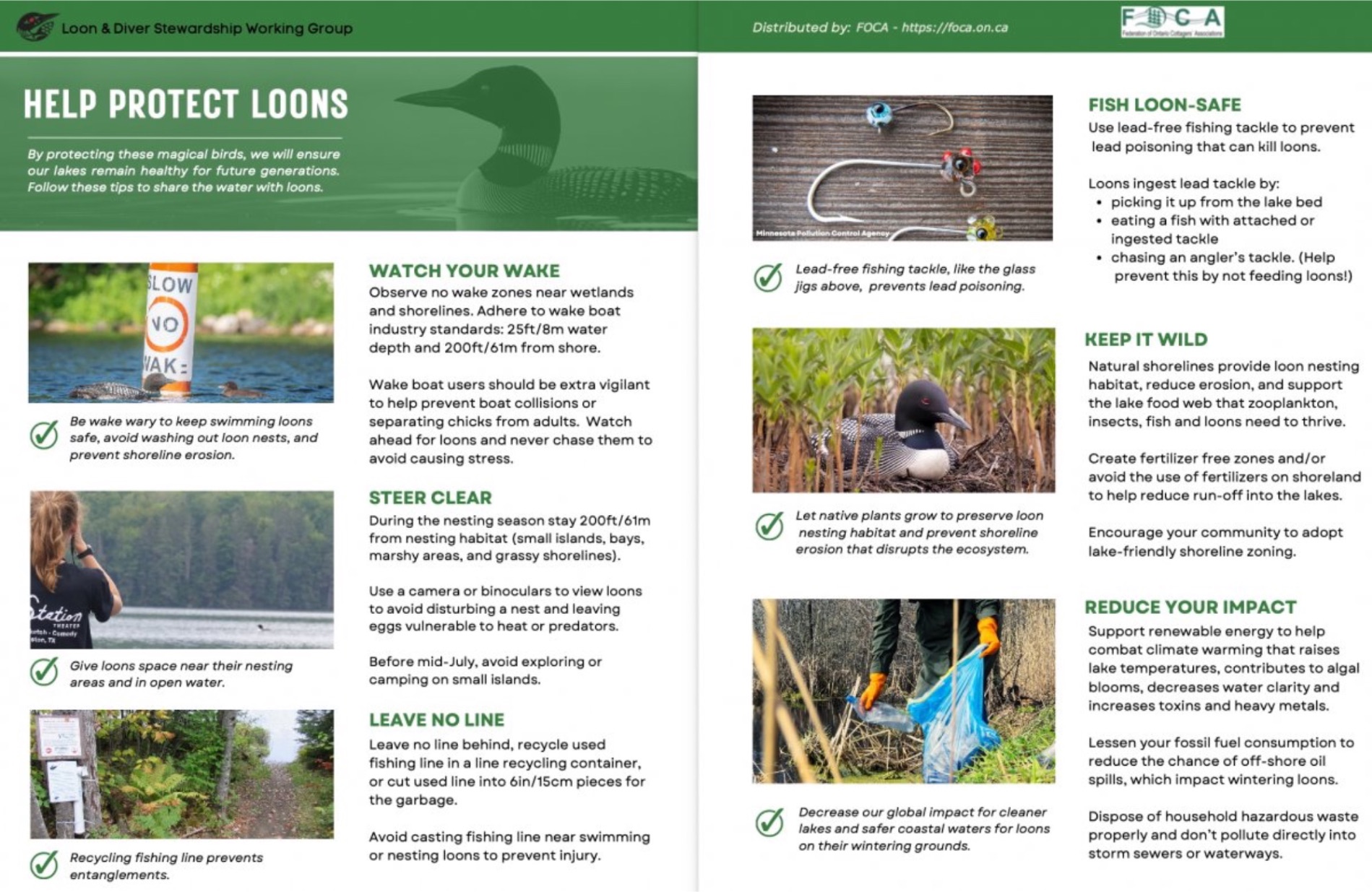
- Loons can’t avoid watercraft and powerboats, and sudden startles may separate them from their young, leaving chicks vulnerable to predators. Wakes can separate parents from young, wash away loon eggs, and disturb nests. To help, give loons a wide berth and slow down near wetlands and shorelines to minimize wakes.
- People can unknowingly harass and stress loons. Watch for signs like splashing, vocalizing, or flat-lying on the shoreline with its head down, indicating nesting. Move away if you see any of these signs to avoid separating loons from their young or exposing eggs to predators.
- Preserve your property’s wild areas by letting native wetland plants grow or replanting bare shorelines. Natural shorelines provide shelter and food for loons and their fish.
- Responsibly dispose of boat trash, including plastics, tackle, and fishing line, as it can injure loons. Keep food and waste minimal around your cottage and camp to discourage nest predators.
- Restrain pets to avoid killing chicks, startling adults, or separating them from their young.
- Reduce your environmental footprint by using less fossil fuel, avoiding pollutants, and ensuring no gas spills into water. Pump out your septic tank every couple of years.
- Join your lake association and participate in loon or lake monitoring. "Citizen scientists" are crucial in understanding loon habits and population effects.
- Grassroots efforts are key to maintaining loon populations. Cottage and lake associations can use education to encourage no wake zones, reduce pollution, and naturalize shorelines. Responsible boating and property ownership are the best ways to help loons.