Living With Rodents
Small mammals are part of everyday life. Species like the Eastern Chipmunk, American Red Squirrel, Groundhog, North American Porcupine and various mice are all part of a diverse group defined by ever-growing front teeth adapted for gnawing. While they chew, dig, cache food and occasionally move into places we’d rather they didn’t, the goal shouldn't be to eliminate them (spoiler alert: That never works long-term), it’s to prevent conflict humanely, by understanding their behaviour and timing your actions carefully. Despite the frustration, most of these issues stem from easy access to food or shelter - problems that can be fixed without harming the animal.
Some rodents you might see around Echo Lake include:
Eastern Chipmunk
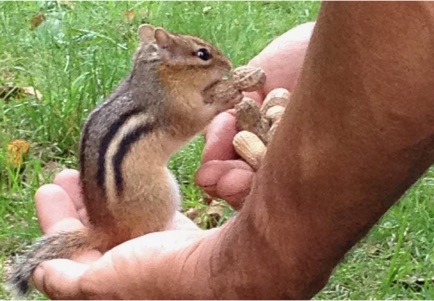
A small, striped rodent commonly seen darting along forest edges, the Eastern Chipmunk is known for its cheek pouches and busy food-gathering habits. It spends much of the summer collecting and storing seeds, nuts and berries in underground burrows. Unlike true hibernators, chipmunks enter periods of torpor in winter, waking periodically to feed on cached food. Their digging helps aerate soil and disperse seeds, making them important contributors to forest regeneration.
Red Squirrel
A loud and territorial forest resident, the red squirrel is active year-round and rarely far from its food caches. It feeds mainly on seeds, cones, fungi and occasionally insects, storing large quantities for winter survival. Highly adaptable, it nests in tree cavities or leaf nests and is often heard chattering loudly when defending its territory.
Groundhog (Woodchuck)
A stocky, burrowing rodent of fields and forest edges, the groundhog is one of Canada’s largest true hibernators. It spends the summer feeding on grasses, clover and garden plants, building fat reserves before retreating underground for winter. Its complex burrow systems, complete with multiple entrances and chambers, provide shelter not only for itself but for many other wildlife species after it leaves.
A stocky, burrowing rodent of fields and forest edges, the groundhog is one of Canada’s largest true hibernators. It spends the summer feeding on grasses, clover and garden plants, building fat reserves before retreating underground for winter. Its complex burrow systems, complete with multiple entrances and chambers, provide shelter not only for itself but for many other wildlife species after it leaves.
North American Porcupine
This slow-moving, tree-climbing rodent is best known for its coat of sharp quills used for defence. Porcupines feed mainly on bark, twigs, leaves and other plant material, and may chew on wood or bones to obtain minerals. Found in forests across the region, they are generally solitary and active year-round, often resting in trees during the day and foraging at night.
This slow-moving, tree-climbing rodent is best known for its coat of sharp quills used for defence. Porcupines feed mainly on bark, twigs, leaves and other plant material, and may chew on wood or bones to obtain minerals. Found in forests across the region, they are generally solitary and active year-round, often resting in trees during the day and foraging at night.
They are generally timid, slow-moving herbivores that mind their own business. They are not aggressive and prefer to avoid confrontation. When threatened, they will turn their back, raise their quills, and chatter their teeth as a warning. If forced, they will lash out with their tails. If the tail strikes, or if a person/pet touches the porcupine, the barbed quills detach and embed themselves.
Porcupine Fact: Baby porcupines are called “porcupettes” 🥰
Porcupine Myth: No, porcupines do NOT shoot their quills!
Northern Flying Squirrel
Rarely seen but widely present, the northern flying squirrel is a nocturnal forest dweller with large eyes and a membrane that allows it to glide between trees. It lives in mature forests, nesting in tree cavities or old bird nests, and feeds on seeds, fungi, lichens and insects. By spreading fungal spores, it plays a quiet but important role in maintaining healthy forest ecosystems.
Rarely seen but widely present, the northern flying squirrel is a nocturnal forest dweller with large eyes and a membrane that allows it to glide between trees. It lives in mature forests, nesting in tree cavities or old bird nests, and feeds on seeds, fungi, lichens and insects. By spreading fungal spores, it plays a quiet but important role in maintaining healthy forest ecosystems.
Rodents are more than just backyard visitors, they are ecosystem engineers.
- Seed dispersers: Species like Eastern Chipmunk and American Red Squirrel help regenerate forests by caching seeds.
- Soil aerators: Burrowing animals like the Groundhog improve soil health.
- Forest recyclers: North American Porcupine and mice break down vegetation and woody material.
- Prey species: They support owls, foxes, snakes and other predators.
The Humane Approach: Prevention, Not Poison
Wildlife experts strongly discourage poisons and inhumane traps. These methods:
1. Seal Entry Points
Carefully inspect buildings for gaps or holes.
⚠️ Important!!
Never seal an opening if animals are inside. Wait until they leave (or confirm
- Cause prolonged suffering
- Harm pets and non-target wildlife
- Often fail to fix the underlying issue
- Block access
- Remove attractants
- Work with seasonal timing
Carefully inspect buildings for gaps or holes.
- Seal openings larger than 1-2 cm
- Use steel mesh, hardware cloth or metal flashing (rodents can chew wood and plastic)
- Check rooflines, soffits, vents and where pipes enter buildings
- Install chimney caps and vent covers.
Never seal an opening if animals are inside. Wait until they leave (or confirm
the space is empty), especially in spring when young may be present.
2. Protect Vulnerable Structures (decks, sheds and crawl spaces)
This is especially effective for woodchucks and chipmunks.
3. Remove Food Attractants
Rodents are opportunistic. If food is available, they will stay.
4. Manage Vegetation
This limits access routes and hiding spots.
5. Use Deterrents (When Needed)
Non-lethal deterrents can help, especially when combined with exclusion
2. Protect Vulnerable Structures (decks, sheds and crawl spaces)
This is especially effective for woodchucks and chipmunks.
- Install buried wire mesh (30-60 cm deep) around the perimeter to stop burrowing
- Use gravel barriers under decks
- Close gaps along foundations
Rodents are opportunistic. If food is available, they will stay.
- Store garbage in wildlife-proof containers
- Clean up fallen bird seed
- Avoid feeding wildlife
- Harvest garden produce promptly
- Store pet food indoors
This limits access routes and hiding spots.
- Trim tree branches away from roofs
- Keep woodpiles elevated and away from buildings
- Reduce dense ground cover near foundations
Non-lethal deterrents can help, especially when combined with exclusion
- Motion lights or noise devices
- Natural repellents (with mixed effectiveness)
- Physical barriers around gardens
The Golden Rule: Timing Matters
One of the biggest mistakes homeowners make is sealing entry points at the wrong time, accidentally trapping babies inside. This leads to unnecessary suffering and often worse problems (odour, insects and structural damage).
How to Perform the Test:
One of the biggest mistakes homeowners make is sealing entry points at the wrong time, accidentally trapping babies inside. This leads to unnecessary suffering and often worse problems (odour, insects and structural damage).
The paper test (or newspaper test) should be used on chipmunks, squirrels and groundhogs for at least 72 hours (3 days) to confirm a burrow is inactive before sealing it.
If the crumpled newspaper placed in the entrance remains in place for that duration, it is generally safe to conclude the animal has moved out or is no longer using that entrance.
How to Perform the Test:
- Method: Crumple newspaper and pack it tightly into the burrow entrance or hole. You can also tape a thin sheet of paper over the hole.
- Duration: Keep the hole blocked for 3 days (72 hours), as some animals may not leave their den every single day.
- Monitoring: If the paper is removed, the hole is still active, and you should wait longer.
- Season Restrictions: Never seal holes (especially for groundhogs) between March and August, as you may trap young inside who are too young to escape.
- Groundhogs: Ensure all holes are sealed. Groundhogs often have one main entrance with a large mound of dirt, and one to four smaller, hidden exit holes.
- Chipmunks: They often have multiple, small (2-inch) entrances, frequently located near plants, foundations or debris.
- Ground Squirrels: They are active on warm, sunny days; test during these times rather than during rainy or cool periods.
Only use live traps when you can monitor them regularly. Captured animals often suffer from stress, self-inflicted injuries, dehydration and exposure while awaiting relocation - and some don’t survive at all.
Key Considerations for Winter Relocation
Safe Release Tips:
Key Considerations for Winter Relocation
- Survival Rates: Animals released into unfamiliar territory in winter often die from cold or lack of food.
- Optimal Release: If release is necessary, place them near woodsy areas with a small cache of seed mix for food.
- Immediate Action: Release them immediately after trapping to minimize stress.
- Alternative Actions: Instead of moving them, focus on prevention.
- Proximity: Release within 100 yards of your home to keep them in their known, though cold, territory.
- Shelter: Find a location with natural cover to protect them from predators.
- Timing: Do it during the day, ideally when temperatures are not at their lowest.
Species-Specific Tips
Chipmunks
The Eastern Chipmunk is a busy summer forager that retreats underground for winter torpor.
Porcupines
- Block small openings in foundations and siding
- Use mesh behind vents and under decks
- Remove easy food sources like bird feeders near buildings
- By this point, chipmunks have finished gathering food
- Activity drops as they settle into burrows
- Young are no longer dependent
- Spring (April-May): Babies in burrows
- Mid-summer (July-August): Possible second litter
- Deep winter: They wake periodically to feed; blocking access can strand them from stored food
- Loosely block the hole with paper or a paper towel
- Wait 72 hours
- If undisturbed, the burrow is likely empty
- Fill with soil and gravel
- Cover with rock or heavy material
- Use mesh or steel wool for gaps near structures
The North American Porcupine rarely enters buildings but can damage cabins, decks, and tool handles by chewing for salt and minerals.
Porcupine
- Protect wooden structures (they chew for salt and minerals)
- Use fencing or barriers around cabins and tool handles
- Avoid leaving salt-treated items outdoors
- Store tools and salty items indoors
- Use barriers or fencing around structures
- Protect wooden surfaces where needed
Porcupine
Groundhogs (Woodchucks)
The Groundhog is a powerful digger that often burrows under decks and sheds.
If a burrow is directly under a foundation or causing structural damage, a humane wildlife specialist is the safest option.
- Install L-shaped buried fencing to prevent digging
- Block burrow entrances only after confirming they’re empty
- Avoid placing structures directly over active burrows
- Young are independent
- Not yet hibernating
- March-June: Nursery season (babies underground)
- November-February: Hibernation - animals cannot escape
- Use the paper test over 3-5 days
- Encourage departure with light, noise or mild deterrents
- Once empty:
- Install heavy wire mesh
- Bury it in an L-shape (about 30 cm deep) to prevent digging
If a burrow is directly under a foundation or causing structural damage, a humane wildlife specialist is the safest option.
Red Squirrels
The American Red Squirrel is one of Muskoka’s most persistent attic invaders.
Best Time to Seal Entry Points: Late fall (October–November) or Mid-summer (brief window between litters)
Avoid Sealing
Best Time to Seal Entry Points: Late fall (October–November) or Mid-summer (brief window between litters)
Avoid Sealing
- March-April: Spring babies
- July-August: Second litter
- Test entry holes with paper (48 hours)
- Install one-way doors so squirrels can exit but not return
- Seal all gaps with metal flashing or hardware cloth
- Trim branches 6-8 feet from roofs
- Secure vents and soffits
- Act quickly - red squirrels will chew aggressively to regain access
Groundhogs (Woodchucks)
The Groundhog is a powerful digger that often burrows under decks and sheds.
If a burrow is directly under a foundation or causing structural damage, a humane wildlife specialist is the safest option.
Red Squirrel
Mice
Small but persistent, mice can enter through incredibly tiny openings.
- Install L-shaped buried fencing to prevent digging
- Block burrow entrances only after confirming they’re empty
- Avoid placing structures directly over active burrows
- Young are independent
- Not yet hibernating
- March-June: Nursery season (babies underground)
- November-February: Hibernation - animals cannot escape
- Use the paper test over 3-5 days
- Encourage departure with light, noise or mild deterrents
- Once empty:
- Install heavy wire mesh
- Bury it in an L-shape (about 30 cm deep) to prevent digging
If a burrow is directly under a foundation or causing structural damage, a humane wildlife specialist is the safest option.
Red Squirrel
Mice
Small but persistent, mice can enter through incredibly tiny openings.
- Seal even tiny gaps (they can fit through very small openings)
- Store food securely
- Maintain clean indoor spaces
- Seal holes as small as a dime
- Use steel wool or metal mesh (never foam alone)
- Store food securely
- Keep indoor spaces clean
If you absolutely must kill mice that are indoors, use a snap trap (not poison), then place the mice outside for the ravens - it won't take them long to find it!