STAYING SAFE FROM TICK-BORNE DISEASES
Living near a lake means enjoying nature - but it also means sharing the outdoors with ticks. These insects can spread diseases such as Lyme disease and, more rarely, Powassan virus. The good news is that there are effective, low-impact ways to protect yourself and your family without harming lakes, wildlife, or water quality.
Why Protection Matters
Due to the pressures of climate change, Blacklegged ticks are now present in Muskoka. Prevention is increasingly important.
Why Protection Matters
Due to the pressures of climate change, Blacklegged ticks are now present in Muskoka. Prevention is increasingly important.
- Blacklegged ticks can spread Lyme disease and, in rare cases, Powassan virus.
- Tick populations are expanding due to climate change, longer warm seasons, and changing habitats.
- Risk exists not only in deep forests, but also in yards, trails, docks, and shoreline areas.
Ontario has launched a new Vector-Borne Disease Tool that posts running totals of cases of Lyme Disease reported, and a map of parts of the province considered to be 'established tick areas'. The map is one of several scrollable 'tabs' on the online tool – look for the small 'forward' arrow near the bottom right of the webpage.
Lyme Disease
- Caused by bacteria transmitted through the bite of an infected blacklegged tick.
- Early symptoms may appear 3–30 days after a bite and include:
- Expanding red rash (sometimes bull’s-eye shaped)
- Fever, fatigue, headache
- Muscle and joint pain
- Early treatment with antibiotics is very effective, making prompt detection and removal of ticks critical.
Powassan Virus
- A rare (but serious) virus spread by infected ticks, including blacklegged ticks.
- Most people have no symptoms, but severe cases can affect the brain and nervous system.
- There is no specific treatment or vaccine, so prevention is key.
HOW TO PROTECT YOURSELF
Because we are on a lake, prevention should protect both people AND the ecosystem.
1. Wear Physical Protection
One of the most effective and lake-friendly options:
2. Do Full-Body Tick Checks
One of the most effective and lake-friendly options:
- Long sleeves and long pants
- Light-coloured clothing to spot ticks more easily
- Pants tucked into socks when walking in grassy or wooded areas
- Bug jackets, bug suits, and mesh hats—especially useful at dusk or during peak mosquito activity
2. Do Full-Body Tick Checks
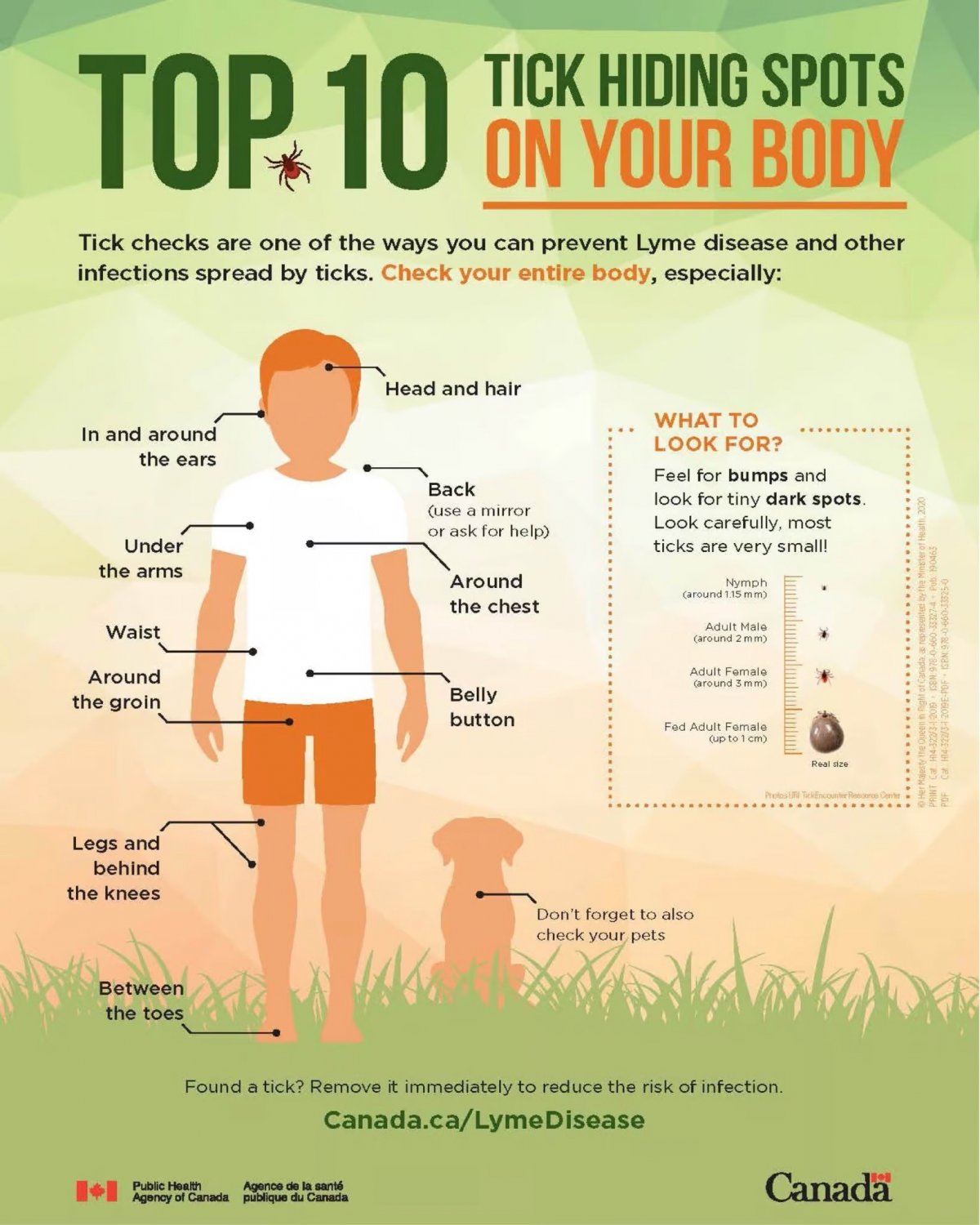
- Checking your entire body after being outdoors
- Showering soon after coming inside
- Checking pets, children, and clothing
- Removing ticks promptly—within 24 hours greatly reduces Lyme disease risk
3. Use Repellents Carefully and Selectively
When needed:
4. Support Natural Predators
Healthy lake ecosystems help keep insect populations in balance.Natural mosquito predators include:
5. Manage Your Yard Without Chemicals
Ticks and mosquitoes thrive in certain conditions. You can reduce risk by:
When needed:
- Health Canada supports repellents containing DEET or picaridin when used according to label directions.
- Apply only to exposed skin or clothing.
- Wash off when you return indoors.
4. Support Natural Predators
Healthy lake ecosystems help keep insect populations in balance.Natural mosquito predators include:
- Bats
- Swallows and other insect-eating birds
- Dragonflies and aquatic insects
5. Manage Your Yard Without Chemicals
Ticks and mosquitoes thrive in certain conditions. You can reduce risk by:
- Keeping grass trimmed
- Removing leaf litter and brush near walkways
- Creating clear paths through wooded areas
- Keeping play areas away from forest edges
Important: Do NOT Spray Pesticides Near Any Waterbody
For lakeside residents, avoid spraying pesticides or insecticides:
- Chemicals can wash into lakes and wetlands
- They harm fish, amphibians, pollinators, and beneficial insects
- Spraying often disrupts natural predator populations, making mosquito problems worse over time
IF YOU FIND A TICK
- Remove it promptly with fine-tipped tweezers
- Save it in a sealed container
- Use eTick.ca for identification *
- Contact a healthcare provider if:
- The tick was attached for 24 hours or more
- You develop symptoms within 30 days
* eTick.ca features great information, resources and tools including an interactive map of sightings, and information on how to protect yourself, how to remove a tick and what to do if bitten, and lots more.
Download the app (Android and Apple) to simplify reporting and to access important resources and information.
SOURCES:
- Simcoe Muskoka District Health Unit: Lyme Disease And Ticks
- Health Canada: Blacklegged (deer) ticks
- Health Canada: Lyme disease: Symptoms and treatment
- Repelling Mosquitoes – Is DEET the Best? What About Natural Alternatives?
- CDC.gov: About Powassan
- CDC.gov: Clinical Signs and Symptoms of Powassan Virus Disease
- CDC.gov: Preventing Powassan