Drinking Water Self-Assessment Tool
Credit Valley Conservation has launched a digital self-assessment tool to find out if your well is at high risk of contamination. While targeted at those who reside in Credit Valley, the 'quiz' is useful for anyone with a well.
WELL WATER SOURCE
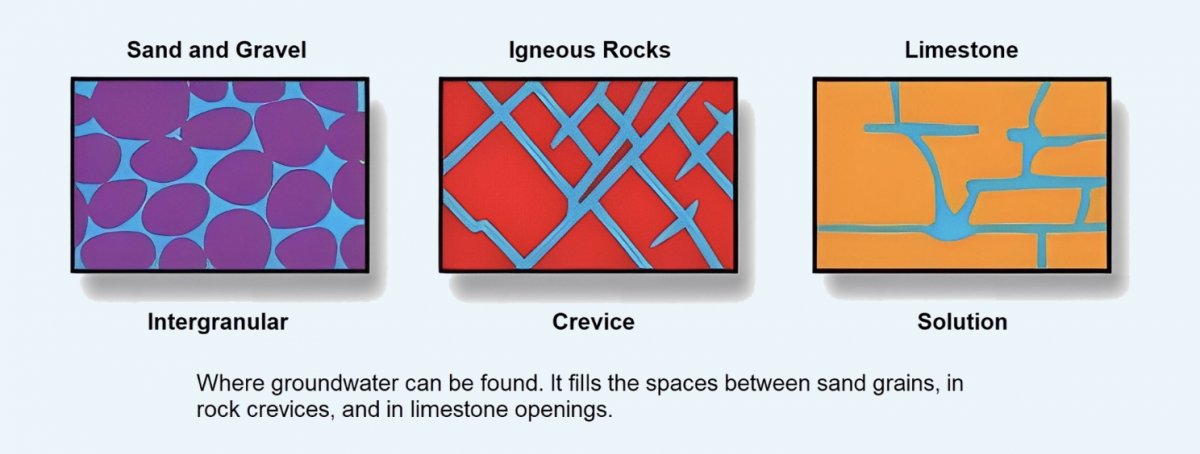
Groundwater, the source for all wells, is water that flows through underground spaces between particles of rock and soil, or crevices and cracks in rocks.
TYPES OF WELLS
There are two types of wells:
A drilled well consists of a hole bored into the ground. This hole is lined with a well casing that covers the entire depth, or a partial section of the well.
A dug well is a shallow excavated hole that is typically less than 10 metres deep and 1 metre wide. They are one of the most vulnerable drinking water systems because of their shallow depth and their non-vermin-proof caps.
WELL RECORDS
Well records are official documents created by licensed well drillers to help owners understand well performance, diagnose issues, and plan maintenance. They include:
- Owner and location information
- Well tag number and construction date
- Well type, depth, and diameter
- Casing and screen details
- Geological and water-bearing zone information
- Static and pumping water levels
- Well yield and pump test results
- Water quality observations
- Contractor name and licence number
Well records may also be found through:
- Property purchase documents
- The original well driller
WATER QUALITY
Key ways private wells impact water quality include:
- Contamination: Poorly maintained or constructed wells can act as a conduit, allowing contaminants from the surface (like runoff) to enter the groundwater.
- Malfunctioning Septic Systems: If your well is near a septic system, a malfunctioning septic system can pollute both the groundwater (your well) and Echo Lake.
- Contaminant Transport: During intense rainfall, or freshets, contaminants can be washed into wells and the surrounding water table, leading to high bacterial counts (E. coli) and other issues, with some reports indicating that up to half of tested wells showed contamination after certain events.
- Structural Risks: Old, abandoned, or improperly sealed wells can act as direct channels for pollutants to enter the aquifer, creating significant risks to the surrounding natural environment.
- Chemical Runoff: Contaminants such as phosphorus, nitrogen, and road salt, which are common in surface runoff, can seep into the groundwater through wells, especially in shallow or vulnerable areas.
Recommendations for Protection:
- Regularly test private well water for bacteria, particularly after spring melt or heavy rainfall.
- Creating an inventory of potential contamination activities on the property (e.g., road salt use)
- Establishing a protection zone around the well (up to 100 metres, where possible)
- Ensure wells are properly maintained, sealed, and that surface water (including runoff containing fertilizer or pet waste) is kept away from the well head.
- Decommission old, unused wells through a licensed contractor.
- Use less road salt, as it is a major concern for water quality in our lakes.
Best Practices for Source Water Protection: Ontario.ca Best Practices for Source Water Protection: Conservation Ontario
The Simcoe Muskoka District Health Unit offers free testing for private well owners to check for bacteria:
ADDITIONAL RESOURCES
- Well Care 101 | Drinking Water Wise Webinars | Source Water Protection
- Well Maintenance and Safety | Drinking Water Wise Webinar
- How To Keep Your Well Water Clean and Safe!
- Wells on your property
- Well Disinfection
- Well Aware - A Well Owner's Guide To Safe Water
- MECP Drinking Water
- FOCA - Well Water: Homeowner Resources
TECHNICAL BULLETINs
summary of Water Supply Wells: Requirements and Best Practices - ONLINE MANUAL
Well Operation, Maintenance & Troubleshooting
New Wells, Construction & Technical Standards
Industry Standards