Look Who's Migrating
But migration depends on healthy stopovers. Birds rely on wetlands, shorelines, and forests to rest and refuel along their journey. When these habitats are degraded or lost, migration becomes riskier and populations decline.
How you can help, Spring or Fall:
- Maintain natural shorelines: Preserving vegetation and avoiding unnecessary clearing.
- Reduce nighttime light pollution: Turn off outdoor lights or use shielded fixtures to prevent disorienting birds in flight.
- Support wetland and forest conservation: These habitats are critical rest stops during long migrations.
The Migratory Birds Convention Act, 1994 (MBCA) and Migratory Birds Regulations, 2022 (MBR) protect migratory birds, their eggs and their nests, by prohibiting activities that can cause them harm.
Of special note, the Great Blue Heron and the Pileated Woodpecker, both common here on Echo Lake, are listed on Schedule 1 - these birds have special protections because their nest has high conservation value, i.e. their nest is re-used from one year to the next or because the nest is frequently re-used by other migratory bird species.
Fact sheet: Nest Protection under the Migratory Birds Regulations, 2022Guidelines to avoid harm to migratory birds
Even if the nest doesn’t belong to one of the bird species covered by federal regulations, it could still be covered by other provincial legislation so be sure to check with the Ontario Species at Risk Act before taking any actions.
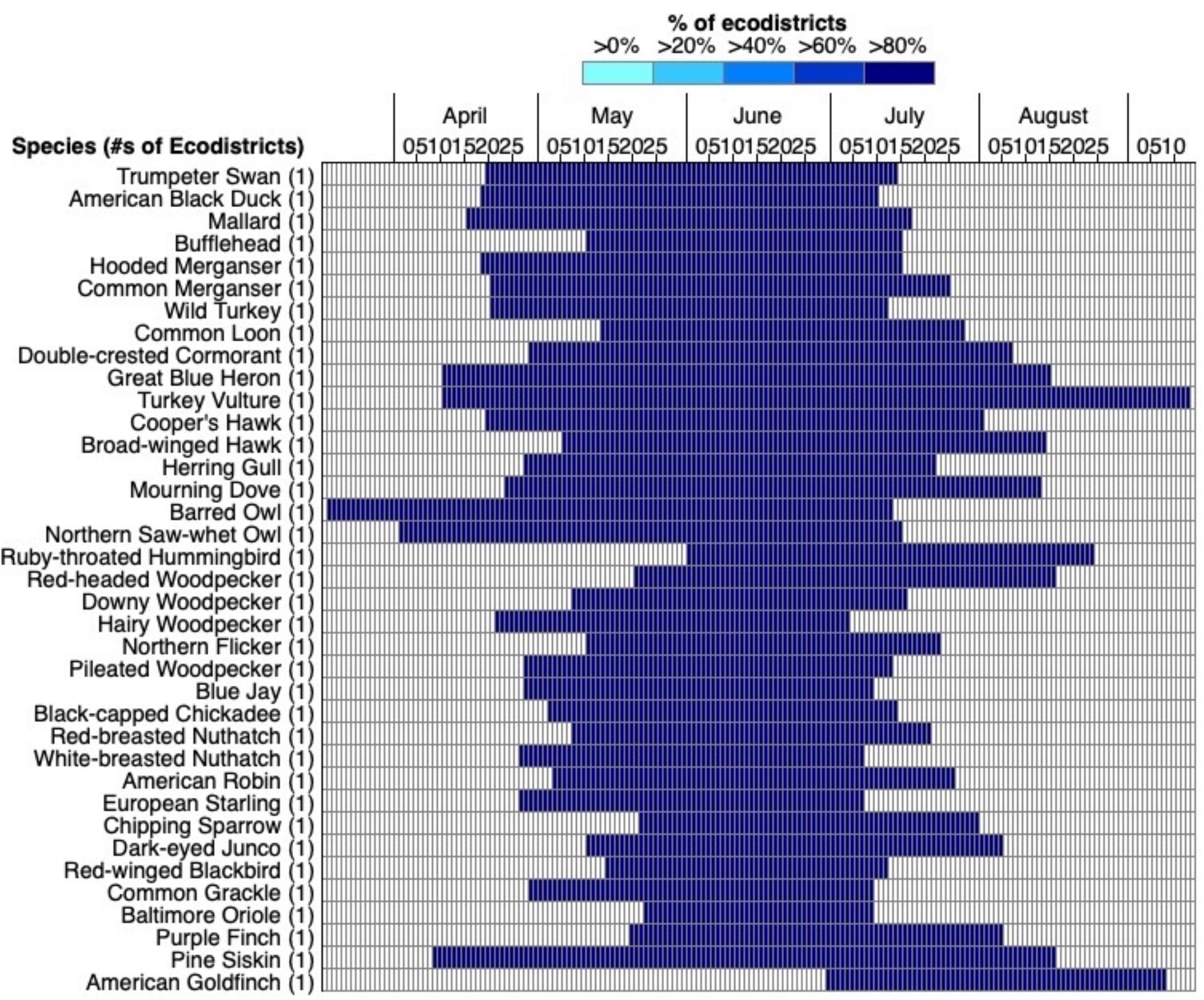
Bird Nesting Calendar
Echo Lake is in the Algonquin Ecodistrict. The picture on the right is just a small subset of birds found around Echo Lake. To view other birds, or other regions, check out the Nesting Calendar Query Tool from Birds Canada:
Bird nesting occurs in a series of stages, from egg laying to the departure of young from the nest. The dates in this tool do not include the nest building period or the time when young birds remain dependent after leaving the nest.
There is no guarantee of the presence or absence of active nests due to natural variability in timing. All of us are responsible for assessing and minimizing the risk of impacting nests or eggs. If nests with eggs or young are found at any time, the area should be avoided until the young have naturally left. Even after fledging, young birds remain vulnerable, so precautionary measures are strongly recommended.
For more information on the protection and nesting timing of federally protected migratory birds, visit: