Flies As Pollinators - Who Knew?
Hover flies, also called flower flies, are a group of true flies (i.e. insects in the order Diptera - they have only two functional wings. Other insects with "fly" in their name, such as dragonflies or butterflies, are not considered true flies because they have four wings).
They're called hover flies because the adults are often seen visiting flowers, where they feed on nectar and pollen. Many can hover in place and fly with amazing control, almost like tiny hummingbirds.
They're called hover flies because the adults are often seen visiting flowers, where they feed on nectar and pollen. Many can hover in place and fly with amazing control, almost like tiny hummingbirds.
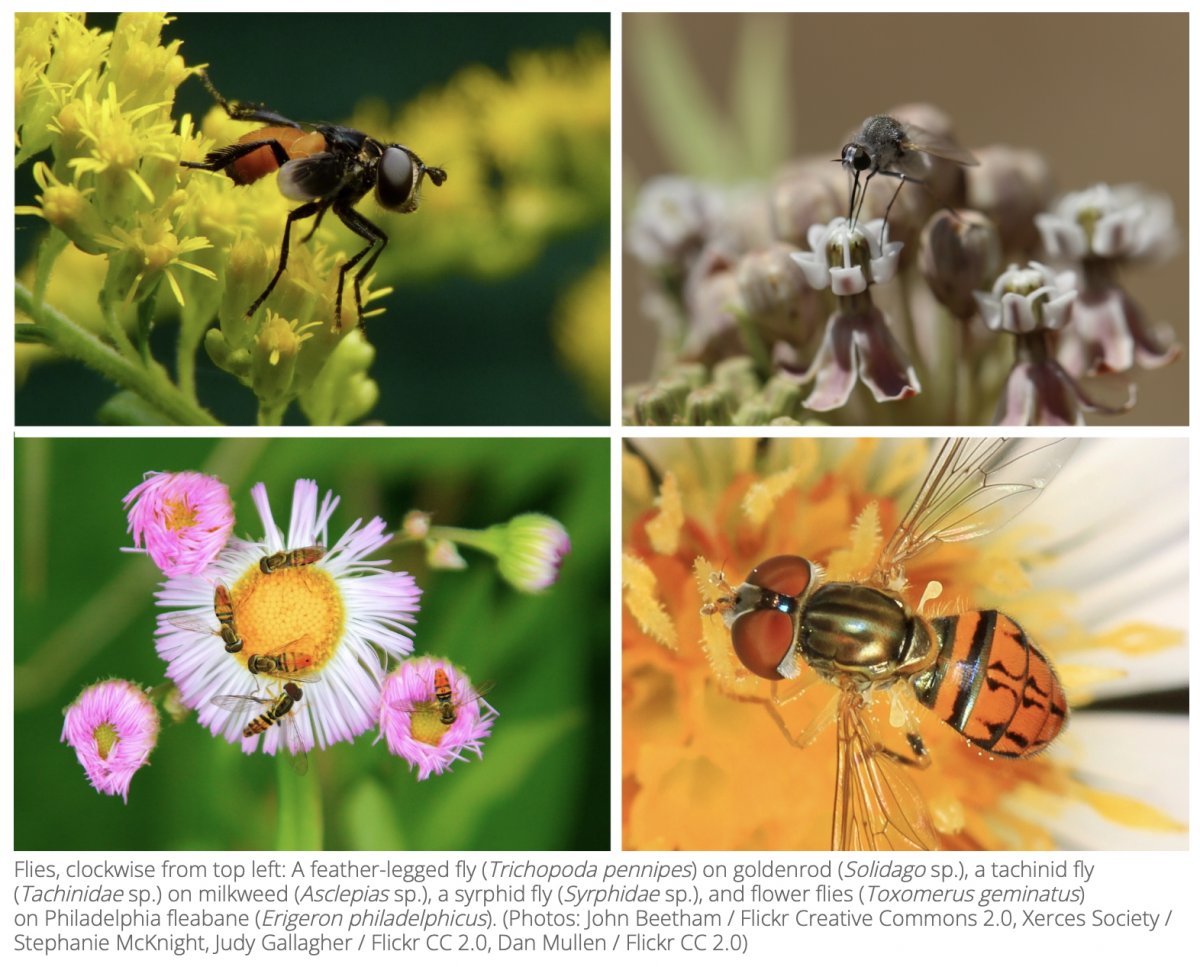
Flies as a whole do a lot more pollinating than most people realize. Nearly 40% of pollination is done by flies. Hover flies are the most important pollinating flies. Because many of them look very much like bees or wasps, people often mistake them for stinging insects. In reality, they are harmless. Their bee-like appearance helps protect them from predators.
While adult hover flies mostly feed at flowers, their young (larvae) live very different lives depending on the species. Some of the most common types have larvae that eat aphids and other plant pests, making them very helpful in gardens and farms. Others specialize in feeding on root-feeding aphids.
Hover flies are an extremely diverse and important group. Scientists have described more than 6,000 species worldwide and there are likely thousands more still undiscovered. In Canada alone, more than 500 species are known and new ones are still being found.
You can recognize a flower fly by:
- Large eyes
- Short antennae
- A distinctive spurious vein in the wing
- About one-third prey on aphids and scale insects
- Others are aquatic "rat-tailed maggots" that filter bacteria and help clean polluted water and sewage systems