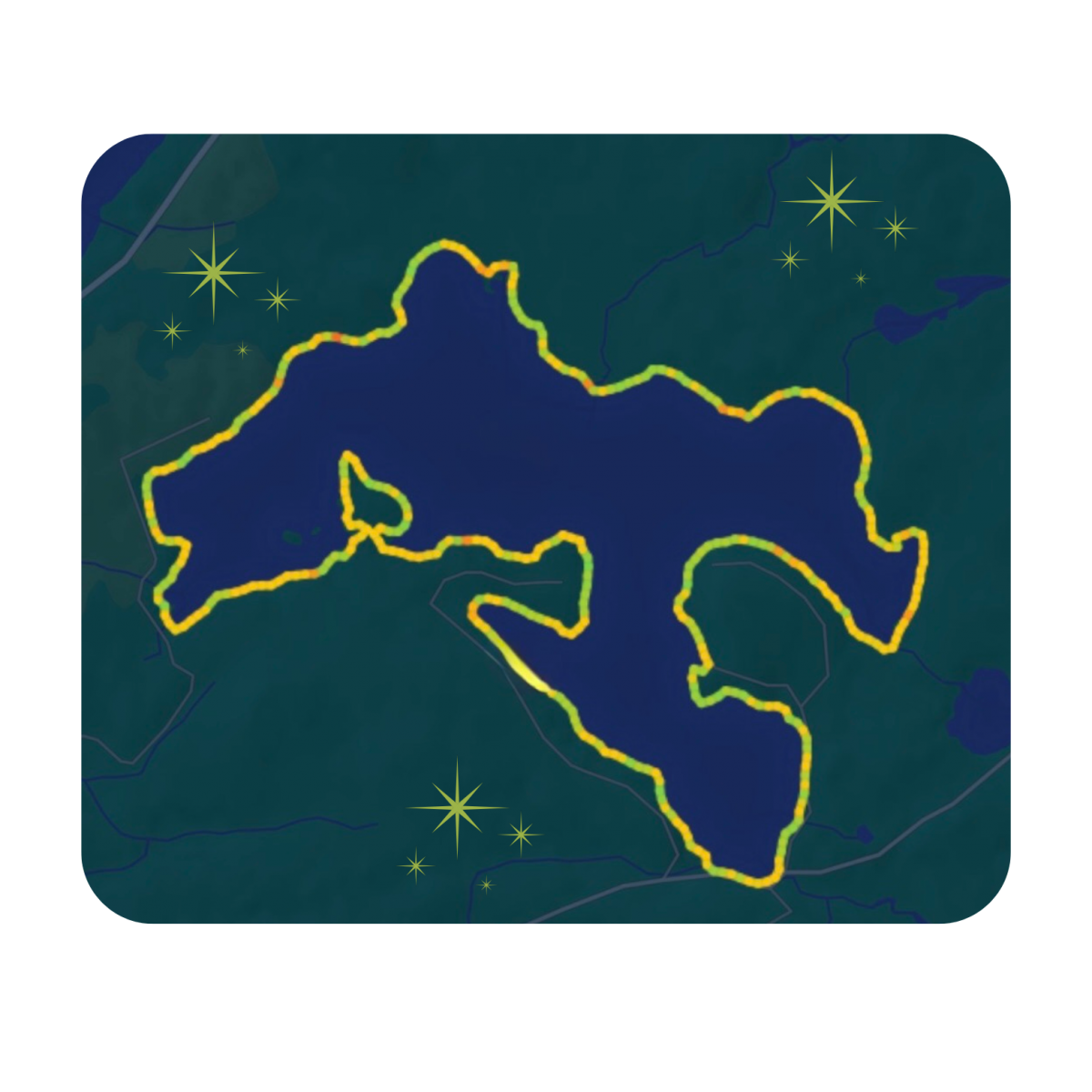
Protecting Our Dark Skies: Why Responsible Lighting Matters
Across rural and waterfront communities, the quiet beauty of a star-filled night sky has long been part of what makes lake life so special. Yet this natural asset is increasingly under threat from light pollution - an issue that is often overlooked but has far-reaching impacts on wildlife, human health, and the environment.
To address this, the Township of Lake of Bays (along with many other municipalities) implemented the By-law to Regulate Outdoor Illumination in 2013, promoting responsible lighting practices that protect both people and nature.
This by-law encourages the use of low-wattage, energy-efficient lighting in waterfront and rural areas to:
- reduce impact on wildlife
- prevent hazards to navigation
- preserve the night sky
- protect privacy
What Is Light Pollution?
Light pollution refers to excessive or misdirected artificial light that brightens the night sky and disrupts natural darkness. According to DarkSky International, it includes several forms such as glare, skyglow, and light trespass - each of which diminishes our ability to experience true darkness. Even modest increases in outdoor lighting can scatter upward and outward, creating a dome of light visible for kilometres. The result is a gradual loss of stars, but also a deeper ecological imbalance.
Impacts on Wildlife and Ecosystems
Artificial light at night interferes with natural behaviours that many species rely on to survive. Birds, insects, amphibians, and mammals all depend on darkness for navigation, feeding, and reproduction.
Human Health and Community Well-Being
Humans are not immune to the effects of artificial light at night. Exposure to bright or blue-rich lighting can interfere with circadian rhythms, affecting sleep quality and overall health. Poorly designed lighting can also create glare, reducing visibility rather than improving it - particularly along shorelines where reflection off water can intensify the effect. For boaters, excessive lighting can obscure navigation markers and create dangerous conditions.
Preserving the Night Sky
One of the most immediate and visible impacts of light pollution is the loss of the night sky itself. In many areas, the Milky Way is no longer visible to the naked eye. Dark sky preservation is about more than aesthetics, it reflects a commitment to environmental stewardship. Communities across Ontario, including Muskoka, are increasingly adopting dark sky policies to protect this shared natural heritage.
Principles of Responsible Outdoor Lighting
DarkSky International outlines simple, effective principles that can significantly reduce light pollution:
Impacts on Wildlife and Ecosystems
Artificial light at night interferes with natural behaviours that many species rely on to survive. Birds, insects, amphibians, and mammals all depend on darkness for navigation, feeding, and reproduction.
Research highlighted by the Canadian Wildlife Federation shows that light pollution can:
A recent report covered by The Guardian described how even park lighting in Europe is being reconsidered after clear evidence of harm to local wildlife. The lesson is simple: More light does not always mean more safety: It can mean more disruption: The normal should be darkness
- disorient migrating birds, increasing collisions and mortality
- disrupt nocturnal pollinators like moths, reducing plant reproduction
- alter predator-prey relationships
- interfere with amphibian breeding cycles
Human Health and Community Well-Being
Humans are not immune to the effects of artificial light at night. Exposure to bright or blue-rich lighting can interfere with circadian rhythms, affecting sleep quality and overall health. Poorly designed lighting can also create glare, reducing visibility rather than improving it - particularly along shorelines where reflection off water can intensify the effect. For boaters, excessive lighting can obscure navigation markers and create dangerous conditions.
Preserving the Night Sky
One of the most immediate and visible impacts of light pollution is the loss of the night sky itself. In many areas, the Milky Way is no longer visible to the naked eye. Dark sky preservation is about more than aesthetics, it reflects a commitment to environmental stewardship. Communities across Ontario, including Muskoka, are increasingly adopting dark sky policies to protect this shared natural heritage.
Principles of Responsible Outdoor Lighting
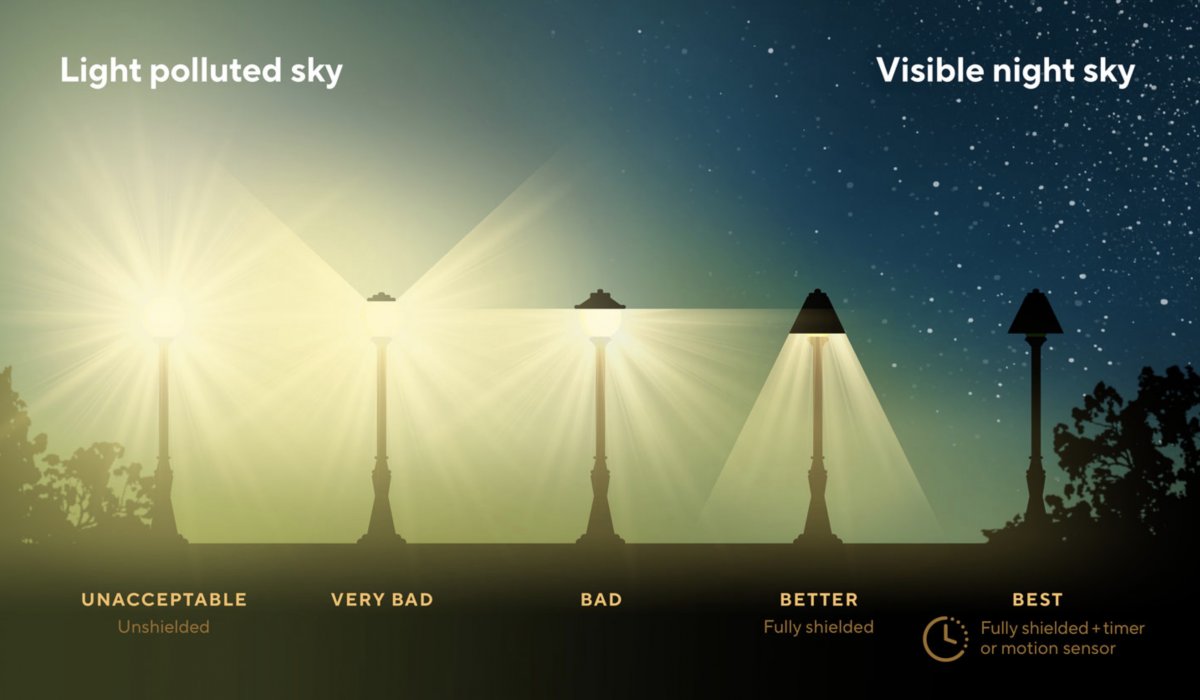
DarkSky International outlines simple, effective principles that can significantly reduce light pollution:
- Use light only when needed
- Direct light downward, where it is required
- Use the lowest effective brightness
- Choose warm-coloured lighting (3000K or less)
- Control lighting with timers or motion sensors
What You Can Do
Protecting dark skies starts at home and at the cottage. Small changes can make a meaningful difference:
- Replace bright, unshielded fixtures with downward-facing lights
- Turn off unnecessary outdoor lighting
- Install motion sensors instead of continuous lighting
- Avoid lighting (indoor or outdoor) that shines onto neighbouring properties or across the water
Resources
- The Darker Side of Light - How artificial light reshapes the night for wildlife
- Night Watch
- What Is Light Pollution?
- Dark-Sky-Brochure-Trent-Lakes-2025.pdf
- Five Principles for Responsible Outdoor Lighting
- How Huntsville and Almaguin dark sky policies help the environment
- Lake of Bays Heritage Foundation: Dark Skies