Black flies, mosquitoes, deer flies, and horse flies are all blood-feeding pests, but they differ in bite severity, timing, and appearance. While all are considered 'True Flies' (order Diptera), we felt a separate page dedicated to these biting insects would be appreciated.
- Bite Severity:
- Black Flies: Slice skin and lap blood, often leaving itchy, swollen lumps.
- Mosquitoes: Use a needle-like probe to suck blood, often unnoticed until after.
- Horse/Deer Flies: Pack a powerful, painful bite that "takes a chunk of skin" using cutting mandibles.
- Appearance & Size:
- Black Flies: Very small (2-5 mm), humpbacked, and black.
- Mosquitoes: Slender, with long legs and a single pair of wings.
- Deer Flies: Smaller (10-13 mm) than horse flies, with dark-patterned wings and striped bodies.
- Horse Flies: Large (20-30 mm), dark, with huge, often iridescent eyes.
- Activity Timing:
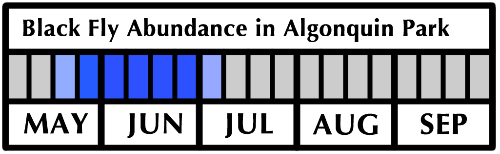
- Black Flies: Peak in late spring and early summer, typically during daylight hours.
- Mosquitoes: Active dusk-to-dawn, but many species bite throughout the day and all summer long.
- Horse/Deer Flies: Active during the day in mid-summer; attracted to motion, shadows, and swimming, especially in sunny, hot weather.
- Repellent Effectiveness:
- Mosquitoes/Black Flies: Generally responsive to DEET-based repellents.
- Deer/Horse Flies: Very difficult to repel; they are attracted to movement and CO2. Physical barriers like hats and light-coloured clothing are more effective.
- Habitats:
- Black Flies: Require running water (rivers/streams) for larvae.
- Mosquitoes: Breed in standing, stagnant water.
- Deer/Horse Flies: Found in varied habitats, including forests, wetlands, and near livestock.
Calendar Of Events
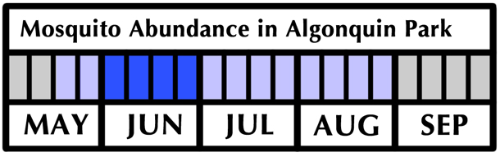
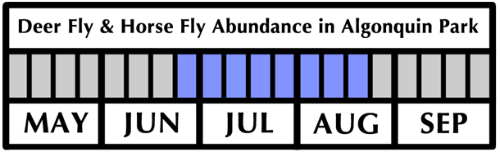
Spring is the season for biting insects such as black flies and mosquitoes in Algonquin Park. Each species of biting insect has a relatively short flight time and prefers specific hosts upon which to feed, with very few species actually preferring to bite humans. The graphics below indicate the typical flight time, in weeks, for biting insects in Algonquin Park. The darker colour indicates a greater abundance of the insects.
Tolerance to biting insects varies between visitors. If you are unsure about your tolerance for black flies and mosquitoes, for example, and will be visiting during their flight period, come prepared by packing your bug jacket and/or insect repellent, and you will have a great trip! Also see below for additional ways to prepare for "bug season" in Algonquin Park.
Spring is the season for biting insects such as black flies and mosquitoes in Algonquin Park. Each species of biting insect has a relatively short flight time and prefers specific hosts upon which to feed, with very few species actually preferring to bite humans. The graphics below indicate the typical flight time, in weeks, for biting insects in Algonquin Park. The darker colour indicates a greater abundance of the insects.
Don’t Hate Me ‘Cause I’m Bountiful
Tolerance to biting insects varies between visitors. If you are unsure about your tolerance for black flies and mosquitoes, for example, and will be visiting during their flight period, come prepared by packing your bug jacket and/or insect repellent, and you will have a great trip! Also see below for additional ways to prepare for "bug season" in Algonquin Park.
Canada is home to over 80 species of mosquitoes with 67 species occuring in Ontario. Mosquitoes are abundant, beginning in mid to late May and lasting longer than black flies (usually into July depending upon the weather).
Mosquitoes start their life as eggs that can sit dormant for many years before hatching under ideal conditions. Eggs are usually placed in calm water, such as beaver ponds, with larvae living just below the water's surface. Adults emerge from the water in late May to late summer, depending upon the species, with females searching out blood meals for development of their eggs.
Mosquitoes are attracted to heat and carbon dioxide from exhaling and also through visual cues. Females land on hosts and use needle-like mouth parts to pierce the skin and suck in a blood meal. Females require several blood meals to acquire enough protein to produce a batch of eggs. Mosquitoes are abundant at certain times of the year and most abundant in cooler, shady parts of the forest, as well as in the evening and into the first couple of hours of darkness. These biting insects become less abundant through the night, although they do not disappear entirely.
Covering up with clothing, such as a bug jacket, and applying insect repellent, as directed, offers good protection from the bite of mosquitoes.
Deer and Horse Flies
Deer flies and horse flies appear similar to large house flies, but they pack a strong bite. Unlike the sucking mouth parts of a mosquito, these insects have biting mouth parts that occasionally feel like they are "taking a chunk of skin" as a meal.
Horse flies are relatively larger and darkly coloured, while deer flies are smaller and have colourful eyes and dark-patterned wings. Deer and horse flies are most abundant during the summer months and fly only during the day.
Being visual feeders attracted to motion, these insects circle humans waiting for a good time to land and obtain a meal. Insect repellent is less effective against deer and horse flies than compared to other biting insect species. Covering your head, arms, and legs is a good way to deter the bites from these insects.
How To Prepare Yourself
- Know the traits of the insects you may encounter at certain times of the year.
- Know your tolerance for biting insects, including your reaction to bites of certain species. If you are new to biting insects, cover up and use insect repellent if suitable.
- Cover up. Wear long-sleeved shirts (if it is hot, lightweight shirts are good) with cuffs and collars that can be buttoned tight, as well as long pants with elastic cuffs (or tuck your pants into your socks). Some insects such as black flies will land on you and then crawl under clothing if they can. Wear light-coloured clothing (white, tan, khaki, etc.). Some insects such as black flies are attracted to dark colours.
- Wear a bug jacket or bug hat available at local sporting goods retailers. Pick a model with good visibility and fine insect netting.
- Use insect repellent, as directed, when outdoors. See the latest personal insect repellent product safety guidelines from the Government of Canada and read the directions on your insect repellent.
- When camping, set up a screen dining shelter to avoid biting insects.
- Inspect your insect netting on your tent, RV, bug jacket, etc. prior to your trip. Repair or replace if necessary.
Under no circumstances should ANY pesticide be sprayed around your property. If you haven't already seen it, please check out our page under Please Don't Spray.
Diseases and Biting Insects
Mosquito-borne diseases such as Zika, West Nile, Malaria, Chikungunya, Yellow Fever, Dengue, and others are not known to occur in Algonquin Park. The first human case of West Nile virus was found in Simcoe County in 2025: Simcoe Muskoka District Health Unit.
Mosquito-borne diseases such as Zika, West Nile, Malaria, Chikungunya, Yellow Fever, Dengue, and others are not known to occur in Algonquin Park. The first human case of West Nile virus was found in Simcoe County in 2025: Simcoe Muskoka District Health Unit.
Resources