About Clearing Trees ...
Before You Cut That Tree: What You Need to Know About Pileated Woodpeckers
Remember, you need a permit for clearing any vegetation within 98' of the shoreline - call the Township of Lake of Bays Planning and Development department at (705) 635-2272 or email planning@lakeofbays.on.ca before altering the shoreline or removing vegetation.
The issuance of a Permit, though, does not excuse property owners from complying with other applicable federal, provincial and municipal By-laws.
Permits Are Rare - and Not a Shortcut
There are permits available in very limited circumstances (for example, safety risks or serious land-use conflicts), but:
The issuance of a Permit, though, does not excuse property owners from complying with other applicable federal, provincial and municipal By-laws.
So while cutting down a tree might seem harmless, and the Township gave you permission, if that tree contains a Pileated Woodpecker cavity, it could put you on the wrong side of federal law.
Migratory Birds Regulations, 2022, these large woodpeckers - and especially their nesting cavities - are strongly protected. And the rules are stricter than most people realize.
Pileated Woodpeckers aren’t just another bird, they’re considered a keystone species. Their large nesting cavities are reused by dozens of other species, including owls, ducks, bats and various species at risk. And that’s why their nesting sites receive extra legal protection in Canada.
The Most Important Rule:
You cannot damage or destroy an active bird nest. Period. Anywhere in Canada.
The 36-Month Rule (Yes, Three Years)
Even if a Pileated Woodpecker cavity appears unused, you still cannot remove it right away.
The Most Important Rule:
You cannot damage or destroy an active bird nest. Period. Anywhere in Canada.
- It is illegal to damage, destroy, disturb, or remove a nest that contains a live bird or viable egg
- If a nest is active, work must stop or be postponed
- Their nesting cavities are protected even when no bird is present
- Protection remains in place because these cavities are reused by wildlife
The 36-Month Rule (Yes, Three Years)
Even if a Pileated Woodpecker cavity appears unused, you still cannot remove it right away.
- The cavity must be confirmed abandoned
- Then a waiting period of 36 months must pass before removal is allowed
Permits Are Rare - and Not a Shortcut
There are permits available in very limited circumstances (for example, safety risks or serious land-use conflicts), but:
- They apply only to unoccupied cavities
- You must prove the cavity causes a real problem
- Avoiding the tree is always the first requirement
- Permits are considered a last resort, not a workaround
Resources
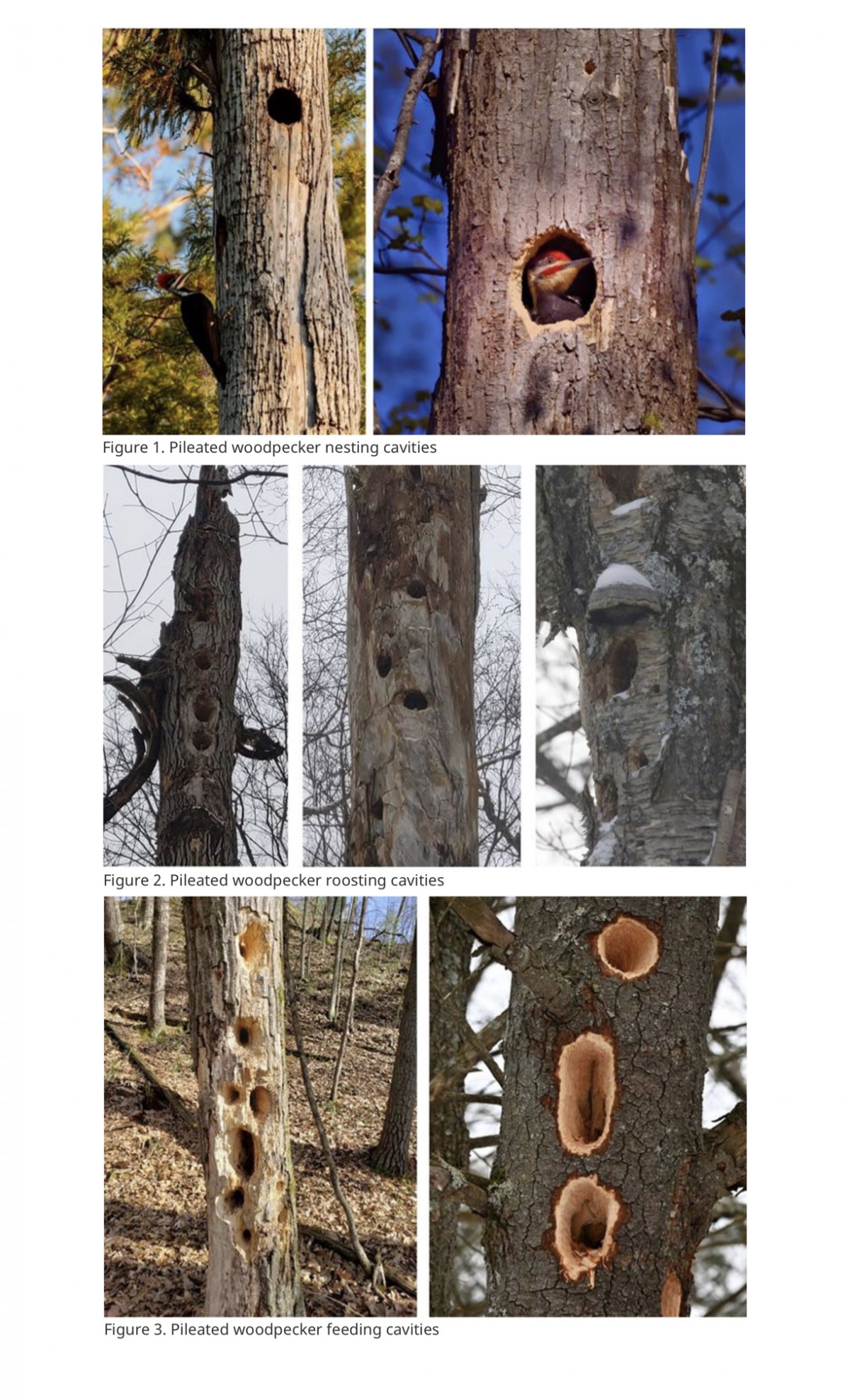
What This Means for Tree Cutting
Before removing or cutting any tree, especially large or dead trees, you need to:
1. Check for cavities
Even if you don’t see a bird, the cavity may still be legally protected.
3. Avoid cutting during nesting season
If there’s any chance a cavity is in use:
In many cases, the only fully compliant option is: Do not cut the tree
Before removing or cutting any tree, especially large or dead trees, you need to:
1. Check for cavities
- Large, rectangular openings
- Often found in mature or dead trees
Even if you don’t see a bird, the cavity may still be legally protected.
3. Avoid cutting during nesting season
If there’s any chance a cavity is in use:
- Delay work until nesting is over - This is often the safest and simplest option
In many cases, the only fully compliant option is: Do not cut the tree