The Fish Of Echo Lake
or ... i like big bass and I cannot lie 🎶🎵
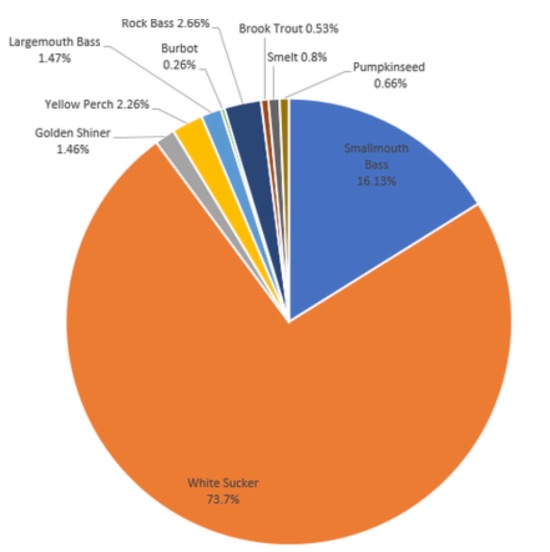
Echo Lake is a cold-water lake with a mixed fish community, supporting species such as White Suckers and Smallmouth Bass. In 2019, the Ontario Ministry of Natural Resources (MNR) conducted a fish survey - The results are HERE.
Echo Lake falls within Fisheries Management Zone 15 (Parry Sound, Bancroft, Pembroke, Algonquin Park).
At-a-Glance Summary
- Zone: FMZ 15
- Lake Type: Cold-water
- Bass Season: Late June - Nov 30
- Bass Limits: 6 (Sport) / 2 (Conservation)
- Special Rules: None (standard FMZ regulations apply)
- Bait: Restricted by management zones
- Consumption: Follow provincial fish consumption guide
BASS FISHING REGULATIONS (LARGEMOUTH AND SMALLMOUTH)
Season
Opens: 4th Saturday in June
Catch Limits
Size Limits
Opens: 4th Saturday in June
Closes: November 30
👉 Bass cannot be targeted outside the open season!
Catch Limits
Sport Licence: 6
Conservation Licence: 2
Size Limits
No size restrictions for bass in FMZ 15
ICE FISHING RULES
While ice fishing is technically permitted, there is nothing in season in Echo Lake.
All anglers must:
- Hold a valid Outdoors Card and fishing licence
- Follow open seasons and catch limits
- Use legal fishing methods only
- Avoid fishing in closed areas or sanctuaries
- Not waste edible fish
There’s a lot to learn when it comes to fishing, like which fishing rod and tackle to choose, how to follow the fishing regulations, and how to identify fish species.
For a more interactive experience with videos and quizzes.
Information is provided on length, distribution/habitat, similar fish, and key identifying characteristics that separate them from similar fish.
A free, mobile-friendly web mapping tool developed by the Ontario Ministry of Natural Resources. It provides detailed information for over 20,000 lakes, including fish species, stocking data, depth contours, and fishing regulations.
Conservation-minded steps to follow to help ensure higher survival rates for your catches.
Use this guide and interactive map to help you identify and prepare the types and amounts of fish that are safe to eat from more than 2,800 fishing locations in Ontario.
This is the same Guide to Eating Ontario Fish as above, but isolated to Echo Lake.
The Central Bait Management Zone (BMZ) in Ontario consists exclusively of Fisheries Management Zone (FMZ) 15.
Key Facts
- Bait cannot be transported into or out of the Central BMZ.
- Bait must be purchased from a licensed dealer within the zone.
- Receipts for purchased bait must be kept.
- Personal, authorized harvesting of bait is restricted to within the same zone.
- Bait must be used or disposed of within two weeks of purchase.
Guidance from Fisheries and Oceans Canada highlights that:
- Improper bait use can spread invasive species and disease
- Anglers play a key role in protecting ecosystems
Illegally released fishes (baitfishes and other species) can negatively affect recipient ecosystems in four ways:
- Food-web changes: Introduced species disrupt food webs by competing for resources or preying on native species. This can reduce the abundance of prey, affecting sportfishes that depend on them.
- Habitat changes: The behaviour of introduced species alters habitats. For instance, the feeding and spawning of the Common Carp destroy aquatic vegetation and increase turbidity, impacting native species that rely on that habitat.
- Disease introduction: Introduced species can transmit diseases and parasites to native species, leading to decreased abundance. The spread of "whirling disease" from stocked trout to wild trout is an example. Another example is Viral Hemorrhagic Septicemia (VHS), a highly contagious, deadly viral disease affecting over 30 species of freshwater and marine fish, causing severe hemorrhaging, anemia and mass mortality.
- Genetic impacts: Native species are adapted to their environment. Introduced individuals, not adapted, may spawn with native individuals of the same species. Their offspring may look similar but be less adapted. Introduced individuals may also spawn with closely related native species, resulting in less adapted hybrids or reproductive failure. In most cases, spawning between introduced and native species decreases native species abundance.
These impacts extend beyond introduced baitfishes. Bait bucket water can also harbour microscopic invasive species like Spiny Waterflea, Fish Hook Waterflea, and Zebra Mussel larvae, which harm aquatic ecosystems.
Anyone with information about the unlawful movement or stocking of live fishes is encouraged to call the Ministry of Natural Resources:
Anyone finding species that they suspect are invasive should remove and freeze them, and report their finding to the Invading Species Hotline: