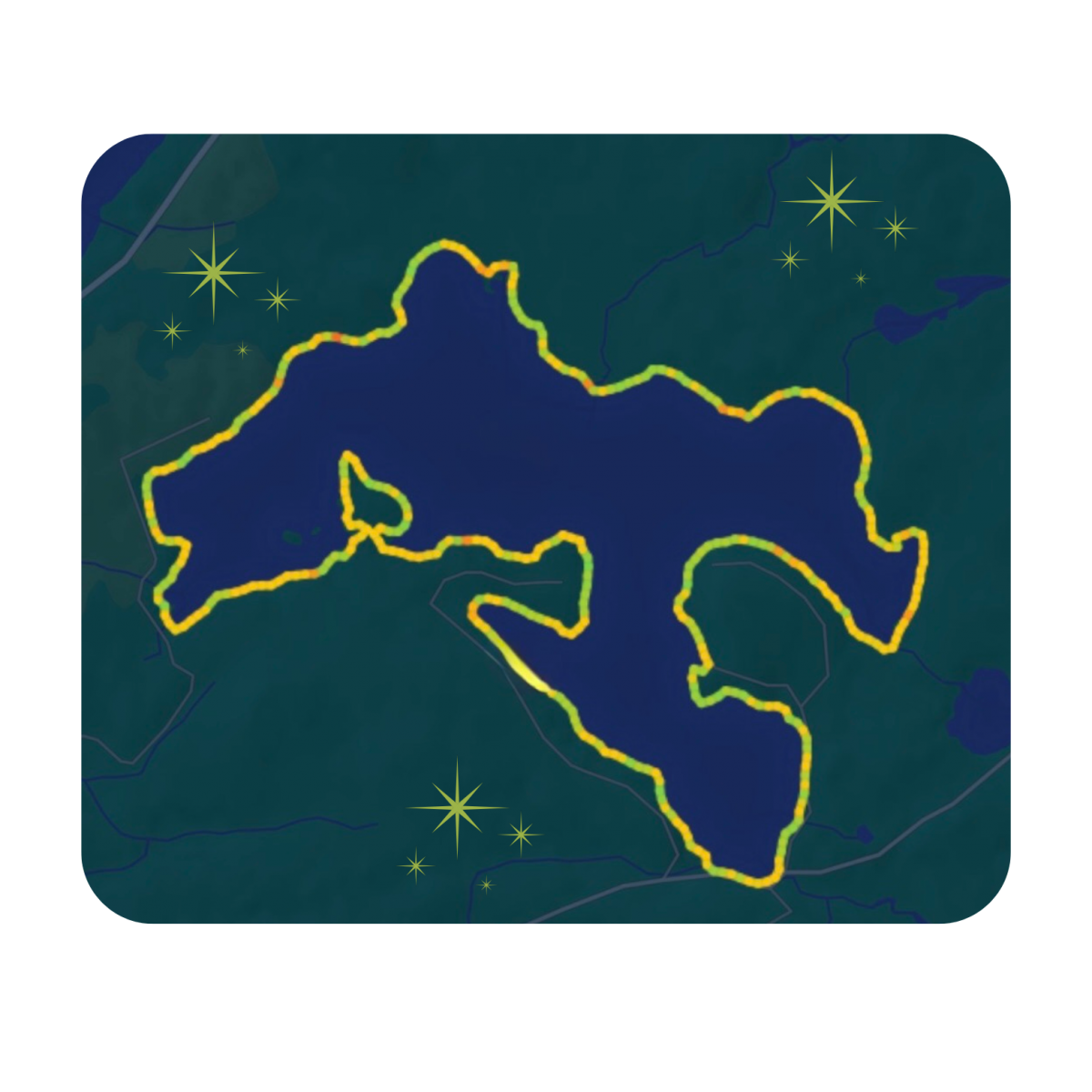
MUSKOKA IS HOME TO ABOUT A DOZEN SNAKE SPECIES (EIGHT OF THEM ARE COMMON AROUND ECHO LAKE). AND ONE LUCKY NATIVE LIZARD!
Snakes and Skinks
Muskoka’s iconic landscape - granite outcrops, windswept pines, wetlands, and shorelines - is not just cottage country. It is also prime habitat for a remarkable group of reptiles: Snakes and skinks. Often hidden beneath logs, basking on warm rock, or slipping silently through wetlands, these animals are easy to overlook. Yet they play a critical role in keeping ecosystems balanced - and despite common fears, the vast majority are harmless to people.
Three-quarters of Ontario’s reptiles are at risk - your photos and reports provide the critical data needed to protect their habitats and prevent further declines. Ontario Nature is looking for volunteers for their Long-Term Monitoring Protocol (LTMP) for Ontario Snakes program. Help detect population trends and inform conservation actions for snakes in Ontario! Join or learn more here
You can also participate in citizen science programs by submitting observations (online or via app) to iNaturalist's Herps of Ontario project
Common Snake Species You May Encounter
- Common Garter Snake
One of the most widespread snakes in Ontario, found in forests, fields, and wetlands. Known for its varied diet and large communal hibernation sites. - Common Watersnake
A familiar sight along Muskoka’s lakes and rivers. Often mistaken for a venomous species due to its defensive behaviour, it is actually harmless. - Eastern Milksnake
Recognizable by its reddish-brown blotches. It frequently mimics rattlesnakes by vibrating its tail in dry leaves. - Northern Ring-Necked Snake
A small, secretive snake that spends much of its time under rocks and logs. Its bright neck ring makes it easy to identify. - Ribbon Snake
Slender and fast-moving, typically found near wetlands and shorelines.
Additional Muskoka Species - These species are regularly present but less frequently noticed
- Dekay's Brownsnake
A small, secretive snake that feeds heavily on slugs and earthworms - excellent for gardens. - Red-bellied Snake
A tiny forest species, usually hidden under logs and leaf litter. - Smooth Green Snake
Bright green and well camouflaged in grasses; feeds primarily on insects.
Behaviour: Not Aggressive, Just Defensive
One of the most important things to understand about snakes is that they are not aggressive animals. With the exception of the Massasauga, Canada’s snakes are non-venomous. Even venomous species:
Masters of Camouflage and Survival
Snakes are highly adapted predators. Their survival depends on subtlety rather than strength.
Why So Many Snakes Go Unseen
Even in areas where snakes are abundant, people rarely notice them. That’s because:
One of the most important things to understand about snakes is that they are not aggressive animals. With the exception of the Massasauga, Canada’s snakes are non-venomous. Even venomous species:
- Avoid humans whenever possible
- Use warning signals (like rattling) before resorting to defence
- Tail vibration to mimic a rattle
- Flattening their bodies to appear larger
- Striking without biting
Masters of Camouflage and Survival
Snakes are highly adapted predators. Their survival depends on subtlety rather than strength.
- Many rely on camouflage, blending into leaf litter, rock or water edges
- Some, like milksnakes, use behavioural mimicry to deter predators
- Others, such as watersnakes, may appear aggressive but are simply defending themselves
Why So Many Snakes Go Unseen
Even in areas where snakes are abundant, people rarely notice them. That’s because:
- They rely on camouflage
- Many are nocturnal or secretive
- They spend time under logs, rocks or underground
Major Threats
What to Do If You See a Snake
If you encounter a snake in your yard or on a trail:
- Habitat loss from shoreline development and urban expansion
- Road mortality during seasonal movements
- Pesticides reducing prey and contaminating habitats
- Persecution: Intentional killing due to fear and misunderstanding
- Habitat fragmentation, particularly in rock barrens and wetlands
What to Do If You See a Snake
If you encounter a snake in your yard or on a trail:
- Stay calm and keep your distance
- Do not attempt to handle or kill it
- Allow it to move away on its own
Safety Around the Eastern Massasauga Rattlesnake
(If you're visiting in their range)
- Bites are extremely rare
- The snake will usually rattle as a warning
- Give it space and back away slowly
- Keep pets leashed in natural areas
Muskoka’s Only Native Lizard
The Five-Lined Skink is a smooth, slender lizard that prefers rock barrens and open, sunny habitats and can grow 14 to 19 centimetres in length. Key features
Skinks can detach their tails - a defence known as caudal autotomy. The wriggling tail distracts predators, allowing the skink to escape.
- Juveniles have a striking bright blue tail
- Adults develop a more subdued brown or bronze colour with five light stripes
- They are fast, agile, and often seen darting through leaf litter
Skinks can detach their tails - a defence known as caudal autotomy. The wriggling tail distracts predators, allowing the skink to escape.
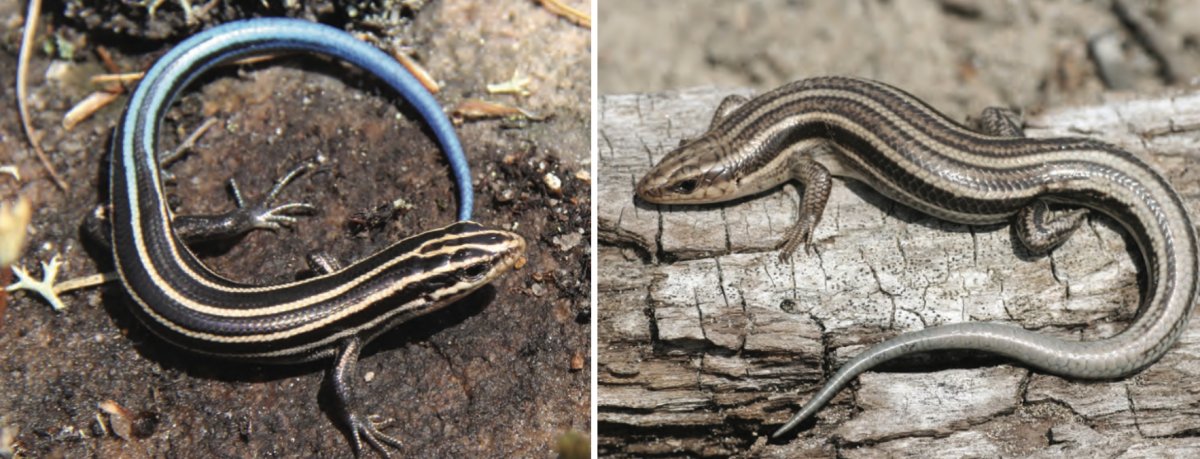
Photo credit: Joe Crowley, left; Scott Gillingwater, right
Why Snakes and Skinks Matter
Snakes and skinks are essential components of Muskoka’s ecosystems.Natural Pest Control
They feed on:
- Rodents such as mice and voles
- Slugs, snails, and insects
- Leeches and other invertebrates,
- Amphibians and small fish
A Key Role in the Food Web
They are also prey for:
- Hawks and owls
- Herons and other birds
- Mammals like skunks and foxes
At Risk: A Growing Conservation Concern
Snakes are among the most imperiled wildlife groups in Canada.
- Of Canada’s 24 snake species, more than half are at risk
- Several species in Ontario, including the Eastern Massasauga Rattlesnake, are legally protected
- The Five-Lined Skink is also considered a species at risk in parts of its range
Making Your Yard Wildlife-Friendly
Supporting snakes and skinks can be simple, and beneficial. You can help by:
Supporting snakes and skinks can be simple, and beneficial. You can help by:
- Leaving part of your yard natural or "wild"
- Adding rock piles or logs for shelter
- Avoiding pesticides and chemical fertilizers
- Being careful when moving wood or stones
- Preserving natural shoreline vegetation
RESOURCES
- Herps of Ontario
- Lepidoptera in Northern Ontario: Muskoka snakes to Elk Lake
- The ‘Ssseriously’ Strange Anatomy of Snakes
- Eastern Foxsnake - Species At Risk In The Land Between
- Massasauga Rattlesnake - Species At Risk In The Land Between
- Learning to love Muskoka’s snakes
- Water Snake has been around Muskoka longer than any cottagers
- Saving skinks in Muskoka
- Snake Road Survey Guidelines
- The Snakes of Ontario
- The wonderful world of Ontario snakes
- What should I do if I spot a snake in my garden?
- How many venomous snakes are there in Canada?
- How do I make a snake shelter?
- How do I deal with a rattlesnake?
- How can I discourage snakes from my yard?
- A Sneaky Snake Question
- Hope for the Eastern Hog-nosed Snake
- Green Snake
- Understanding Snakes: The Key to Their Survival
- The Underrated Beauty of Snakes
- Why Snakes Matter: A Deep Dive into Ontario’s Reptilian Residents
- Five-lined Skink