Invasive Plants & Species - Overview
For a plant or animal to be invasive, it must do harm. Simply being non-native is not cause for concern.
Properly disposing of invasive plant species is important to prevent further spreading of these plants in Muskoka.
Materials brought to a transfer station will not be accepted.
IMPACTS
There are currently nine invasive species of concern in Muskoka (four terrestrial and five aquatic). But that list can change at any time. In 2024, hydrilla was discovered in an Ontario marsh: Invasive Plant Found For First Time In Ontario
Terrestrial Impacts
- Habitat Degradation: Dense mats of invasive plants like Phragmites block sunlight, preventing native seedlings and plants from growing, leading to less diverse forests and wetlands.
- Reduced Forest Health: They compete with trees for water and nutrients, slow forest regeneration, and make forests more vulnerable to pests and diseases.
- Infrastructure Damage: Japanese Knotweed can grow through asphalt and concrete, damaging roads and foundations, while Phragmites alters water flow.
- Public Health Risks: Giant Hogweed's sap causes severe burns and blindness upon skin contact, affecting recreational use of parks and shorelines.
Aquatic Impacts
- Food Web Disruption: Species like the Spiny Waterflea and Round Goby outcompete native fish for food.
- Habitat Loss: They degrade spawning grounds for native fish and reduce water quality.
- Recreation & Tourism: Invasive aquatic plants (e.g., Eurasian Water-Milfoil) can clog waterways, hindering boating and swimming.
TAKE ACTION
The District of Muskoka and other groups actively map, treat, and manage invasive plants like Phragmites and Giant Hogweed along roadsides and public lands.
Ontario Invading Species Awareness Program educates the public and provides reporting hotlines (1-800-563-7711). This program is a partnership between the Ontario Federation of Anglers and Hunters, and the Ontario Ministry of Natural Resources.
How To Help
How To Help
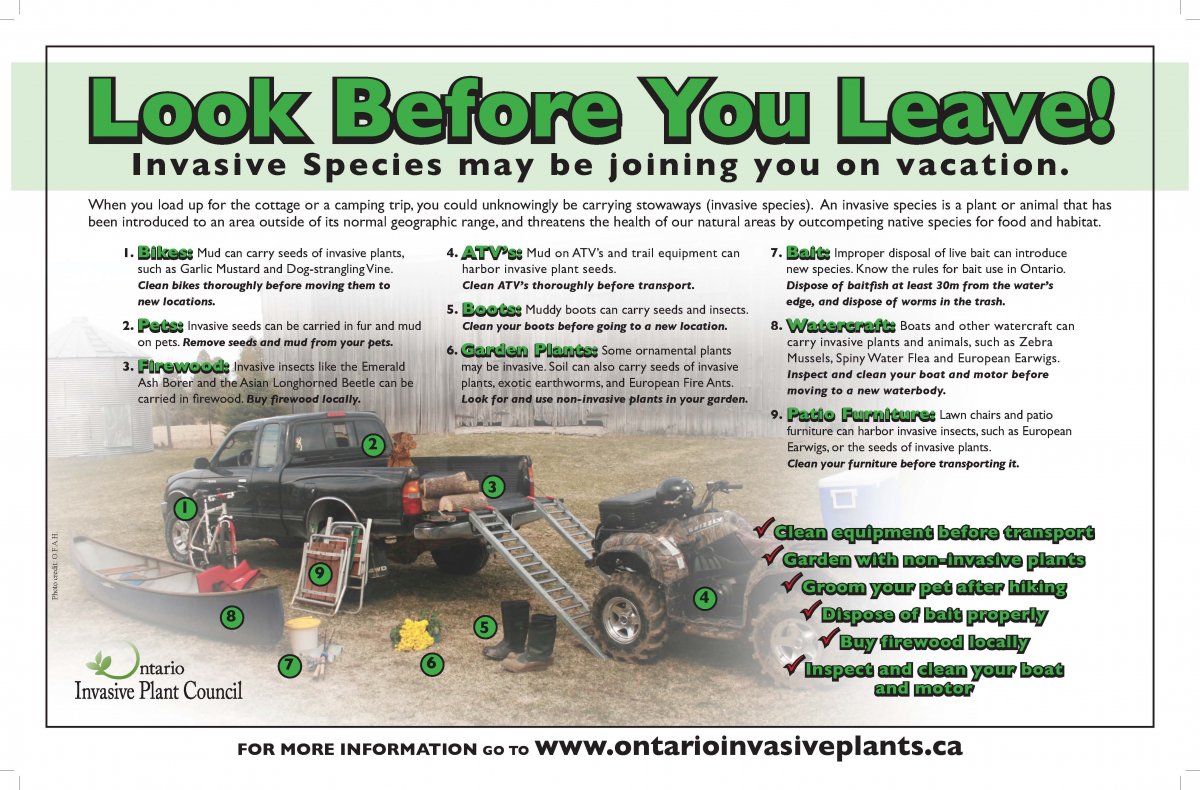
- Keep invasive species localized. Stay on marked and/or designated trails.
- Don't release unwanted bait, fish parts, aquarium pets and plants, garden waste and packing materials. Dispose of them in the trash; DO NOT dump them in the water or on land.
- Buy plants native to Muskoka. Click here for some great resources!
- Clean boats, trailers, bikes, ATVs and gear before leaving a waterbody or trail.
- Report sightings to the Invading Species Hotline (1-800-563-7711) or through mapping apps like EDDMapS (available through Apple App Store and Google Play).
You can also report by email: info@invadingspecies.com
Access webinar summaries, links to relevant scientific studies, stewardship action plans, and more: