Shorelines Matter
Shorelines that maintain key habitat, specifically the planting and maintenance of native vegetation, are critical for supporting water birds.
The type of shoreline vegetation present plays a major role in waterfowl habitat selection and use. Migratory waterfowl tend to prefer native aquatic plants over exotic species. Native plants are generally considered more nutritious and therefore more valuable food sources. Submerged aquatic vegetation, which is more common along undisturbed shorelines, is especially important for foraging waterfowl, and improves water quality and clarity.
Riparian and shoreline vegetation is strongly linked to bird abundance and diversity. Sites with intact understory vegetation and greater canopy cover support higher avian species richness, likely due in part to increased insect abundance. Unfortunately, these areas are frequently degraded by shoreline development.
Shorelines that are heavily hardened or dominated by invasive plants like Phragmites are generally poor habitat for waterbirds. While many ducks and other waterfowl can live near people — and some, like Mallards, even thrive in urban areas — the condition of the shoreline itself matters more than the presence of people. Features such as trees, shrubs, and a variety of native plants provide food and shelter that birds need, and these benefits often outweigh the disturbance caused by human activity. As a result, it’s not development alone that affects waterbirds, but how shorelines are developed. Protecting and restoring native shoreline vegetation is one of the most effective ways landowners can support waterbirds.
Nest-site specialists and fish-eating species, including Wood Ducks and diving ducks such as Bufflehead, may be particularly sensitive to the removal of woody and herbaceous vegetation needed for nesting and foraging.
Creating and maintaining functional shoreline ecosystems requires thoughtful planning, from plant selection to site design and installation. While the process can seem daunting, the ecological rewards are substantial. Programs such as Natural Edge and Love Your Lake help landowners assess local shoreline conditions and choose appropriate native plants, balancing human enjoyment with waterbird conservation.
Human use of shorelines and the well-being of waterbirds are not mutually exclusive. With informed, well-managed shoreline naturalization that reflects local conditions, property owners can enjoy recreational and aesthetic benefits while preserving the habitat features that support diverse and charismatic waterbird species — and the overall health of the water itself.
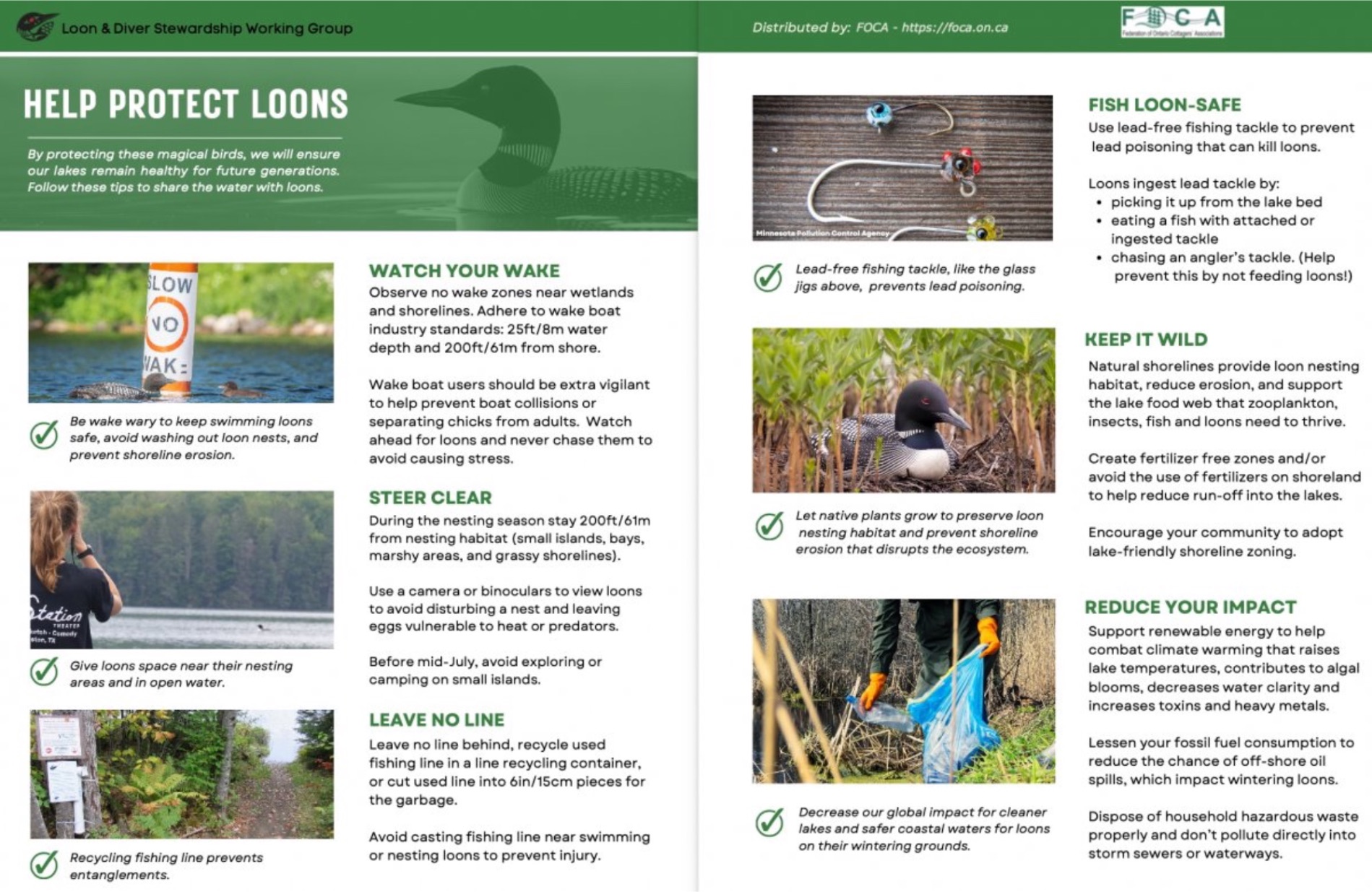
More On Loons
Canadians are obsessed with loons because they are deeply embedded in our national culture, symbolizing wilderness, serenity, and the iconic "cottage life" experience. Some reasons for the obsession:
- Haunting Calls: Their calls — ranging from yodels to wails — are iconic sounds of Canadian wilderness, often heard echoing across lakes.
- Symbol of Wilderness & Solitude: Unlike more common ducks, the solitary, territorial nature of loons represents the peaceful, untouched, and serene nature of Canadian cottage country.
- Ecological Indicator: The presence of loons signals healthy lakes with clean, clear water, which are highly valued in Canadian culture.
- Distinct Behaviour: Loons are known for carrying their young on their backs, a behaviour that many find endearing and unique.
Here on the Echo Lake Association website, we've made frequent references to loons throughout, but what's good for loons is also good for other aquatic birds, like mergansers and ducks.
Muskoka Water Bird Sightings ... so far!
Ducks, Geese, Swans
American Black Duck
American Wigeon
Barrow’s Goldeneye
Blue-winged Teal
Brant
Bufflehead
Canada Goose
Canvasback
Gadwall
Green-winged Teal
Harlequin Duck
Hooded Merganser
Lesser Scaup
Long-tailed Duck
Mallard
Mallard × American Black Duck
Mute Swan
Northern Pintail
Northern Shoveler
Redhead
Ring-necked Duck
Ross’s Goose
Ruddy Duck
Snow Goose
Surf Scoter
Trumpeter Swan
Tundra Swan
White-winged Scoter
Wood Duck
Grebes, Loons, Cormorants
Common Loon
Double-crested Cormorant
Eared Grebe
Horned Grebe
Pied-billed Grebe
Red-necked Grebe
Red-throated Loon
Herons, Egrets, Bitterns, Rails
American Bittern
American Coot
Black-crowned Night Heron
Common Gallinule
Great Blue Heron
Great Egret
Green Heron
King Rail
Least Bittern
Snowy Egret
Sora
Virginia Rail
Yellow Rail
Yellow-crowned Night Heron
Gulls & Terns
American Herring Gull
Black Tern
Bonaparte’s Gull
Caspian Tern
Common Tern
Forster’s Tern
Franklin’s Gull
Glaucous Gull
Great Black-backed Gull
Iceland Gull
Ivory Gull
Lesser Black-backed Gull
Ring-billed Gull
Slaty-backed Gull
Other Water-associated Birds
American White Pelican
Bald Eagle
Belted Kingfisher
Osprey
Shorebirds
American Avocet
American Golden-Plover
Baird’s Sandpiper
Black-bellied Plover
Buff-breasted Sandpiper
Dunlin
Greater Yellowlegs
Hudsonian Godwit
Hudsonian Whimbrel
Killdeer
Least Sandpiper
Lesser Yellowlegs
Marbled Godwit
Pectoral Sandpiper
Purple Sandpiper
Red Knot
Red-necked Phalarope
Ruddy Turnstone
Sanderling
Semipalmated Plover
Semipalmated Sandpiper
Short-billed Dowitcher
Solitary Sandpiper
Spotted Sandpiper
Stilt Sandpiper
Upland Sandpiper
White-rumped Sandpiper
Wilson’s Phalarope
Wilson’s Snipe
This list of water birds spotted in Muskoka and reported to eBird, is as of January, 2026.
The free eBird app can be downloaded for both IOS and Android devices. Be sure to select eBird Canada as your default portal so that you have access to any Canadian specific survey protocols.