and things to do in case of emergency
Turtles - Older Than Dirt: A Guide to Understanding, Respecting and Protecting Them
Turtles as a group have existed for more than 200 million years, alongside dinosaurs. But they now face serious challenges. As is the case for many species at risk, habitat destruction has played a major role in the decline of turtles. Many of the marshes, swamps, bogs and fens that turtles once called home have been drained, filled or otherwise altered.
Roads have been built through several of the remaining wetlands, and as a result road mortality is now a major threat to turtles, second only to habitat loss. Other threats include illegal collection for food or the pet trade, boating mortality and fishing bycatch.
Turtle species in Muskoka and their status on the Protected Species in Ontario list
- Spotted Turtle: Endangered (most at-risk)
- Wood Turtle: Endangered
- Blanding's Turtle: Threatened
- Musk Turtle (Stinkpot): Threatened
- Snapping Turtle: Special Concern
- Northern Map Turtle: Special Concern
- Midland Painted Turtle: Special Concern federally, Not At Risk in Ontario (though it has been designated as a Specially Protected Reptile under the Ontario Fish and Wildlife Conservation Act which offers some protection to individuals and their habitat)
- Road Mortality: This is the #1 cause of death, especially for females looking to lay eggs in the gravelly shoulders of roads.
- Habitat Loss: Fragmentation due to development, wetland drainage and shoreline alteration.
- Slow Reproduction: Turtles take 15-20 years to reach breeding age, making it difficult for populations to recover from adult mortality.
- Illegal Collection: Spotted turtles, in particular, are targeted for the illegal pet trade.
How You Can Help
- Drive cautiously near wetlands, especially in spring
- Even simply slowing down and allowing a turtle to cross safely can make a difference
- Protect nesting areas if you find them
- Practice responsible fishing
- Report Sightings: Join the (NHIC) Rare Species of Ontario and/or Herps of Ontario projects on iNaturalist, online or via app
- If you find a RARE turtle (i.e. Spotted Turtle, Spiny Softshell, Wood Turtle and Blanding's Turtle): Call or text the S.T.A.R.T. Reptile Hotline at (705) 955-4284
- Protect Shorelines: Leave deadwood and vegetation in place along shorelines for basking and safety
Temperature Determines Sex
The sex of turtle hatchlings is determined by temperature during incubation:
A Perilous Start to Life
Hatchlings emerge in late summer or early fall and must quickly find water. Very few survive to adulthood due to predators and environmental challenges. This low survival rate is typical of turtles, which is why adult turtles, and especially breeding females, are so important to population stability.
Seasonal Behaviour: What Turtles Do Throughout the Year
As temperatures rise, turtles emerge from winter dormancy and begin to bask and warm up. Spring also marks the start of mating season. Male snapping turtles may compete by biting and pushing each other to establish dominance. These encounters can appear aggressive, though similar competition occurs across many turtle species. Courtship itself can be surprisingly graceful, with pairs moving together in slow, fluid motions through the water.
Spring & Early Summer (May-June)
This is when they are most vulnerable. Turtles leave the water to:
Turtles become dormant when water temperatures drop. They rest at the bottom of lakes and ponds beneath the ice, and their metabolism slows dramatically. They can absorb small amounts of oxygen directly from the water through specialized tissues, allowing them to remain underwater for months without surfacing.
The sex of turtle hatchlings is determined by temperature during incubation:
- Moderate temperatures tend to produce males
- Warmer or cooler conditions tend to produce females
A Perilous Start to Life
Hatchlings emerge in late summer or early fall and must quickly find water. Very few survive to adulthood due to predators and environmental challenges. This low survival rate is typical of turtles, which is why adult turtles, and especially breeding females, are so important to population stability.
Seasonal Behaviour: What Turtles Do Throughout the Year
As temperatures rise, turtles emerge from winter dormancy and begin to bask and warm up. Spring also marks the start of mating season. Male snapping turtles may compete by biting and pushing each other to establish dominance. These encounters can appear aggressive, though similar competition occurs across many turtle species. Courtship itself can be surprisingly graceful, with pairs moving together in slow, fluid motions through the water.
Spring & Early Summer (May-June)
This is when they are most vulnerable. Turtles leave the water to:
- Find mates
- Travel between wetlands
- Lay eggs in sandy or gravel areas
- Nesting continues into early summer
- Eggs are left buried and unattended
- Many nests are lost to predators like raccoons
- All Ontario turtles hibernate underwater
- They settle into mud at the bottom of lakes and wetlands
- They can absorb oxygen through specialized tissues, allowing them to survive months without surfacing
Turtles become dormant when water temperatures drop. They rest at the bottom of lakes and ponds beneath the ice, and their metabolism slows dramatically. They can absorb small amounts of oxygen directly from the water through specialized tissues, allowing them to remain underwater for months without surfacing.
In Case Of Emergency
If You Find An Injured Turtle:
Call the Ontario Turtle Conservation Centre (OTCC), Peterborough
(705) 741-5000 option 9 immediately!
Visit their website for instructions on how to help and what to do:
Saving Turtles at Risk Today (S.T.A.R.T.), Oro-Medonte
Call or text to report sightings of rare, nesting, injured, or dead reptiles
🐢 🐢 🐢 🐢
🐢 🐢 🐢 🐢
If You Find Eggs, A Recently Deceased Turtle, A Turtle Nest Or Nesting Female:
Saving Turtles at Risk Today (S.T.A.R.T.), Oro-Medonte
(705) 955-4284
Call or text to report sightings of rare, nesting, injured, or dead reptiles
(705) 955-4284
Call or text to report sightings of rare, nesting, injured, or dead reptiles
🐢 🐢 🐢 🐢
You can follow the instructions to build your own turtle nest protector (above),
or you can 'rent' one from the Muskoka Conservancy. Contact:
Amanda Porter, Conservation Manager
Cell: (705) 801-7393
LOSING ADULT FEMALES CAN QUICKLY LEAD TO POPULATION DECLIINE
The Greatest Threat: Roads
Today, one of the biggest threats to all turtles is road mortality. Females frequently cross roads to reach nesting sites, often using gravel shoulders or embankments. Because they move slowly, many are struck by vehicles. This is especially damaging because turtles reproduce slowly.
How You Can Help
How You Can Help
- Move Turtles: DO NOT remove a healthy turtle from its habitat - it reduces their chances of survival. If you find an uninjured turtle in the middle of a road, and it is safe for you to do so, simply help it across the road in the direction it is already headed.
- Use a box or object (such as a shovel or branch) to guide it if needed
- Keep gloves and a large towel handy in your vehicle (car mats work well too)
- If you don't have gloves, keep hand sanitizer handy
- Do not pick them up by the tail
- Use an object (like a shovel or board) to gently guide or lift if needed
- Keep your hands away from the head - snapping turtles can reach far back
- Do not lift too high - if you drop her, you may cause significant injury
‼️ Print this document and keep it in your car
so that you’ll know what to do the next time you see a turtle on the road
A SPECIAL SECTION ON SNAPPING TURTLES SINCE THEY ARE THE MOST MISUNDERSTOOD
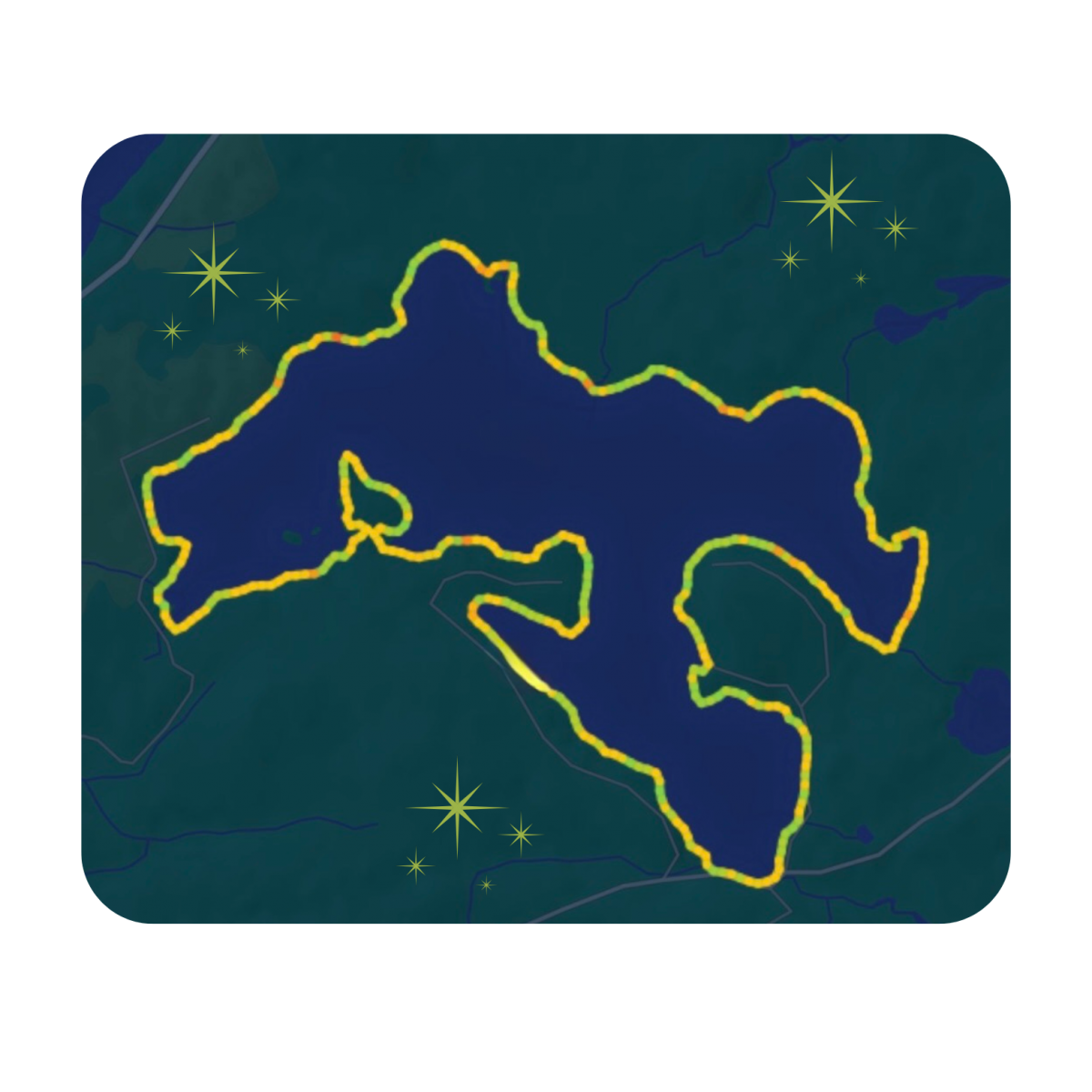
AND WE HAVE A RESIDENT ON ECHO LAKE!
Snapping Turtles: Ancient Survivors Of Our Freshwaters And A Familiar Sight On Echo Lake
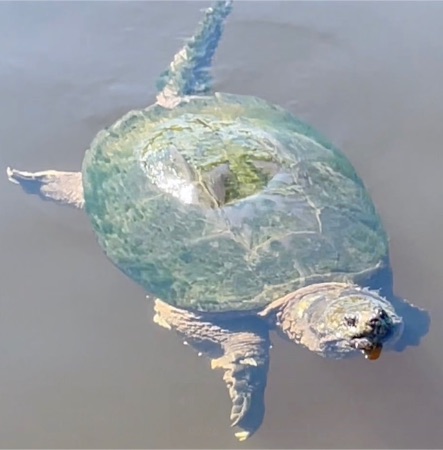
Check out this video of our resident snapping turtle - recorded by Don Lawlor:
Snapping turtles are among the most remarkable and ancient-looking creatures found in our lakes, wetlands and rivers. Though they are still relatively common across much of Ontario, they remain widely misunderstood, and increasingly at risk. With their rugged shells, powerful jaws, and dinosaur-like appearance, snapping turtles offer a rare glimpse into a distant past while playing a vital role in modern ecosystems.
Built for Defence - Not Aggression
All turtles have shells made of two main parts: The carapace (top shell) and the plastron (bottom shell), which together provide protection.
But Snapping turtles have a much smaller plastron, leaving more of their body exposed. Because they cannot fully retreat into their shells, they rely on their powerful jaws for defence - snapping when threatened to scare predators away. Despite their intimidating behaviour on land, snapping turtles are generally not aggressive in water and will usually swim away from people when given the chance. When threatened, a snapping turtle may lunge or "snap" as a warning. This behaviour has earned them a fearsome reputation, but it is simply a defensive response, not aggression.
Unlike most other Ontario turtles, the snapping turtle has a very small plastron and cannot withdraw into its shell for protection when threatened. Therefore, on land this turtle’s only defence from predators is to snap repeatedly and scare them away. In water the snapping turtle rarely snaps at people or other potential threats and will simply swim away if threatened.
Nature’s Clean-Up Crew
Snapping turtles are also often unfairly seen as dangerous or destructive. In reality, they are primarily scavengers. Much of their diet consists of dead plant and animal matter, along with fish, frogs and invertebrates. This strong scavenging role helps keep lakes and wetlands clean and balanced. One common complaint comes from anglers who find their catch partially eaten. In most cases, snapping turtles are simply taking advantage of an easy meal, such as a fish left on a line or stringer.
Size, Habitat, and Range
Snapping turtles are Canada’s largest freshwater turtle, typically reaching 20-36 cm in shell length and weighing up to 16 kg, though larger individuals do occur. They inhabit a wide range of freshwater environments, including ponds, marshes, lakes and slow-moving rivers, especially those with soft mud bottoms and abundant vegetation. Although found across much of eastern North America, their range in Canada is largely concentrated in southern Ontario and nearby regions.
Cold-Blooded but Highly Adaptable
As reptiles, snapping turtles are cold-blooded, meaning their body temperature depends on their surroundings. While many turtle species are frequently seen basking on logs and rocks, snapping turtles tend to spend more time in the water and are less often observed at the surface. They are well adapted to aquatic life and often move by walking along the bottom rather than actively swimming through open water.
Winter Survival: Life Beneath the Ice
One of the most remarkable aspects of snapping turtle biology is how they survive winter. Snapping turtles differ from other Muskoka turtles in winter primarily through their specific hibernation site preferences and their ability to tolerate very low oxygen environments, though all share the same basic method of dormant underwater brumation. While all Muskoka turtles hibernate at the bottom of water bodies, snapping turtles often prefer to bury themselves deep in the mud of shallow, soft-bottomed, and potentially oxygen-poor, slow-moving water.
Long Lives and Slow Growth
Turtles grow quickly when young but take a long time to mature - typically 15 to 20 years before they begin reproducing. They are also long-lived animals. Many individuals live more than 70 years, and some may exceed 100 years. This slow life cycle makes all turtle species especially vulnerable: Losing even a few adults each year can cause population declines.
Nesting: A High-Stakes Gamble
Each spring and early summer, female snapping turtles leave the water to lay eggs. They may travel considerable distances to find suitable nesting sites - typically sandy or gravelly areas exposed to sunlight. A single nest can contain 30-40 eggs, sometimes more. After laying them, the female covers the nest and leaves, as is typical for all turtles. Predators such as raccoons, foxes and skunks frequently destroy nests, especially in areas near human development. Even when nests survive, weather conditions must be just right for the eggs to hatch.
RESOURCES
Turtles
- Our 8 Native Species Need Our Help!
- 10 fun facts you should know about Muskoka turtles
- This Can Be A Deadly Time For One Of Canada’s Most Endangered Wildlife Groups - Turtles
- Watersheds Canada - Saving our Turtles!
- Watersheds Canada - Meet Some of Canada’s Freshwater Turtle Species!
- Help Freshwater Turtles
- Turtle Guardians: Learning Centre
- Keep Calm and Save the Turtles
- Helping Injured Turtles
- Saving Turtles At Risk Today (S.T.A.R.T.) Project - Scales Nature Park
- Saving Turtles At Risk Today (S.T.A.R.T.) Project - CWF
- Species At Risk In Ontario
- Ontario Wildlife Rescue: Turtle