BENTHIC MACROINVERTEBRATE IDENTIFICATION AND MONITORING
The District Municipality of Muskoka has been monitoring bottom-dwelling aquatic invertebrate communities since 2003.
These invertebrates, such as worms, mollusks, insects, crustaceans and mites, are sensitive to environmental changes like pollution or habitat alteration, and indicate the health of lakes and streams.
These invertebrates, such as worms, mollusks, insects, crustaceans and mites, are sensitive to environmental changes like pollution or habitat alteration, and indicate the health of lakes and streams.
Like many species, insects are declining due to loss of habitat, indiscriminate and widespread insecticide and pesticide applications, and climate change.
Echo Lake
Results for Echo Lake are included in the District of Muskoka's Lake System Health Water Quality Monitoring Program 2024 Annual Report - Click Here
You'll also see Echo Lake data in the Muskoka Watershed Report Card 2023 - Chapter 3: Benthic Macroinvertebrates In Muskoka - Click Here
Another snapshot of Echo Lake's benthic community can be found at
Another snapshot of Echo Lake's benthic community can be found at
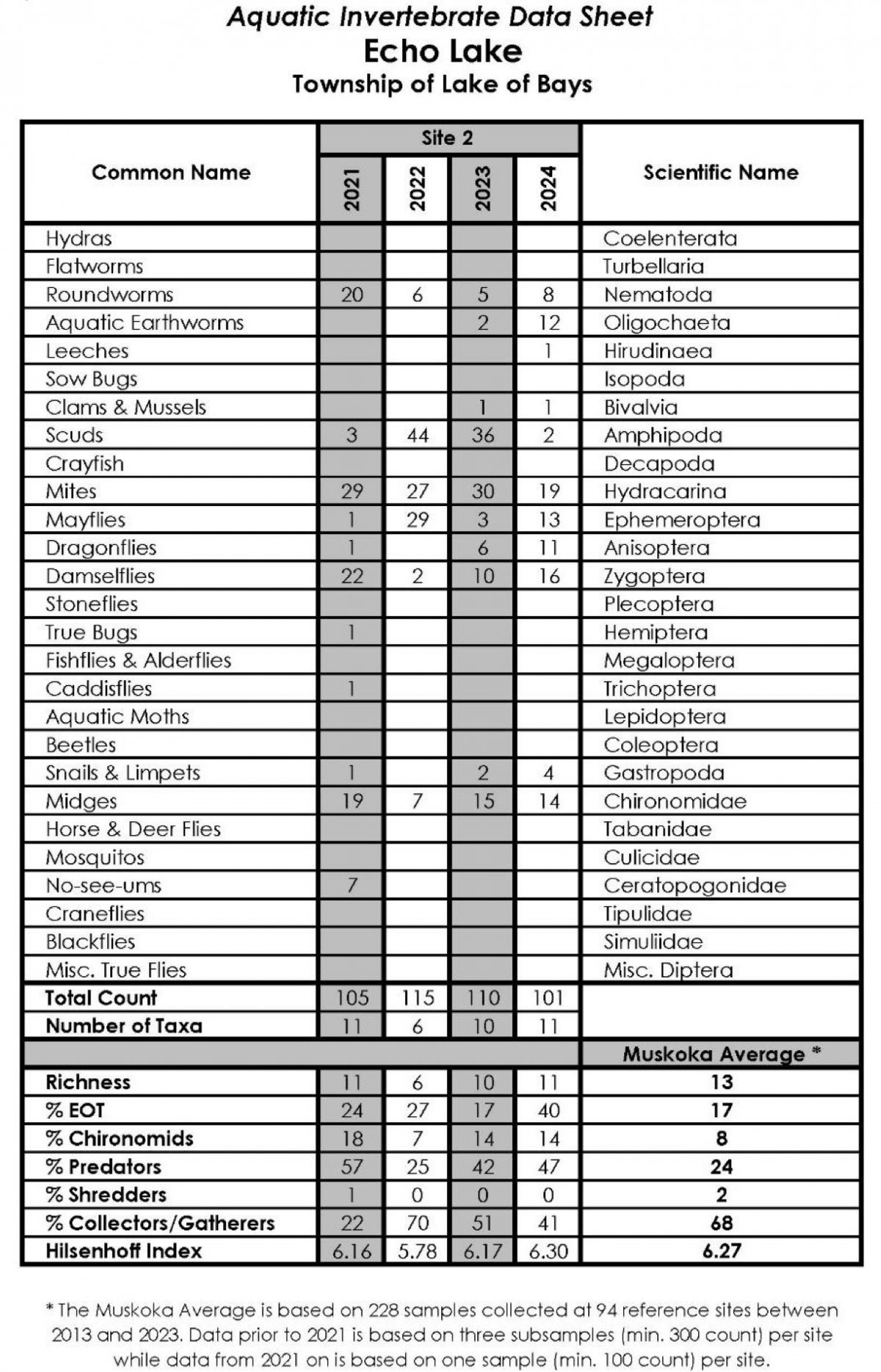
The Muskoka Water Web. Below, you'll find a picture of Echo Lake's Biological Monitoring Data from that site.
Test Your Knowledge
Here is a REALLY, REALLY, REALLY good interactive tool to ID benthic macroinvertebrates. Learn about their sensitivity level to sources of pollution in their habitat and varying water conditions (least tolerant, moderately tolerant and most tolerant).
When you click on each sketch, you will also learn about its life cycle, feeding habits and other unique facts!!!
Can you help Echo Lake? We're Looking for Benthic Macroinvertebrate Monitoring Volunteers
There are three categories: Potential Concern (PC), Typical (T), and Insufficient Data (ID). Echo Lake's status is currently classified as TYPICAL.
But, since 2021, our lake is being tested only once a year, so we don't know if that's actually true. More data is always needed, especially in quaternary watersheds.
The Echo Lake Association has reached out to the District Of Muskoka’s Biological Monitoring Program to have us added as a PROGRAM PARTNER. That way, we can collect more benthic data for our lake. The District provides the expertise, training and equipment, we would provide the volunteers.
But we will need your help! Please email us at elamuskoka@gmail.com if you would like to participate 🙏
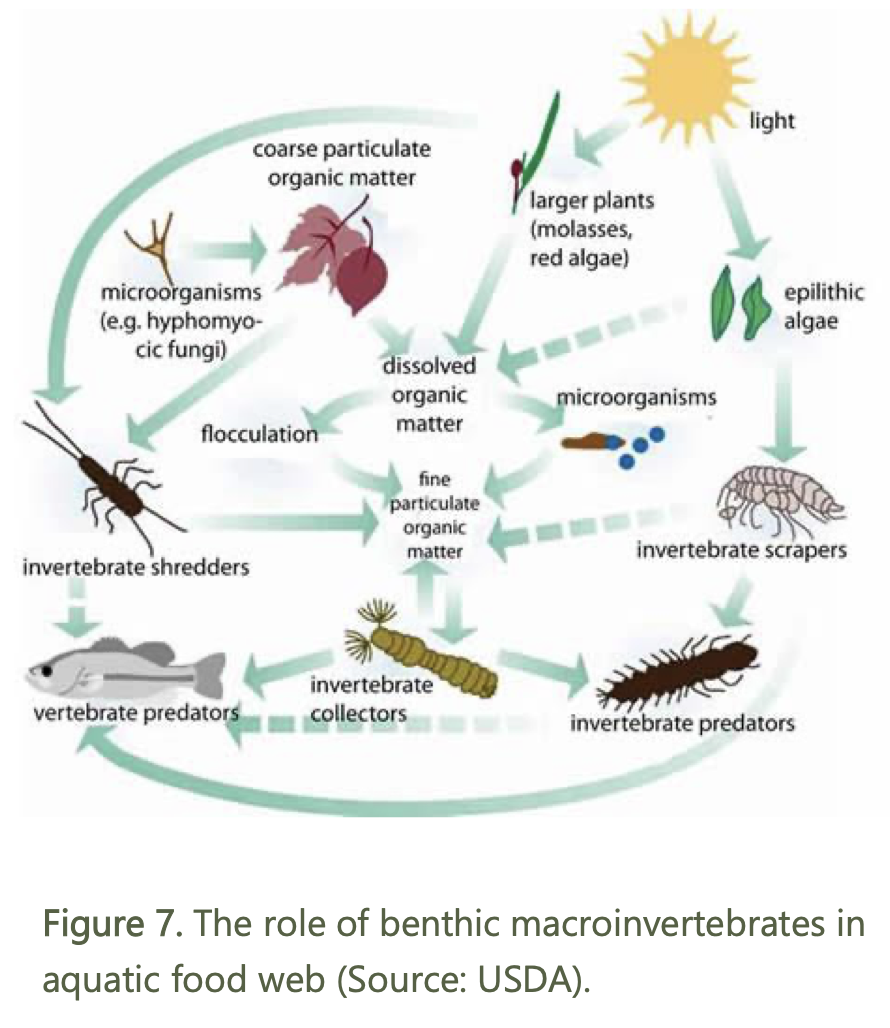
Some people do not like the squishy feel of a lake bottom. But that squishiness is just muck primarily composed of decaying organic matter like plants and leaves. It plays a critical role in the aquatic ecosystem, feeding and supporting many beneficial insects in their first stage of life as nymphs. Think of that soft bottom as the forest floor of the lake. Just like leaves break down in the woods, plants and natural materials break down in the water. It might feel strange, but it’s part of what keeps Echo Lake healthy.
By the way, when dragonflies come out of their larval stage in the water, you’ll see some of their carcasses clinging to different things around your house and property. They look like something out of a horror movie! It's hard to believe that a beautiful dragonfly came out of it!
If someone just can’t get past the squishy feeling, even knowing it’s actually a sign of a living, healthy lake, here are a few simple options:
- Wear water shoes or sandals. A thin sole removes the squishy sensation almost entirely.
- Swim from a dock. Jumping or climbing in from deeper water avoids walking on the bottom.
- Look for a sandy entry point. If you don’t have one, the public access area at the intersection of Hammond Road and Echo Lake Road is a nice spot and it’s not squishy.
- Use a floating mat or kayak. Entering the water from floating equipment bypasses the shoreline altogether.
Resources
A note about crayfish
Echo Lake, as a small, spring-fed lake with rocky shorelines, submerged logs, and shallow, reed-filled bays, makes it highly likely that we have a native crayfish population. Additionally, crayfish are a primary food source for smallmouth bass, so their presence is nearly certain.
It is important to note that moving live crayfish between waterbodies is illegal in Ontario.